


• Text size:

    S M L
  • Letter spacing:

WhatsApp banking

WhatsApp banking

Right Arrow

Say ‘Hi 👋’ on WhatsApp at 9555 555 555 & we’ll get back to you instantly

Track Requests

Track Requests

Right Arrow

View & track all your past and active service requests.

Raise a Request

Raise a Request

Right Arrow

Facing issues? Let us know how we can help you

Locate Us

Locate Us

Right Arrow

Locate your nearest IDFC FIRST Bank branches and ATMs

Add a compliment

Add a compliment

Right Arrow

Our customers are talking, and we think you’ll like what they’re saying.

Customer care

Customer care

Right Arrow

We will be happy to help you 24x7.

Help Center Icon

Help Center

Right Arrow

Support topics, FAQs and more

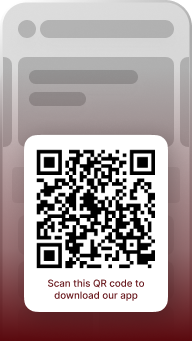
QR code for IDFC app download

Download our app

Get instant help for all your queries in one place

Explore Personal
Explore Business
Explore Credit Cards
WhatsApp banking

WhatsApp banking

Right Arrow

Say ‘Hi 👋’ on WhatsApp at 9555 555 555 & we’ll get back to you instantly

Track Requests

Track Requests

Right Arrow

View & track all your past and active service requests.

Raise a Request

Raise a Request

Right Arrow

Facing issues? Let us know how we can help you

Locate Us

Locate Us

Right Arrow

Locate your nearest IDFC FIRST Bank branches and ATMs

Add a compliment

Add a compliment

Right Arrow

Our customers are talking, and we think you’ll like what they’re saying.

Customer care

Customer care

Right Arrow

We will be happy to help you 24x7.

Help Center Icon

Help Center

Right Arrow

Support topics, FAQs and more

QR code for IDFC app download

Download our app

Get instant help for all your queries in one place

Download now!

UPI

This digital payment mode enables businesses to receive payments from your customers using any UPI-linked mobile app. All one needs to do is scan the UPI QR code.


With IDFC FIRST Bank’s QR code solution you get instant settlement to ensure your cash flow remains seamless.


Read more...
Tax Payment

Free UPI QR Standee

Instant settlement

UPI QR Dashboard

Benefits of UPI QR code

  • How it works?
  • How to use the UPI QR code for collections?

How it works?

img

Start accepting payments to your IDFC FIRST Bank a/c through your UPI QR. You can avail it during your account opening process itself or subsequently through the branch.

Read more

How to use the UPI QR code for collections?

img

Once the UPI QR is created, a Digital QR is delivered to your registered email id.


You can download your QR code from your mobile application / netbanking portal.


You can even create dynamic QR code from your mobile app to ease your collection reconciliation


Read more

Features

pointerSeamless collection from customers

pointerNo risk of storing customer’s UPI ID

pointerResolves cash on delivery

pointerAccept payments from all banks and UPI apps

pointerComplete visibility of all collections for easy reconciliation

pointerTransaction notification on SMS


Terms & Conditions


Please click here to read the terms & conditions.


Contact Us


Apply now for the current account to avail seamless UPI collections

FAQs

How UPI QR collections helps your business?

UPI QR - a digital mode of collections enables your customers to make payments to your bank without sharing your bank account details. The most convenient, cashless payment option adopted by all businesses.

Can we have multiple UPI QR code to differentiate every transactions?

You can create Dynamic UPI QR code with identifiers for your every transactions from your mobile app / Netbanking. Your identifier can assist you reconcile your collections

How will you receive the report for collection of transactions via QR?

You will be able to generate and download report from UPI QR dashboard.

What safety measures are to be taken while interacting on UPI?

  • Be cautious of money requests from unknown senders as accepting a UPI money request is a debit to your account. Only accept requests from known senders and verified merchants.
  • Never share your card number, CVV, expiry date, OTP and PIN numbers.
  • Beware of Mobile screen sharing apps used for remote access, like Anydesk: and de-activate them while transacting on any UPI App
  • Do not share or forward any SMS from the Apps. This SMS may contain information regarding registration of your account on another device.

What are the UPI Transaction Limits?

Per NPCI, the daily transaction limit for UPI is ₹1,00,000 for general transactions, ₹2,00,000 for categories like capital markets, and insurance, and ₹5,00,000 for merchant transactions and Initial Public Offering (IPO).
However, the maximum UPI transfer limit for a day can change from bank to bank and usually ranges from ₹25,000 to ₹1,00,000. Depending on the bank, you may have a weekly/monthly transaction limit instead of a daily transaction limit.

Which transactions attract MDR, and from when?

MDR is applicable on all UPI P2M (Person-to-Merchant) transactions above ₹2,000, effective 15 October 2026. Applicability is based solely on transaction amount; merchant size (small or large) has no bearing.  

Note: P2PM MCC – 7407 is exempted from MDR Charges. 

What are the applicable MDR rates?

Standard P2M (non-Industry Program, non-Capital Market): 

• Up to ₹2,000: Zero MDR 

• Above ₹2,000 up to ₹75,000: 0.40% of transaction value 

• ₹75,000 and above: Fixed ₹300 per transaction (cap) 

• Industry Program categories: Flat ₹5 per transaction above ₹2,000 

• Capital Market (MCC 6211, 6012): 0.02% of transaction value, capped at ₹300  

Is MDR applicable uniformly to small and large merchants?

Yes. MDR applicability depends on transaction amount and merchant MCC classification, not merchant type. Both small and large merchants are subject to the same rate structure for transactions above ₹2,000. 

Can merchants pass MDR charges to customers?

No, merchants cannot pass MDR charges to customers.

Whether a surcharge is applicable for fuel MCCs (5541, 5542, 5983) in addition to MDR?

No, it’s not applicable. 

How is the 0.40% MDR distributed?

The 0.40% MDR is split as follows (all rates exclusive of GST): 

• Interchange — 0.28%: Payable by Payee PSP / Acquiring Bank to Remitter / Issuer Bank 

• PSP Fee — 0.12%: Payable by Remitter / Issuer Bank to Payer PSP Bank 

• App Provider Fee — 0.08%: Settled directly by Payer PSP with its app provider (outside NPCI) 

For transactions ₹75,000 and above (MDR capped at ₹300): Interchange capped at ₹210; aggregate PSP Fee + App Provider Fee capped at ₹90. 

How is the flat ₹5 MDR for Industry Program categories distributed?

• Interchange: ₹3.50 per transaction — Payable by Payee PSP / Acquiring Bank to Remitter / Issuer Bank 

• PSP Fee: ₹1.50 per transaction — Payable by Remitter / Issuer Bank to Payer PSP Bank 

If a merchant is acquired through a Payment Aggregator (PA), how is the Acquirer share split?

The Acquiring Bank’s share is distributed between the Acquiring/ Sponsor Bank and the Payment Aggregator (PA) in accordance with the terms of their business. NPCI is not involved in this internal split. 

Which transaction types are fully exempt from MDR?

The following are exempt; existing configured pricing remains unchanged: 

• P2P transactions — all amounts 

• P2PM transactions — Payee MCC = 7407 

• All P2M transactions up to ₹2,000 

• RuPay Credit Card on UPI — Account Type = CREDIT (existing credit card pricing continues) 

• Credit Line on UPI — all relevant Credit Line account types (existing pricing continues) 

• OD / UOD — Account Type = UOD (existing pricing continues) 

• PPI Wallet — Account Type = PPI Wallet 

• eRUPI Voucher — Account Type = VOUCHER, Purpose Codes: 17, 18, 19, A0–A9, B0–B9, C0–C9, 0A–9A, 0B–9B, 0C–9C, AA–AI (existing pricing continues) 

• CBDC — Purpose Code = 92 

• UPI AutoPay / Mandates — Purpose Code = 14, AZ (existing pricing continues) 

• One-Time Mandate — Purpose Code = 01 (existing pricing continues) 

• ICCW — Payee MCC = 6013, Purpose Code = 12 or 13, Initiation Mode = 18 (existing pricing continues) 

• UPI Cash Deposit (ICD) — Payee MCC = 6013, Initiation Mode = 18, Purpose Code = 84 or 85 (existing pricing continues) 

• Cash@BC — Payee MCC = 6013, Initiation Mode = 15 (existing pricing continues) 

• Cash@POS — Payee MCC = 6010 (existing pricing continues) 

Is MDR applicable to UPI AutoPay or recurring mandates?

No. Mandate-related pricing is unchanged and excluded from OC-237 scope.  

Which merchant categories qualify for the flat ₹5 MDR per transaction?

The following categories attract a flat ₹5 MDR per transaction above ₹2,000 (zero MDR for transactions up to ₹2,000): 

• Debt Collection — MCC 7322 (Debt collection agencies), MCC 5413 (Credit card bill payment) 

• Fuel — MCC 5541 (Service Stations), MCC 5542 (Automated Fuel Dispensers), MCC 5983 (Fuel Dealers) 

• Agriculture — MCC 0820 (Fertilizer), 0821 (Pesticides/Insecticides), 0822 (Seeds), 0823 (Farm Equipment), 0824 (Agricultural Machinery), 0825 (Other Agri Inputs) 

• Railways (IRCTC) — MCC 4111 (Local/suburban transport incl. ferries), MCC 4112 (Passenger railways) 

• Bill Payments — MCC 4814 (Telecom services), MCC 4899 (Cable/Pay TV), MCC 4900 (Utilities: electricity, gas, water, sanitary) 

• Government — MCC 9211 (Court costs/alimony), 9222 (Fines), 9311 (Tax payments), 9399 (Govt. services NEC), 9402 (Postal services), 9405 (Intra-Govt. purchases) 

• Insurance — MCC 5960 (Direct marketing – insurance), MCC 6300 (Insurance premiums), MCC 6529 (Public Sector Insurance) 

• Education — MCC 8211 (Elementary/secondary schools), 8220 (Colleges/universities), 8241 (Correspondence schools), 8244 (Business/secretarial schools), 8249 (Trade/vocational schools), 8299 (Schools NEC) 

• Wallet Top-up — MCC 6540 

• Tolls & Bridges (incl. FASTag) — MCC 4784 

What MDR and fee rates apply to Capital Market transactions?

Identifier: Payee MCC = 6211 (Securities, Brokers and Dealers) or MCC 6012 (Mutual Fund). 

• Up to ₹2,000: Zero MDR 

• Above ₹2,000 up to ₹15,00,000: Interchange = 0.014%, PSP Fee = 0.006% (total MDR = 0.02%) 

• Above ₹15,00,000: Interchange = ₹210 flat, PSP Fee = ₹90 flat per transaction 

Is MDR applicable to P2PM merchants?

No. MCC 7407 (P2PM) is fully exempt from MDR, irrespective of individual transaction value. 

Is zero MDR applicable to QR code payments accepted in rural areas for P2PM merchants?

All P2PM merchants regardless of geography are exempt from MDR. 

How are Interchange Fee and PSP Fee settled?

Both are settled on a transaction-by-transaction basis through the existing NPCI settlement process: 

• Interchange Fee: Payee PSP / Acquiring Bank → Remitter / Issuer Bank 

• PSP Fee: Remitter / Issuer Bank → Payer PSP Bank 

• App Provider Fee: Payer PSP → App Provider (settled directly, outside NPCI) 

No separate settlement channel is created for Interchange or PSP fees. 

Who settles the App Provider fee — NPCI or the PSP?

The App Provider fee is settled directly between the Payer PSP and its application provider. NPCI is not involved in this settlement. 

Is GST applicable on MDR, Interchange, and PSP Fees?

GST at 18% is levied on each fee component. 

Is there any change to the UPI Switching Fee?

No. Existing Switching Fee pricing continues unchanged. OC-237 has no impact on the Switching Fee structure. 

Is the 50% Switching Fee Rebate still applicable?

Yes, switching fee rebate will continue until further notice. 

Is MDR applicable on P2M merchants who are accepting the payment towards digital deposit & digital saving? 

Yes.

Other features of UPI like ICCW, CBDC (wallet load and interoperable payments), eRupi, BBPS etc are also onboarded onto the UPI as merchants. Will MDR be applicable to these transactions as well?

it is not applicable for ICCW, CBDC and eRUPI. However, it is applicable for BBPS related bill payments via UPI.

Are the MDR charges applicable to all type of payer instruments (CASA/RCC/CL/SOD/UOD/PPI/) or only specific payer instruments? 

It is not applicable for RCC, CL, UOD and PPI.

Do merchants need to upgrade or change their existing QR codes?

No. Existing QR infrastructure will continue to function normally. Merchants do not need to replace, re-register, or alter their existing physical QR stands or soundboxes. All UPI QR codes currently displayed across shops will continue to process payments without interruption. Merchants can receive customer payments through their existing setups without visiting a bank branch or updating software. 

ON A MISSION TO BUILD THE WORLD’S MOST
CUSTOMER FRIENDLY BANK