






















Login to Internet banking
A brand-new experience - smarter, faster, and secured


Introducing the First-in-industry IDFC FIRST Bank's Super Account
Request a Callback
You gain a dedicated partner committed to helping you reach your full potential and achieve new heights
Know More
BRAVO (Auto Sweep)
Convert the idle funds in your current account into a fixed deposit with the BRAVO feature.
Know More
Streamline your export process with digital convenience with IDFC FIRST Bank's Export Solutions
Know More
Make more than one online payment in just a few clicks with IDFC FIRST Bank Bulk Payments
Know More



Most Searched
Enjoy Zero Charges on All Commonly Used Savings Account Services
Open Account Now
Download our app
Get instant help for all your queries in one place
Unlock features, exclusively available
only on the IDFC FIRST Bank app
Trusted by 1.2+ million Indians.


4.8

4.8

Tools & Calculators
Privilege Program

Unlock features, exclusively available
only on the IDFC FIRST Bank app
Despite the emergence of digital payments, cheques are still used widely in India. They provide proof of payment and help with every type of transaction, including loan and bill repayment. It is difficult to commit fraud using cheques while lenders process them within days, which speeds up the process.
However, cheques also come with certain drawbacks. The biggest issue you can face is dishonoured cheques, resulting from different problems.
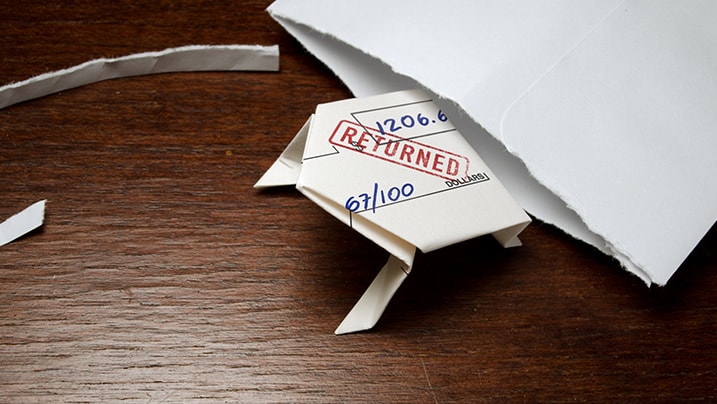
A cheque falls under the dishonoured category when a payee cannot successfully deposit the payer’s cheque. A payer is the one who issues a cheque to the payee. The payee deposits this cheque in the bank. If the bank refuses to pay the amount mentioned on the cheque, the cheque is dishonoured.
The payee must inform the payer of the dishonoured cheque and ask them to inquire about its reason. If the payer believes the cheque will be honoured a second time, they can resubmit it within three months after the date on it. However, if the cheque bounces again, the payer can face legal action.
The payee could file a case if the amount specified in the payer’s cheque was for the discharge of a debt. No legal action can be taken if the cheque was given as a gift or for lending money.
Cheques can be dishonoured for a no. of reasons. Some of them are as below
Lack of cash in the account is one of the most common reasons for dishonoured cheques. The bank cannot execute the transaction if you do not have the required funds in your account. The bank may impose a cheque bounce penalty on the payer and the payee. The payer has two options when this occurs: write a replacement cheque or add enough money to the account.
Cheques are among the few payment methods that still rely on signatures. Signatures are, in fact, a key component of cheques. If the payer’s signature does not match the recorded signature with the bank, the bank will reject the cheque.
Date is an essential feature in cheques. Any discrepancy or fault with it can result in dishonoured or disapproved cheques. The most common problem with dates on cheques is that they can be distorted or outdated. Ensure that you check it thoroughly before depositing or offering a cheque.
The bank will not accept any cheque in damaged, ripped, or poor condition. Banks also reject cheques if the details are unclear or there are too many stains on them. Hence, keep the cheque in readable condition before processing it forward.
Overwriting anything on cheques can lead to rejection. Banks reject them because it appears suspicious.
While IDFC FIRST Bank closely analyses the cheques it receives, the bank does not scrutinise mistakes. Writing errors are common, so you will not be charged for an honest mistake. However, penalties will apply if the same mistakes are repeated countless times. Also it is best to keep track of all your banking information with a mobile banking app
Disclaimer
The contents of this article/infographic/picture/video are meant solely for information purposes. The contents are generic in nature and for informational purposes only. It is not a substitute for specific advice in your own circumstances. The information is subject to updation, completion, revision, verification and amendment and the same may change materially. The information is not intended for distribution or use by any person in any jurisdiction where such distribution or use would be contrary to law or regulation or would subject IDFC FIRST Bank or its affiliates to any licensing or registration requirements. IDFC FIRST Bank shall not be responsible for any direct/indirect loss or liability incurred by the reader for taking any financial decisions based on the contents and information mentioned. Please consult your financial advisor before making any financial decision.
The features, benefits and offers mentioned in the article are applicable as on the day of publication of this blog and is subject to change without notice. The contents herein are also subject to other product specific terms and conditions and any third party terms and conditions, as applicable. Please refer our website www.idfcfirst.bank.in for latest updates.