









Login to Internet banking
A brand-new experience - smarter, faster, and secured





BRAVO (Auto Sweep)
Convert the idle funds in your current account into a fixed deposit with the BRAVO feature.
Know More

Zero Forex Markup Current Account
Maximise your savings and boost profitability with our Zero Forex Markup current accounts
Know More
BRAVO (Auto Sweep)
Convert the idle funds in your current account into a fixed deposit with the BRAVO feature.
Know More

You gain a dedicated partner committed to helping you reach your full potential and achieve new heights
Know More







Enjoy Zero Forex on all IDFC FIRST Bank Credit Cards
Save more on all international spends
Know More
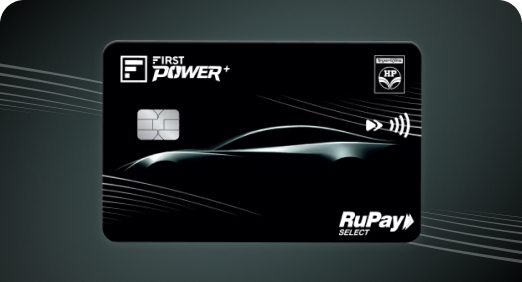
A Card that Powers your Savings & Lifestyle
IDFC FIRST Bank HPCL Credit Card









Most Searched
Earn up to 7% interest on your Savings Account
Open Account Now
Download our app
Get instant help for all your queries in one place
Unlock features, exclusively available
only on the IDFC FIRST Bank app
Trusted by 1.2+ million Indians.


4.8

4.8

Tools & Calculators
Privilege Program



Tools & Calculators

Unlock features, exclusively available
only on the IDFC FIRST Bank app
 NRIs need an NRE or NRO account to invest in Indian markets.
Investment returns are taxable under STCG or LTCG rules depending on the asset class.
NRIs face restrictions such as no intraday trading or investment in commodities and certain mutual funds.
Essential documents like PAN, passport, and PIO/OCI card are mandatory for investment compliance.
NRIs need an NRE or NRO account to invest in Indian markets.
Investment returns are taxable under STCG or LTCG rules depending on the asset class.
NRIs face restrictions such as no intraday trading or investment in commodities and certain mutual funds.
Essential documents like PAN, passport, and PIO/OCI card are mandatory for investment compliance.
India continues to be a preferred investment hub for Non-Resident Indians (NRIs) due to its robust markets and growing economy. From equities to real estate, multiple avenues allow NRIs to generate attractive returns. However, such investments are treated as foreign investments under FDI laws and governed by specific regulations. To make informed decisions as an NRI, you must understand the type of bank accounts required, taxation rules, investment restrictions, and mandatory documentation before entering the Indian market.
No matter where you live currently, you will have to conduct your transactions in Indian Rupees (INR) if you want to invest in the Indian market. As per the foreign investment laws in India, investments in foreign currency by non-resident Indians are not allowed. Thus, to convert your currency into the INR and invest in the Indian market, you will need to have any one of the following bank accounts,
If you don’t have any of these accounts, you can open an NRI Savings Account with IDFC FIRST Bank and start investing in India with ease.
As per the income tax laws, any income from investments in India is also subject to income tax. If you’re investing in equity-based markets, your returns would be taxable as per the Short-Term Capital Gains (STCG) or Long-Term Capital Gains (LTCG) taxation rules.
Asset / Income Type |
Short-Term Taxation |
Long-Term Taxation |
TDS Applicability |
Additional Notes |
Equity & Equity-Oriented Mutual Funds |
STCG (≤ 12 months) taxed at 20% + surcharge + cess |
LTCG (> 12 months) taxed at 12.5% (above exemption threshold of ₹1.25 lakh) |
Yes, at applicable rate |
Flat rates, no slab application. Surcharge is applicable subject to threshold as prescribed under Income Tax Act. |
Debt Funds and Hybrid funds (debt oriented) |
STCG (≤24 months) taxed at individual slab rates if held short-term |
LTCG (>24 months) 12.5% without indexation |
Yes |
Different from equity taxation |
Hybrid Funds (Equity oriented) |
STCG (≤ 12 months) taxed at 20% + surcharge + cess (If STT is applicable). Where STT is not applicable, chargeable to tax at slab rate. |
LTCG (> 12 months) taxed at 12.5% (above exemption threshold of ₹1.25 lakh) |
|
|
Real Estate |
STCG (≤24 months) taxed at applicable income tax slabs |
LTCG (> 24 months) taxed at 12.5% without indexation, or 20% with indexation (if sold before July 23, 2024) |
Yes |
Transition rules apply |
Rental / Interest Income (e.g., NRO accounts) |
Taxed as per slab |
N/A |
Yes (e.g., 30% TDS on NRO interest) |
Covers rental income and interest earnings |
As per the applicable laws related to FDI in India, NRIs are not allowed to invest in certain sectors in the Indian stock market. Additionally, NRIs are barred from investing in instruments such as currency derivatives and commodities.
Apart from these, NRIs cannot participate in intraday trading in the Indian stock markets, unlike resident Indians. They are only allowed to take the delivery of shares. Additionally, foreign investment law in India puts restrictions on NRIs from the United States of America (USA) and Canada to invest in mutual fund schemes in India.
Successful NRI investing is about blending opportunities with compliance, ensuring wealth creation while staying aligned with India’s financial and regulatory framework.
As an NRI, you will need certain documents to invest in the Indian market. These include:
Please note that this list is indicative and you may need a few other documents along with it. It is advisable to consult your investment broker or advisor for exact details.
NRI investments in India can be rewarding but require careful navigation of banking, taxation, and regulatory requirements. While opportunities exist in equity, debt, and real estate, restrictions and documentation rules must be followed diligently. Having the right NRI account ensures seamless fund transfers and compliance with FEMA guidelines. Opening an NRI bank account with IDFC FIRST Bank can simplify your journey by offering tailored NRI banking solutions, investment avenues, and expert guidance.
The features, benefits and offers mentioned in the article are applicable as on the day of publication of this blog and is subject to change without notice. The contents herein are also subject to other product specific terms and conditions and any third party terms and conditions, as applicable. Please refer our website www.idfcfirst.bank.in for latest updates.