









Login to Internet banking
A brand-new experience - smarter, faster, and secured



You gain a dedicated partner committed to helping you reach your full potential and achieve new heights
Know More

BRAVO (Auto Sweep)
Convert the idle funds in your current account into a fixed deposit with the BRAVO feature.
Know More
Zero Forex Markup Current Account
Maximise your savings and boost profitability with our Zero Forex Markup current accounts
Know More





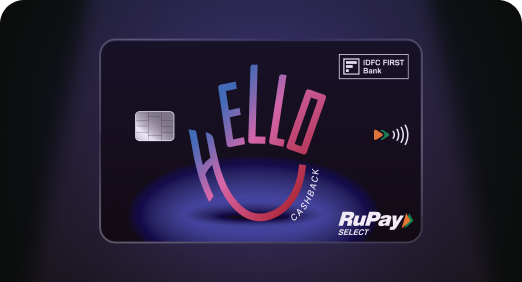
A Card that Powers your Savings & Lifestyle
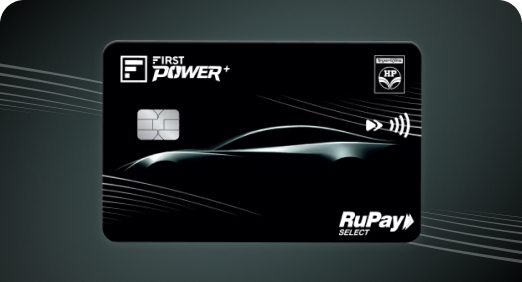
IDFC FIRST Bank HPCL Credit Card









Most Searched
Earn up to 7% interest on your Savings Account
Open Account Now
Download our app
Get instant help for all your queries in one place
Unlock features, exclusively available
only on the IDFC FIRST Bank app
Trusted by 1.2+ million Indians.


4.8

4.8

Tools & Calculators
Privilege Program



Tools & Calculators

Unlock features, exclusively available
only on the IDFC FIRST Bank app
Credit Card
 A low credit score can reduce your access to better credit options, but it is not a dead end.
Knowing how to improve your CIBIL score begins with spotting the reasons it has stayed low.
Stronger credit habits and smarter credit behaviour can gradually improve your profile.
IDFC FIRST Bank provides credit-building cards that can support responsible credit use.
A low credit score can reduce your access to better credit options, but it is not a dead end.
Knowing how to improve your CIBIL score begins with spotting the reasons it has stayed low.
Stronger credit habits and smarter credit behaviour can gradually improve your profile.
IDFC FIRST Bank provides credit-building cards that can support responsible credit use.
A credit score of 650 can feel frustratingly in-between. It is not low enough to suggest serious credit damage, yet not strong enough to make approvals easy. This can mean rejected credit card applications, limited loan choices, or higher borrowing costs exactly when you need better financial flexibility
That is why understanding how to improve your CIBIL score matters so much at this stage. With the right habits and a smarter approach to credit, your score can gradually move in the right direction.
A 650 score is generally considered fair, which means approval is still possible in some cases, though not always on the best terms.
To understand what this usually means in practice, keep these points in mind:
1. Approvals may be harder to get
Banks may treat a 650 score as a signal that your credit profile needs closer review.
2. Premium cards may be harder to access
Cards with higher limits, richer rewards, or premium travel features often require a stronger profile.
3. Loan terms may be less favourable
A fair score can sometimes result in higher interest rates or tighter approval conditions.
4. Your overall profile still matters
Income, current obligations, repayment history, and employment profile can all influence the final decision.
So, while a 650 score does not close the door completely, it does mean your next move should be more strategic than impulsive. Focus on fixing credit habits before making fresh applications.
A score usually stays around this level because one or more credit habits have been quietly holding it back over time.
Some of the most common reasons include:
1. Missed or delayed payments
Even one missed EMI or delayed card payment can affect your score and slow improvement.
2. High credit utilisation
Frequent use of a large share of your available limit can suggest repayment pressure.
3. Too many recent applications
Multiple loan or card applications in a short period can trigger repeated hard enquiries.
4. Errors in your credit report
Incorrect late-payment entries, duplicate accounts, or outdated details can unfairly drag your score down.
5. Old unresolved dues
Past issues, including unpaid balances or settlements, may continue to affect your credit profile.
If you want to improve your position, the first step is not to apply again. It's finding the exact reason your score has stopped moving.
Repayment discipline is the single most important part of credit improvement. If one habit deserves the most attention, it is this one.
A few repayment practices can make the biggest difference:
1. Pay every EMI on time
Loan repayment history directly affects your credit record, so even a single missed due date can hurt your progress.
2. Pay your credit card bill on time every month
Timely card payments show that you can handle revolving credit responsibly.
3. Pay in full whenever possible
Clearing the full outstanding amount is better than carrying unpaid dues when you’re trying to strengthen your credit profile.
4. Set reminders or auto-pay
Small delays often occur due to oversight, and a simple system can help prevent them.
5. Stay consistent for several months
Credit improvement comes from repeated good behaviour, not a one-time correction.
When people ask about how to improve their CIBIL score, the answer often begins here because repayment discipline shapes the trust that lenders place in your profile. IDFC FIRST Bank Credit Cards, for instance, offer a dynamic interest rate structure that rewards consistent on-time repayment, making responsible usage easier to sustain.
Credit utilisation refers to how much of your total credit limit you are using. It is one of the clearest signals of how comfortably you manage available credit.
One way to approach it more carefully is by following these simple rules:
Try to stay below 30% of your total limit
If your total credit limit is ₹1 lakh, keeping usage under ₹30,000 is usually healthier.
Avoid maxing out your card
A card that is constantly near its limit can make your profile look stretched.
Spread spending carefully if you have more than one card
This can help keep the reported usage ratio lower.
Pay before the billing cycle ends if needed
Bringing the outstanding amount down earlier may reduce the balance that gets reported.
Anyone trying to improve their CIBIL score should pay attention to utilisation, as even timely repayment can be overshadowed by consistently high utilisation.
Improvement is not only about doing the right things. It is also about not repeating habits that weaken your profile.
While rebuilding your score, avoid these mistakes:
1. Do not apply for multiple credit cards quickly
Too many hard enquiries in a short span can lower your score further.
2. Do not keep chasing approvals after rejection
Repeated applications without fixing the real issue can make the situation worse.
3. Do not ignore your credit report
If there is an error, it’s worth spotting early and disputing properly.
4. Do not spend heavily on a newly approved card
Getting a card is only the beginning; using it carefully matters more.
5. Do not miss even small dues
A small unpaid amount can still create unnecessary friction in your credit history.
If you’re serious about improving your CIBIL score, patience and restraint can be just as important as repayment and utilisation.
Yes, in many cases, it can. If your score is around 650, an entry-level or secured card may be a more realistic starting point than aiming straight for a premium unsecured card.
At this stage, a card like this can help in a few practical ways:
1. It gives you a controlled way to rebuild
You can use the card for planned expenses and build a better repayment track.
2. A secured card may be easier to access
Cards backed by a fixed deposit generally reduce the bank’s risk.
3. It helps create stronger recent behaviour
Responsible use over time can improve lenders' view of your profile.
4. It encourages discipline
Small spends and full repayments can turn the card into a credit-building tool.
5. It supports a smarter restart
Instead of applying everywhere, you can choose a more suitable option from a trusted bank.
If you are learning how to improve your credit score, a beginner-friendly or secured card can be a practical starting point. The FIRST WOW! Credit Card, for example, is backed by a fixed deposit of ₹20,000 and offers zero forex markup with no annual fee.
A 650 credit score is not a final verdict on your financial future. Once you understand how to improve your CIBIL score, the path becomes clearer: repay on time, keep utilisation low, avoid unnecessary applications, and review your credit report regularly.
Small credit habits can create meaningful improvement over time. Consider IDFC FIRST Bank credit cards to find an option that supports responsible use and helps you build a stronger credit profile.
Yes, it can improve over a few months if repayments stay consistent, card usage remains low, and no new credit mistakes are made. The pace depends on the cause of the low score and how quickly it is corrected.
Start by checking your credit report, correcting any errors, paying all EMIs and card dues on time, and lowering credit utilisation. Avoid making multiple fresh applications immediately after a rejection.
You can improve it by paying existing dues on time, keeping credit utilisation low, avoiding repeated applications, and reviewing your credit report regularly. A responsibly used entry-level or secured credit card may also help
Not at all. Merely checking your CIBIL score does not affect it. In fact, regularly reviewing your report helps you spot errors, track progress, and stay informed as you work to improve your CIBIL score.
Improving your score from 650 to a higher range usually takes a few months to a year, depending on your credit behaviour. Consistent on-time payments, low credit utilisation, and avoiding repeated applications can gradually strengthen your profile. The key is steady, disciplined habits rather than quick fixes.
The contents of this article/infographic/picture/video are meant solely for information purposes. The contents are generic in nature and for informational purposes only. It is not a substitute for specific advice in your own circumstances. The information is subject to updation, completion, revision, verification and amendment and the same may change materially. The information is not intended for distribution or use by any person in any jurisdiction where such distribution or use would be contrary to law or regulation or would subject IDFC FIRST Bank or its affiliates to any licensing or registration requirements. IDFC FIRST Bank shall not be responsible for any direct/indirect loss or liability incurred by the reader for taking any financial decisions based on the contents and information mentioned. Please consult your financial advisor before making any financial decision.
The features, benefits and offers mentioned in the article are applicable as on the day of publication of this blog and is subject to change without notice. The contents herein are also subject to other product specific terms and conditions and any third party terms and conditions, as applicable. Please refer our website www.idfcfirst.bank.in for latest updates.


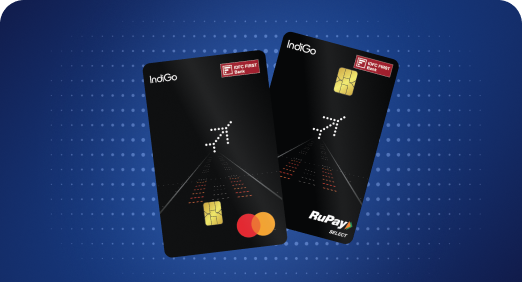
Earn IndiGo BluChips | Redeem on IndiGo flights | Power of Dual cards | 1.49% Forex Mark Up

Lounge access, 10X Reward, ₹4000 cashback, Zero Forex, Spa, Golf access

1% Forex, 10X rewards, Lounge, Spa, Golf and Movies

Buy-1-Get-1 Movie ticket offers, airport lounge access, 1.5% forex markup, railway lounge visits









Earn IndiGo BluChips | Redeem on IndiGo flights | Power of Dual cards | 1.49% Forex Mark Up
Know MoreLounge access, 10X Reward, ₹4000 cashback, Zero Forex, Spa, Golf access
Know MoreBuy-1-Get-1 Movie ticket offers, airport lounge access, 1.5% forex markup, railway lounge visits
Know MoreLounge access, 10X Reward, ₹4000 cashback, Zero Forex, Spa, Golf access
Know MoreFuel Card, 5% fuel savings, 2.5% Grocery & Utility Savings, 0 interest cash
Know MoreZero Annual Fee, Complimentary airport lounge access, Low forex mark-up at 1.99%, Buy-1-Get-1 Movie ticket offers
Know More