









Login to Internet banking
A brand-new experience - smarter, faster, and secured




You gain a dedicated partner committed to helping you reach your full potential and achieve new heights
Know More

BRAVO (Auto Sweep)
Convert the idle funds in your current account into a fixed deposit with the BRAVO feature.
Know More
Zero Forex Markup Current Account
Maximise your savings and boost profitability with our Zero Forex Markup current accounts
Know More






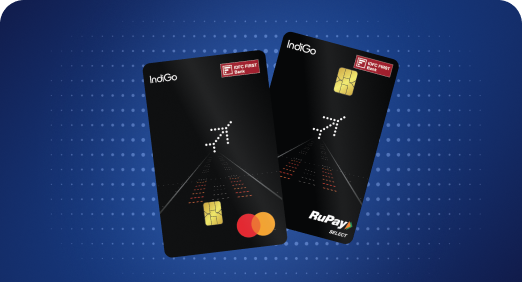


A Card that Powers your Savings & Lifestyle
IDFC FIRST Bank HPCL Credit Card









Most Searched
Earn up to 7% interest on your Savings Account
Open Account Now
Download our app
Get instant help for all your queries in one place
Unlock features, exclusively available
only on the IDFC FIRST Bank app
Trusted by 1.2+ million Indians.


4.8

4.8

Tools & Calculators
Privilege Program



Tools & Calculators

Unlock features, exclusively available
only on the IDFC FIRST Bank app
Finance
 The .bank.in migration is an RBI-mandated security upgrade, ensuring all licensed banks in India adopt a safer, standardised domain.
The bank domain transition enhances protection against phishing, spoofing, and cyber fraud, making online banking more trustworthy.
With advanced encryption, a unified digital identity, and regulated domain access, customers gain a more secure and seamless digital banking experience.
The migration is handled entirely by banks, so customers continue banking as usual—no changes to login, access, or daily transactions.
The .bank.in migration is an RBI-mandated security upgrade, ensuring all licensed banks in India adopt a safer, standardised domain.
The bank domain transition enhances protection against phishing, spoofing, and cyber fraud, making online banking more trustworthy.
With advanced encryption, a unified digital identity, and regulated domain access, customers gain a more secure and seamless digital banking experience.
The migration is handled entirely by banks, so customers continue banking as usual—no changes to login, access, or daily transactions.
Nowadays safety has become a necessity, where most of our financial activity happens online. This is why the Reserve Bank of India includes regular updates to enhance digital banking security. One such update is the .bank.in migration. It is a mandatory step that all licensed banks in India were ought to take by 31st October 2025. Learn what .bank.in migration is and why banks are moved their domain in this informative blog.
.bank.in domain migration is a carefully regulated framework upgrade for licensed banks in India. The RBI, in coordination with the Institute for Development and Research in Banking Technology (IDRBT), had mandated banks to migrate to the .bank.in domain by 31st October 2025. This step, under the authority of the National Internet Exchange of India (NIXI) and the Ministry of Electronics and Information Technology’s (MeitY) support is crucial for digital security.
Unlike generic domains, the .bank.in. transition is exclusively reserved for licensed and regulated banks in India. RBI strictly controls this shift and prevents fraudsters from posing as legitimate banks. This move is to create a standardised secure online banking atmosphere.
Moving your bank’s online presence to .bank.in impacts how safely you progress through your day-to-day digital banking activities. From paying utility bills to transferring funds, here’s a closer look at how the bank domain transition benefits you as a banking customer:
One of the most direct and noticeable benefits of .bank.in domain migration is exclusively to licensed banks. Not everyone can register with the bank.in the domain. The RBI tightly regulates who can register under the domain through IDRBT. This means you no longer have to second-guess if the site is authentic. Just one glance at .bank.in towards the end of the link assures you that you are banking on the legitimate portal.
Cybercriminals often exploit common banking communication channels, including the domains for phishing attacks. They create fake websites or send misleading emails to trick you into revealing sensitive information. With the .bank.in migration, a highly restricted domain environment is created. This makes it harder for fraudsters to imitate legitimate banks. As a result, the risk of fake portals, fraudulent emails, and SMS scams targeting you is lowered.
Besides the domain change, RBI also authorises banks to meet the cybersecurity standards with the bank domain transition. This includes emphasis on advanced SSL/TLS encryption with extended validation. This adds to the protection of your sensitive personal and financial information when you log in, transfer money, make deposits, or check bank statements online. It is less susceptible to interception or misuse.
All banks have a similar domain ending with .bank.in. Due to this unified digital identity, it is easier for you to recognise official communications, websites, and mobile apps. Just like how you recognise government portals ending with .gov.in. The .bank.in domain is consistent and reduces confusion when you access or register for banking services online.
With safety taken care of through the verified domain migration, the overall usability of banking portals and app improves. You can carry out transactions, access your bank statements, automate bill payments, manage your bank accounts, and more without constantly worrying about phishing, spoofing, or other cyberattacks.
The .bank.in migration sets the foundation of a secure banking infrastructure for years to come. The consolidation of all licensed banks under a single, secured domain ensures a seamless security upgrade. This is also a good stepping stone for other crucial protective measures in the future.
Due to the upgraded safety with .bank.in domain migration, you get a clear visual cue that you’re on the official banking platforms. Such reassurance extends to communication channels like emails and EMS, as well as mobile banking apps. As a result, you can confidently access digital banking services and freely leverage the many benefits of financial solutions at your fingertips.
Under the RBI’s directive, the .bank.in migration is being implemented within the regulatory framework. The IDRBT is overseeing this technical transition to ensure the domain registration meets the prescribed cybersecurity standards.
Banks are registering for the new domain through IDRBT. Once verified, they are gradually updating their public-facing websites, mobile applications, and communication channels to reflect the .bank.in domain, while maintaining uninterrupted access to banking services. Such update includes strengthening of internal IT systems and the cybersecurity framework.
All RBI-licensed banks were expected to complete the .bank.in migration by 31st October 2025.
Your bank may notify you regarding the same. Note that nothing changes for you in terms of accessing the banking services. Everything is carried out at the bank-end with uninterrupted access to the existing portals and apps.
Now that the .bank.in migration is explained clearly, you can rest assured knowing that this move is in your best interest. It is meant to create a safer and more transparent online banking experience. As a customer, you are undisbursed throughout the transition. Your digital banking activity commences as usual, and you need not make any adjustments. Just stay alert and get ready for enhanced protection against cyberattacks.
IDFC FIRST Bank has already completed the bank domain transition to make the digital banking experience seamless and safe for you. Read more about the migration here.
The last date to migrate to .bank.in was 31st October 2025.
Your existing login ID, password, and access to the banking portal and mobile app remain unchanged. The migration has no effect on how you access digital banking services. You need not make any changes.
All banks registered under the .bank.in are legitimate, as governed by the RBI. However, it also helps to check the domain spelling carefully and look for the secure padlock or https:// before the URL to verify legitimacy.
While the mobile banking app is linked to the new .bank.in domain, it doesn’t affect the functionality. You can continue to use the mobile banking app or UPI services as usual.
Report such an email promptly to your bank’s customer support. Also, avoid clicking on any links or sharing your credentials in response.
You will automatically get redirected to the new .bank.in domain. It is still better to update your bookmarks after the migration.
The contents of this article/infographic/picture/video are meant solely for information purposes. The contents are generic in nature and for informational purposes only. It is not a substitute for specific advice in your own circumstances. The information is subject to updation, completion, revision, verification and amendment and the same may change materially. The information is not intended for distribution or use by any person in any jurisdiction where such distribution or use would be contrary to law or regulation or would subject IDFC FIRST Bank or its affiliates to any licensing or registration requirements. IDFC FIRST Bank shall not be responsible for any direct/indirect loss or liability incurred by the reader for taking any financial decisions based on the contents and information mentioned. Please consult your financial advisor before making any financial decision.
The features, benefits and offers mentioned in the article are applicable as on the day of publication of this blog and is subject to change without notice. The contents herein are also subject to other product specific terms and conditions and any third party terms and conditions, as applicable. Please refer our website www.idfcfirst.bank.in for latest updates.