









Login to Internet banking
A brand-new experience - smarter, faster, and secured


BRAVO (Auto Sweep)
Convert the idle funds in your current account into a fixed deposit with the BRAVO feature.
Know More

Zero Forex Markup Current Account
Maximise your savings and boost profitability with our Zero Forex Markup current accounts
Know More
BRAVO (Auto Sweep)
Convert the idle funds in your current account into a fixed deposit with the BRAVO feature.
Know More
You gain a dedicated partner committed to helping you reach your full potential and achieve new heights
Know More





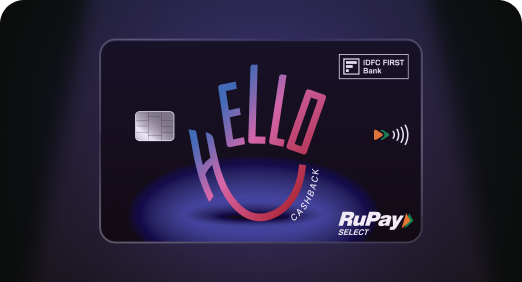

Enjoy Zero Forex on all IDFC FIRST Bank Credit Cards
Save more on all international spends
Know More
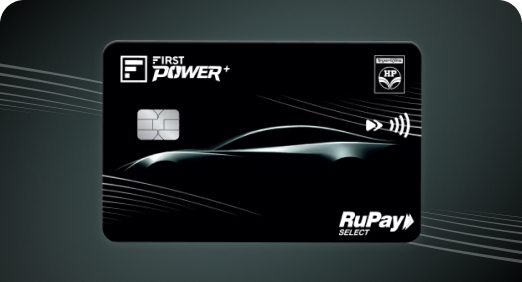
A Card that Powers your Savings & Lifestyle
IDFC FIRST Bank HPCL Credit Card









Most Searched
Earn up to 7% interest on your Savings Account
Open Account Now
Download our app
Get instant help for all your queries in one place
Unlock features, exclusively available
only on the IDFC FIRST Bank app
Trusted by 1.2+ million Indians.


4.8

4.8

Tools & Calculators
Privilege Program



Tools & Calculators
Personal Loan
 Personal loans come with two types of interest structures: fixed and floating interest rates.
Fixed interest rates stay constant throughout the tenure, while floating rates change based on market movements.
These two options differ in certainty, risk, EMI stability, and overall affordability.
For most borrowers, a fixed-rate personal loan offers better predictability and more controlled interest costs over time.
Personal loans come with two types of interest structures: fixed and floating interest rates.
Fixed interest rates stay constant throughout the tenure, while floating rates change based on market movements.
These two options differ in certainty, risk, EMI stability, and overall affordability.
For most borrowers, a fixed-rate personal loan offers better predictability and more controlled interest costs over time.
When you shop around for personal loans, comparing interest rates is a smart starting point. But beyond the number itself, there’s another factor that can change your overall cost, the type of interest rate you choose.
Personal loans usually come with fixed and floating interest rates to choose from, with the difference between the two structures meaningfully affecting what you end up paying. This is why understanding ‘what fixed and floating interest rates are’ is so important.
Here’s everything you should know about how fixed interest rates differ from floating rates, including the pros and cons of each, to help you decide which option works better for your financial situation.
A fixed interest rate is one that stays unchanged for the entire loan tenure, no fluctuations, no surprises. This means if you take a five-year personal loan at a 12% interest rate, you’ll pay 12% every year, regardless of market movements or policy rate changes.
A floating interest rate keeps moving during your loan tenure because it’s linked to an external benchmark, usually the lender’s repo-linked rate. So when the benchmark rises, your personal loan interest rate goes up; when it falls, your rate comes down. This means your EMIs or overall interest cost can increase or decrease over time based on market conditions.
In simple terms, the fixed and floating interest rates differ on one key point, fixed rates stay unchanged throughout the loan, while floating rates adjust based on market movements.
Understanding the difference between fixed and floating interest rates helps you see how each one impacts your EMI stability and overall borrowing cost. While fixed rates offer predictability, floating rates move with the market and can change what you ultimately pay.
Here’s a quick comparison to help you choose the structure that fits your financial goals.
Parameters |
Fixed interest rates |
Floating interest rates |
Interest rate |
Remains constant throughout the loan tenure |
Changes with a change in market rates |
EMIs |
Remain constant |
Can increase or decrease with a change in interest rates |
Risk |
Nil since the EMI stays the same |
Moderate to high since the EMI can increase |
Typical rate |
Slightly higher |
Usually lower in the initial stages |
Suitability |
Suitable for short-term loans that run for 4-5 years |
Suitable for long-term loans since rate changes can lead to considerable savings in interest outgoes |
While floating interest rates can lower your EMIs when market rates fall, there are several reasons why they may not be the best fit for personal loans.
Here’s what can make them less practical in certain cases:
Most people assume that a drop in the market rate means an immediate revision in their personal loan interest rate. However, banks usually take time to pass on reductions, and since personal loans are short-term, the benefit often arrives late in the tenure. This impacts the overall interest savings, leaving very little real benefit from choosing a floating rate.
Floating rates only help if market rates actually fall, something that depends on monetary policy decisions and broader economic conditions. Because these movements are unpredictable, planning your repayments becomes harder.
If market rates rise instead of falling, your EMIs increase as well. This can quickly strain your monthly budget and make repayment tougher, especially for borrowers who prefer stability.
While you may benefit from floating rates during a falling-rate cycle, their unpredictability makes fixed and floating interest rates very different in terms of repayment stability. This is where fixed rates step in, offering the certainty many personal loan borrowers look for.
When comparing fixed and floating interest rates, fixed rates stand out for one simple reason, they don’t change. Your EMI stays exactly the same from the first month to the last, giving you total clarity on what you’ll pay and making budgeting far easier.
Because fixed interest rates remain constant, you’re protected from any unexpected spike in market rates. There’s no guesswork, no adjustments, and no EMI fluctuations, just a predictable repayment schedule you can rely on.
Fixed interest rates also work on the reducing balance method, meaning that as your principal amount decreases, the interest charged reduces as well. This steadily lowers your interest outgo in the latter part of your loan.
Here’s a quick example to put this into perspective:
Period |
Opening loan amount (₹) |
EMI paid (₹) |
Interest paid (@ 12% per annum) (₹) |
Principal repaid (EMI - interest) (₹) |
Closing loan amount (₹) |
Month 1 |
1,00,000 |
8884.88 |
1000 |
7884.88 |
92,115.12 |
Month 2 |
92,115.12 |
8884.88 |
921.15 |
7963.73 |
84,151.39 |
Month 3 |
84,151.39 |
8884.88 |
841.51 |
8043.36 |
76,108.03 |
Month 4 |
76,108.03 |
8884.88 |
761.08 |
8123.80 |
67,984.23 |
Month 5 |
67,984.23 |
8884.88 |
679.84 |
8205.04 |
59,779.19 |
As the table shows, your interest amount decreases every month as the principal is paid down, and a larger share of each EMI is allocated toward repayment. This steady, predictable pattern is what makes fixed interest rates easier to manage when choosing between fixed and floating interest rates. It provides borrowers with clear visibility into their costs and a straightforward path to repayment.
Now that you understand how fixed and floating interest rates work, here’s a personal loan option that brings speed, flexibility, and simplicity together: the FIRSTmoney personal loan from IDFC FIRST Bank.
Designed for borrowers who want quick access to credit with minimal effort, this loan offers a fully digital, paperless experience with transparent terms and high convenience.
Here’s what makes the FIRSTmoney personal loan stand out:
Eligibility for the FIRSTmoney personal loan is simple, you can apply whether you’re salaried or self-employed, as long as you’re between 21 and 60 years of age and have a CIBIL score of 710 or above.
Once you meet these criteria, getting started is easy with a quick digital process:
With its fast processing, flexible features, and straightforward eligibility, the FIRSTmoney personal loan makes borrowing a simple and stress-free experience. It’s a convenient option for anyone looking for quick funds with transparent terms and complete control over repayment.
Both fixed and floating interest rates come with their own advantages, but the stability of a fixed rate often works better for personal loan borrowers who want predictable EMIs and full control over their repayments. With the FIRSTmoney personal loan, you can enjoy a smarter fixed-rate setup that makes planning easier, reduces your overall interest expenses, and provides complete flexibility.
Ready to apply? Explore the FIRSTmoney personal loan and get quick access to funds with simple, transparent terms.
Yes, many lenders allow you to switch between fixed and floating interest rates during the loan tenure. However, this conversion usually comes with a fee, so it’s best to check the exact charges and terms before opting for the switch.
There is no specific tenure for a change in floating interest rates. The rates can change at any time if the repo rate or the lender’s benchmark rate changes.
Yes, most lenders allow you to prepay a floating-rate personal loan if rising rates make your EMIs expensive. Just check your lender’s policy beforehand — some do levy a prepayment or foreclosure charge, while others may allow it at a lower or zero fee.
The contents of this article/infographic/picture/video are meant solely for information purposes. The contents are generic in nature and for informational purposes only. It is not a substitute for specific advice in your own circumstances. The information is subject to updation, completion, revision, verification and amendment and the same may change materially. The information is not intended for distribution or use by any person in any jurisdiction where such distribution or use would be contrary to law or regulation or would subject IDFC FIRST Bank or its affiliates to any licensing or registration requirements. IDFC FIRST Bank shall not be responsible for any direct/indirect loss or liability incurred by the reader for taking any financial decisions based on the contents and information mentioned. Please consult your financial advisor before making any financial decision.
The features, benefits and offers mentioned in the article are applicable as on the day of publication of this blog and is subject to change without notice. The contents herein are also subject to other product specific terms and conditions and any third party terms and conditions, as applicable. Please refer our website www.idfcfirst.bank.in for latest updates.