









Login to Internet banking
A brand-new experience - smarter, faster, and secured




You gain a dedicated partner committed to helping you reach your full potential and achieve new heights
Know More
BRAVO (Auto Sweep)
Convert the idle funds in your current account into a fixed deposit with the BRAVO feature.
Know More
Zero Forex Markup Current Account
Maximise your savings and boost profitability with our Zero Forex Markup current accounts
Know More





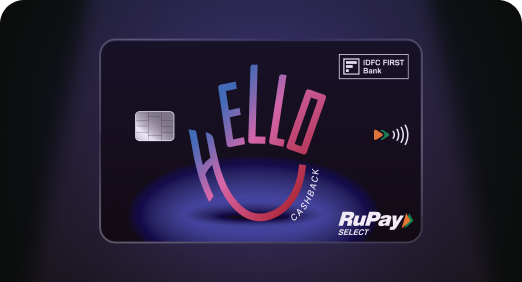
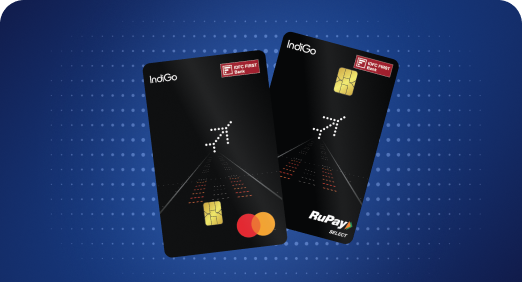

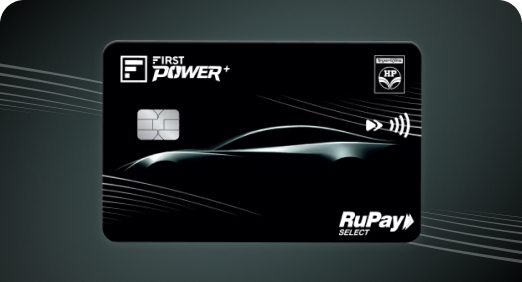
A Card that Powers your Savings & Lifestyle
IDFC FIRST Bank HPCL Credit Card









Most Searched
Earn up to 7% interest on your Savings Account
Open Account Now
Download our app
Get instant help for all your queries in one place
Unlock features, exclusively available
only on the IDFC FIRST Bank app
Trusted by 1.2+ million Indians.


4.8

4.8

Tools & Calculators
Privilege Program



Tools & Calculators

Unlock features, exclusively available
only on the IDFC FIRST Bank app
Personal Loan
 A high income alone does not guarantee personal loan application approval in India, as banks assess credit score, repayment history, and debt-to-income ratio before approval.
Personal loan applications are commonly rejected due to poor credit behaviour, high existing EMIs, multiple recent credit inquiries, or unstable employment, even for high-salary earners.
When you apply for a personal loan online, accurate documentation, strong banking patterns, and a healthy credit profile play a bigger role than salary alone.
Choosing a digital-first lender with transparent eligibility criteria can improve online personal loan application success and speed up approvals in India.
A high income alone does not guarantee personal loan application approval in India, as banks assess credit score, repayment history, and debt-to-income ratio before approval.
Personal loan applications are commonly rejected due to poor credit behaviour, high existing EMIs, multiple recent credit inquiries, or unstable employment, even for high-salary earners.
When you apply for a personal loan online, accurate documentation, strong banking patterns, and a healthy credit profile play a bigger role than salary alone.
Choosing a digital-first lender with transparent eligibility criteria can improve online personal loan application success and speed up approvals in India.
Earning a high salary can improve your chances of approval for a personal loan application. However, income is just one of the criteria a lender evaluates. Credit scores, repayment history, income-to-expense ratio, and several other parameters are thoroughly checked before anyone gets a personal loan application approval.
In this article, we shall discuss in detail why applicants with a high salary may face rejection when they apply for a personal loan and what are the typical checks banks run before loan approvals.
High salaries improve your ability to repay debt, but it doesn’t qualify you for a guaranteed approval when a personal loan is applied for. In the list below, we will clear common myths regarding this:
Fact: Lenders do not approve loans based on salary alone. Credit history, loan repayment track record, job stability, existing debt-to-income ratio, and internal lender policies. High-income applicants can be rejected if any of these factors are not up to the mark. However, a high income may make you eligible for a higher loan amount also depending on other eligibility factors like credit score and repayment history.
Fact: The loan amount depends on credit score, income stability, and repayment capacity. Lenders calculate affordability using a set formula, not just income.
Fact: A high income does not offset a negative credit report. Missed credit payments, settlements, or high utilisation of credit may not sustain the advantage of a high salary.
Fact: Personal loan approval depends on your credit profile, income stability, and past financial behaviour. Salary alone does not determine the speed or outcome of a traditional loan or an online personal loan application.
Lenders assess the borrower’s overall credit profile, not just salary. Let us see some additional factors that influence approval for a personal loan application process.
· Credit score and repayment history: Late payments, overdue credit cards, loan defaults, or settlements outweigh a high salary. Your past financial behaviour is critical for personal loan application approvals.
· Debt-to-income ratio (DTI): DTI compares monthly debt outgoings to monthly income. Borrowers with a high DTI are considered risky for lenders.
· Frequent job changes or insecure employment: Stable employment is viewed as more favourable by lenders than individuals who change jobs frequently. Employees working sustainably are preferred by lenders.
· Short credit history: Banks look at the borrowers’ credit history in terms of time and repayment history. People with a short credit history may face rejection with their personal loan application.
· Excessive credit inquiries: Every time you apply for a loan, credit bureaus count it as a hard inquiry, which causes a temporary dip in your credit score. These hard inquiries make banks see you as a high-risk borrower, sometimes even leading to loan rejection.
· High unsecured loan exposure: Borrowers who have several unsecured loans, lenders may view another personal loan application as risky, leading to rejection.
· Documentation errors: Incorrect or incomplete KYC documents, mismatched personal details, can trigger an automatic rejection.
· Internal lender policies: Banks have specific criteria, such as age, location, industry, etc. Not meeting their internal criteria could lead to rejection of a personal loan application.
Listed below are some prudent tips to improve your chances of personal loan approvals.
· Maintain a healthy credit profile: Applicants who pay credit card bills on time, avoid late payments and keep credit utilisation moderate are seen as suitable borrowers by banks.
· Reduce existing EMIs: Lowering overall debt improves the DTI and shows better repayment ability. Closing small loans or reducing credit card dues strengthens your credit profile.
· Avoid multiple loan applications: Ensuring there are no multiple credit inquiries appearing on your credit report improves approval odds. A credit score above 750 is considered a strong score by most lenders. For a FIRSTmoney personal loan, you need a CIBIL score of 710 and above.
· Provide accurate documentation: Correct, complete and consistent information across your KYC records, income proof and all mandatory documents make a strong case for personal loan application approvals.
· Strengthen banking patterns: Maintain average monthly balances, avoid frequent overdrafts, and ensure regular salary credits. Lenders analyse bank statements to understand financial behaviour.
· Choose lenders with digital evaluations: Digital platforms often offer quicker eligibility checks and simplified verification. Digital checks can lead to quick and paperless online personal loan application approvals. For example, you can get quick funds within 10 minutes with a FIRSTmoney smart personal loan by IDFC FIRST Bank.
If your personal loan application was rejected despite a high salary, then reviewing financial behaviour, reducing debt exposure, and updating documentation can help you prepare for a stronger application. Once you have fixed all areas that may be leading to your personal loan application, you can explore digital lending options that offer clear eligibility criteria and faster processing.
FIRSTmoney from IDFC FIRST Bank is a smart personal loan available through the bank’s mobile app and official website. Eligible customers can get online personal loan application and disbursal, all within 10 minutes, with minimal steps.
IDFC FIRST Bank offers personal loans with interest rates starting at 9.99% per annum, a fully digital application process, loan amounts up to ₹15 lakh, zero foreclosure charges, multiple on-demand loans and flexible repayment tenures ranging from 9 to 60 months. If you want a smooth, fast, and convenient borrowing experience, applying through IDFC FIRST Bank’s FIRSTmoney smart personal loan can help you move forward confidently.
There could be several possible reasons for personal loan application rejection, such as high debt obligations, a credit score below 750, a short credit history, unstable employment, multiple recent inquiries, or documentation mismatches.
Lenders evaluate many factors beyond income, such as repayment history, credit score, job stability, and internal risk norms. Failure to meet any of these criteria can lead to personal loan rejection.
A common myth is that a high salary automatically ensures approval. Lenders do not rely on income alone. They evaluate credit history, repayment behaviour, debt levels, job stability, and documentation accuracy before approving a loan. Salary is only one part of the assessment.
Many borrowers believe that personal loans are approved solely based on income. In reality, credit score, debt-to-income ratio, spending patterns and financial consistency also play a critical role in personal loan application approvals or rejections.
For a FIRSTmoney personal loan by IDFC FIRST Bank, you need a minimum salary of ₹10,000 or above per month. Read more: How Much Personal Loan Can You Get on Your Salary? An Eligibility Guide for 2025
The contents of this article/infographic/picture/video are meant solely for information purposes. The contents are generic in nature and for informational purposes only. It is not a substitute for specific advice in your own circumstances. The information is subject to updation, completion, revision, verification and amendment and the same may change materially. The information is not intended for distribution or use by any person in any jurisdiction where such distribution or use would be contrary to law or regulation or would subject IDFC FIRST Bank or its affiliates to any licensing or registration requirements. IDFC FIRST Bank shall not be responsible for any direct/indirect loss or liability incurred by the reader for taking any financial decisions based on the contents and information mentioned. Please consult your financial advisor before making any financial decision.
The features, benefits and offers mentioned in the article are applicable as on the day of publication of this blog and is subject to change without notice. The contents herein are also subject to other product specific terms and conditions and any third party terms and conditions, as applicable. Please refer our website www.idfcfirst.bank.in for latest updates.