








Login to Internet banking
A brand-new experience - smarter, faster, and secured



You gain a dedicated partner committed to helping you reach your full potential and achieve new heights
Know More

BRAVO (Auto Sweep)
Convert the idle funds in your current account into a fixed deposit with the BRAVO feature.
Know More
Zero Forex Markup Current Account
Maximise your savings and boost profitability with our Zero Forex Markup current accounts
Know More






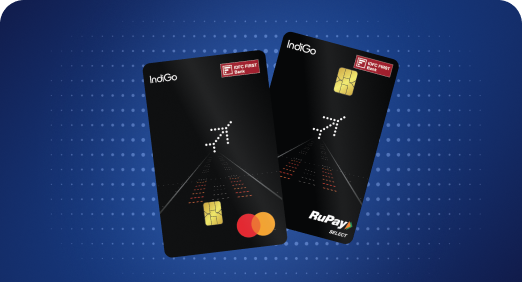

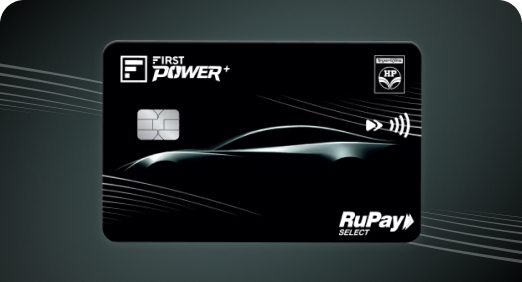
A Card that Powers your Savings & Lifestyle
IDFC FIRST Bank HPCL Credit Card









Most Searched
Earn up to 7% interest on your Savings Account
Open Account Now
Download our app
Get instant help for all your queries in one place
Unlock features, exclusively available
only on the IDFC FIRST Bank app
Trusted by 1.2+ million Indians.


4.8

4.8

Tools & Calculators
Privilege Program



Tools & Calculators

Unlock features, exclusively available
only on the IDFC FIRST Bank app
Personal Loan
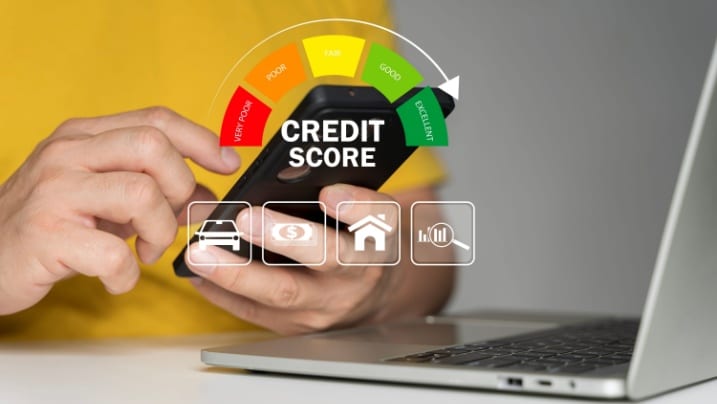
 A CIBIL score of 715 falls in the good range and usually meets the minimum CIBIL score for personal loan approvals in India.
You can improve your CIBIL score to 750+ to qualify for better interest rates, higher loan limits, and more flexible repayment options.
Maintaining timely repayments, low credit utilisation, and a balanced credit mix helps strengthen your credit profile.
With a 715 CIBIL score, you can apply for a personal loan from IDFC FIRST Bank and get up to ₹15 lakh at interest rates starting from 9.99% p.a.
A CIBIL score of 715 falls in the good range and usually meets the minimum CIBIL score for personal loan approvals in India.
You can improve your CIBIL score to 750+ to qualify for better interest rates, higher loan limits, and more flexible repayment options.
Maintaining timely repayments, low credit utilisation, and a balanced credit mix helps strengthen your credit profile.
With a 715 CIBIL score, you can apply for a personal loan from IDFC FIRST Bank and get up to ₹15 lakh at interest rates starting from 9.99% p.a.
A credit score of 715 is nothing to underestimate. It shows that you have a solid repayment history. A score above 700 falls within the good CIBIL score range. It opens you up to reasonable interest rates and loan amounts. Lenders view you as a creditworthy borrower. If you are planning to apply for a personal loan and wondering if 715 is a good credit score to qualify, read on to gain the needed clarity.
You can get a personal loan with a CIBIL score of 715. It is sufficient to meet the minimum CIBIL score requirement for personal loans. That said, you still have room to improve to attract more favourable loan offers. It is ideal to aim for an excellent CIBIL score, which is above 750.
With a credit score of 715:
· Enhanced chances of loan approval: Your chances of approval for a personal loan are favourable, as it is considered a good credit score.
· Eligibility for better loan offers: You qualify for competitive interest rates and larger loan amounts, given that your income is steady and decent, with limited debt obligations.
· Low-risk borrower: Lenders view you as a low-to-moderate risk borrower.
· Get pre-approved loan offers: You may also qualify for pre-approved loans, as 715 is considered a good CIBIL score to gain lenders’ trust.
· Faster loan processing: If your sorted credit history is complemented by a stable income and debt standing, the loan is processed smoothly with quick access to funds.
While we know that a CIBIL score of 715 is already solid, you can aim for a higher range of 750-900. Boosting your score to this excellent CIBIL score range strengthens your credit profile. Lenders often reserve their most favourable personal loan deals, like lower interest rates, higher loan amounts, zero charges, and flexible repayment options to borrowers with such a high credit score.
You can follow these practical steps consistently to position yourself in the 750-900 CIBIL score range:
· Check your credit report regularly
Simply knowing your CIBIL score is not enough. You also want to understand how your credit behaviour is being monitored and recognise any gaps. This is possible when you review your credit report regularly. While tracking your report, you can spot errors, outdated entries, and discrepancies that may drag your score down. You can dispute such issues promptly and ensure your credit report accurately reflects your repayment behaviour.
· Pay all your dues on time
The major aspect that creates the difference between a good CIBIL score and a bad one is the repayment history. Timely repayment of EMIs, credit card bills, and other dues is critical in boosting your credit score. Even minor delays can impact your CIBIL rating negatively. Make sure to avoid payment delays at all costs and ensure consistency. You can automate your payments or set reminders to clear your dues on time.
· Mind your credit utilisation
Keeping your credit utilisation below 30% of the available credit helps you practice financial discipline effectively. When you avoid over-reliance on credit, you reduce the risk of financial stress that puts you behind on repayments. Lenders recognise this as responsible borrowing, which boosts your credit score. This step is about building your credit journey on the right foundation to support a positive repayment behaviour.
· Space out your applications
Applying for multiple credit cards and loans in a short span leads to multiple hard enquiries on your credit report. This has a direct impact on your CIBIL score. While the impact may not be as significant, it is unnecessary. You can avoid this easily by planning your applications carefully. When you apply for credit thoughtfully, you show that you are a responsible borrower, which leads to a good credit score.
· Consider a diverse credit profile
It’s good to have a balanced mix of credit options, such as secured loans, unsecured loans, credit cards, etc. Diversifying your credit profile this way demonstrates your ability to handle different types of financial obligations responsibly. It shows that you can manage unsecured loans with stringent criteria as well as secured loans that risk your collateral, with the same efficiency.
· Keep your older accounts active
Having long-standing credit accounts is good for your credit history. Closing them too soon can shorten your credit age. As a result, your CIBIL score takes a hit. So, if you have older credit cards or loans active with minimal usage, you can keep them active. Let them contribute to your credit history, while they demand minimal maintenance.
· Plan your repayments proactively
The key to being a responsible borrower is to plan your repayments beforehand. You don’t want to borrow enthusiastically only to stress over the affordability later. Lenders like IDFC FIRST Bank support you in this step with free tools like a personal loan EMI calculator. You can input the expected loan amount, interest rate, and tenure, and calculate the monthly EMI.
· Leverage small loans
A great way to improve your CIBIL score, even if you have limited credit needs, is to borrow small. These manageable loans can enhance your credit history without much effort. So, whenever the opportunity arises, borrow small and repay the amount on time. Doing so will give you access to higher loan amounts and competitive interest rates in the future.
You can easily qualify for a personal loan with a CIBIL score of 715. It depicts you as a creditworthy borrower and makes for a strong starting point. But if you need more favourable terms on your loan with lower interest rates, higher loan limits, lower charges, and better negotiation power, aiming for a credit score of 750-900 is ideal.
While you put in efforts to boost your credit score, you can apply for personal loans for your immediate financial needs with a 715 score. Lenders, like IDFC FIRST Bank, offer personal loans up to ₹15 lakh for 710+ credit scores with flexible repayment options, quick approvals, and competitive interest rates starting at just 9.99% p.a.
While 715 is a good CIBIL score and getting a personal loan on this rating is very much possible, it is not guaranteed. Your approval depends on various factors like your age, income, employment, debt-to-income ratio, etc., too.
A personal loan on a CIBIL score of 715 will come with a decent loan amount. The exact limit depends on your profession, income, and existing debt. Most lenders, like IDFC FIRST Bank, offer up to ₹15 lakhs personal loans.
Moving from a good credit score to an excellent CIBIL score range makes a world of difference in your borrowing experience. It boosts your chances of approval and helps you secure preferential interest rates, higher loan limits, better repayment flexibility, and reduced charges.
Yes, you qualify for a personal with a 715 credit score even as a self-employed individual with a stable business income and limited existing debt obligations.
The contents of this article/infographic/picture/video are meant solely for information purposes. The contents are generic in nature and for informational purposes only. It is not a substitute for specific advice in your own circumstances. The information is subject to updation, completion, revision, verification and amendment and the same may change materially. The information is not intended for distribution or use by any person in any jurisdiction where such distribution or use would be contrary to law or regulation or would subject IDFC FIRST Bank or its affiliates to any licensing or registration requirements. IDFC FIRST Bank shall not be responsible for any direct/indirect loss or liability incurred by the reader for taking any financial decisions based on the contents and information mentioned. Please consult your financial advisor before making any financial decision.
The features, benefits and offers mentioned in the article are applicable as on the day of publication of this blog and is subject to change without notice. The contents herein are also subject to other product specific terms and conditions and any third party terms and conditions, as applicable. Please refer our website www.idfcfirst.bank.in for latest updates.