













Login to Internet banking
A brand-new experience - smarter, faster, and secured


Introducing the First-in-industry IDFC FIRST Bank's Super Account
Request a Callback
You gain a dedicated partner committed to helping you reach your full potential and achieve new heights
Know More
BRAVO (Auto Sweep)
Convert the idle funds in your current account into a fixed deposit with the BRAVO feature.
Know More
Zero Forex Markup Current Account
Maximise your savings and boost profitability with our Zero Forex Markup current accounts
Know More
Make more than one online payment in just a few clicks with IDFC FIRST Bank Bulk Payments
Know More





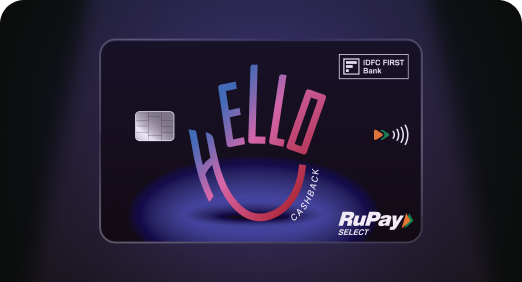
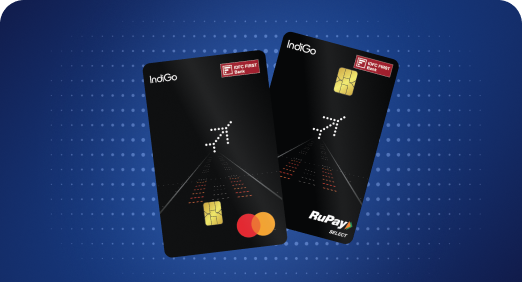

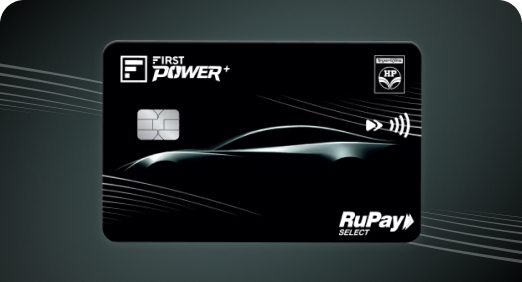
A Card that Powers your Savings & Lifestyle
IDFC FIRST Bank HPCL Credit Card





Most Searched

Earn up to 6.50% interest on your Savings Account
Open Account Now
Download our app
Get instant help for all your queries in one place
Unlock features, exclusively available
only on the IDFC FIRST Bank app
Trusted by 1.2+ million Indians.


4.8

4.8

Tools & Calculators
Privilege Program




Unlock features, exclusively available
only on the IDFC FIRST Bank app
Credit Card
 IDFC FIRST Bank credit cards offer an interest-free period of up to 45 days on purchases.
Interest is calculated based on the outstanding balance, number of days unpaid, and applicable annual interest rate.
Paying only the minimum amount due activates revolving credit, where interest continues to gather on the remaining balance.
IDFC FIRST Bank follows a dynamic interest rate model, depending on credit profile and repayment behaviour.
IDFC FIRST Bank credit cards offer an interest-free period of up to 45 days on purchases.
Interest is calculated based on the outstanding balance, number of days unpaid, and applicable annual interest rate.
Paying only the minimum amount due activates revolving credit, where interest continues to gather on the remaining balance.
IDFC FIRST Bank follows a dynamic interest rate model, depending on credit profile and repayment behaviour.
The outstanding credit card balance of Indian customers has increased by 27%, as of November 2022. While this indicates increased consumer spending, it inevitably leads to an increase in delayed bill payments. If you have swiped more than what you can repay this month or simply forgot to pay your bill, a credit card interest calculator should be your go-to tool.
A credit card interest calculator simplifies the calculation of the interest rate applicable against your credit card dues. In its absence, you must rely on the amount the credit card company calculates or try your hand at the formula yourself.
In the event of failing to repay your credit card dues, the card issuer levies interest on the overdue amount, called the ‘credit card interest rate’. Bear in mind, however, that if you pay your credit card dues on time, the bank will not apply this interest rate to your outstanding dues.
Here’s the formula used by a credit card interest calculator -
[number of days since the transaction date X Outstanding amount X Annual interest rate] / 365
The amount so calculated increases further as GST is added to it. Calculating the interest as per the formula can be cumbersome, especially if there are multiple scenarios of defaults and payments. For this purpose, a credit card interest calculator tool becomes useful.
To understand how calculations run in a credit card interest calculator,let’s look at a few scenarios against the following information:
· Transaction date - 1 March
· Statement date - 7 March
· Due date - 27 March
· Transaction amount - Rs 1,00,000
· Total amount - Rs 1,00,000
· Minimum amount - Rs 5,000
· Interest rate - 42% per annum
Scenario |
Payment Details |
Interest Calculation |
Full payment on time |
· Payment date - 20 March · Payment amount - Rs 1,00,000 |
[20 X 1,00,000 X 42%] / 365 = Rs 2,301 (effectively Rs 0)*. |
Part-payment on time
|
· Payment date - 20 March · Payment amount - Rs 50,000 · Next statement date - 7 April · Transaction amount during the cycle ended 7 April - Nil |
· Till 20 March - [20 X 1,00,000 X 42%] / 365 = Rs 2,301 · From 21 March to 7 April - [17 X 50,000 X 42%] / 365 = Rs 978 · Total credit card interest = 3,279 |
Partial payment after the due date
|
· Payment date - 28 March · Payment amount - Rs 50,000 · Next statement date - 7 April · Transaction amount during the cycle ended 7 April - Nil |
· Till 28 March - [28 X 1,00,000 X 42%] / 365 = Rs 3,222 · From 28 March to 7 April - [10 X 50,000 X 42%] / 365 = Rs 575 · Total credit card interest = 3,797 |
Partial payment after the due date with subsequent transactions |
· Payment date - 28 March · Payment amount - Rs 50,000 · Next statement date - 7 April · Transaction amount during the cycle ended 7 April - 10,000 · New transaction date - 20 March |
· Till 20 March - [20 X 1,00,000 X 42%] / 365 = Rs 2,301 · From 20 March to 28 March - [8 X 1,10,000 X 42%] / 365 = Rs 1,013 · From 28 March to 7 April - [10 X 60,000 X 42%] / 365 = Rs 690 · Total credit card interest = 4,004 |
*No interest is charged as the total payment was made within the due date.
By taking a look at four of the many possible scenarios, you can surmise how credit card interest calculations change with even a small change in the transaction details. With credit card interest calculators, these calculations take place automatically.
Continuing with the above example, let's assume that the statement date of your credit card is the 7th of every month, whereas the due date is the 27th of the month. While your bill is generated on the 7th, you get 20 days of the credit-free period to pay your bill.
During this period, you have the option to pay the Total Amount Due (TAD) or the minimum due credit card amount, which is generally 5% of the total outstanding balance.
If you don't pay the MAD or the TAD by the due date, you will be charged interest on the outstanding amount and a late fee for non-payment of the MAD. If you pay the MAD by the due date, you avoid the late fee, but the interest is charged. Paying the MAD on time and the remaining amount over time is called a revolving credit facility.
Do note that interest is also charged on cash withdrawals made through the card in many credit cards. The interest applies from the withdrawal date to the date of full repayment.
Why you need to use a credit card interest calculator
Let’s consider a scenario where you don't use a credit card interest calculator.
If you always pay your credit card dues on time, you should be good. However, if you avail of the revolving credit facility, you have to rely on the interest calculations made by the credit card company. Their calculations are generally accurate. However, there’s always a possibility of missing out on some crucial information if you fail to monitor credit card interest rates or don't use a credit card interest rate calculator.
With IDFC FIRST Bank credit cards, interest is charged only when the outstanding balance is not repaid as per the billing cycle terms. Understanding these situations helps you avoid finance charges completely.
When the total amount due is not paid
IDFC FIRST Bank credit cards offer an interest-free period of up to 45 days on purchases. If the full outstanding amount is not paid by the due date, interest is charged on the remaining balance from the transaction date.
When only the minimum amount due is paid
Paying only the minimum due keeps the account active but interest continues to apply on the unpaid amount until it is fully cleared.
After the interest-free period expires
If dues remain unpaid beyond the interest-free window, finance charges are applied based on the applicable interest rate for your card.
Cash withdrawal not repaid by due date
IDFC FIRST Bank credit cards offer 0% interest on cash withdrawals until the bill due date. However, if the withdrawn amount is not repaid within the billing cycle, finance charges may apply thereafter.
Late payment of credit card bills
Missing the payment deadline may lead to late payment charges along with interest on the outstanding balance.
Paying the full bill amount before the due date ensures you continue to enjoy interest-free credit.
IDFC FIRST Bank follows a dynamic interest rate model, where rates are personalised based on the cardholder’s credit profile and usage behaviour rather than applying a single fixed rate to all customers.
Credit score and repayment history
Customers with strong credit scores and consistent repayment records may receive lower interest rates, as they demonstrate responsible credit behaviour.
Payment behaviour on the card
Regular on-time payments help maintain favourable pricing, while delayed payments or irregular repayment patterns may impact applicable interest rates.
Credit utilisation levels
Maintaining balanced usage of your credit limit indicates better financial discipline and can influence interest rate evaluation over time.
Income and risk assessment
The bank evaluates income stability and repayment capacity while determining dynamic interest rates.
Overall banking relationship
Existing relationships with IDFC FIRST Bank, such as savings accounts or loans, may also contribute to credit assessment and pricing decisions.
Using a credit card interest calculator will keep you aware of and help avoid high interest rates. It’s also a nifty tool to help you compare credit cards and find a more beneficial one. Additionally, you can also improve the timing of your part payments helping you save money. It will eventually help you make informed financial decisions, improving your credit record too.
With IDFC FIRST Bank Credit Cards, your good credit card usage duly rewarded.
To get some of the best credit card interest rates, apply for a credit card with zero joining fees and zero annual fees.
Lifetime free credit cards are free in the sense that they do not come with a joining and renewal fee. However, other charges like late payment fees, cash withdrawal charges, EMI processing charges, etc., still apply.
In most cases, no. Banks clearly state if a card is lifetime free and the terms associated with it. For instance, IDFC FIRST Bank offers select lifetime‑free credit cards, such as the FIRST Classic, FIRST Millennia, FIRST Select, FIRST WOW!, and FIRST Wealth, which remain free for life without any conditions.
Not necessarily, as credit limits depend on your income, credit score, and repayment history. However, in the case of FD-backed credit card, the limit is usually linked to the fixed deposit amount, and it can be increased by creating additional FDs.
The contents of this article/infographic/picture/video are meant solely for information purposes. The contents are generic in nature and for informational purposes only. It is not a substitute for specific advice in your own circumstances. The information is subject to updation, completion, revision, verification and amendment and the same may change materially. The information is not intended for distribution or use by any person in any jurisdiction where such distribution or use would be contrary to law or regulation or would subject IDFC FIRST Bank or its affiliates to any licensing or registration requirements. IDFC FIRST Bank shall not be responsible for any direct/indirect loss or liability incurred by the reader for taking any financial decisions based on the contents and information mentioned. Please consult your financial advisor before making any financial decision.
The features, benefits and offers mentioned in the article are applicable as on the day of publication of this blog and is subject to change without notice. The contents herein are also subject to other product specific terms and conditions and any third party terms and conditions, as applicable. Please refer our website www.idfcfirst.bank.in for latest updates.


Earn IndiGo BluChips | Redeem on IndiGo flights | Power of Dual cards | 1.49% Forex Mark Up

Lounge access, 10X Reward, ₹4000 cashback, Zero Forex, Spa, Golf access

1% Forex, 10X rewards, Lounge, Spa, Golf and Movies

Buy-1-Get-1 Movie ticket offers, airport lounge access, 1.5% forex markup, railway lounge visits








Earn IndiGo BluChips | Redeem on IndiGo flights | Power of Dual cards | 1.49% Forex Mark Up
Know MoreLounge access, 10X Reward, ₹4000 cashback, Zero Forex, Spa, Golf access
Know MoreBuy-1-Get-1 Movie ticket offers, airport lounge access, 1.5% forex markup, railway lounge visits
Know MoreLounge access, 10X Reward, ₹4000 cashback, Zero Forex, Spa, Golf access
Know MoreFuel Card, 5% fuel savings, 2.5% Grocery & Utility Savings, 0 interest cash
Know MoreZero Annual Fee, Complimentary airport lounge access, Low forex mark-up at 1.99%, Buy-1-Get-1 Movie ticket offers
Know More