









Login to Internet banking
A brand-new experience - smarter, faster, and secured


You gain a dedicated partner committed to helping you reach your full potential and achieve new heights
Know More
BRAVO (Auto Sweep)
Convert the idle funds in your current account into a fixed deposit with the BRAVO feature.
Know More
Zero Forex Markup Current Account
Maximise your savings and boost profitability with our Zero Forex Markup current accounts
Know More






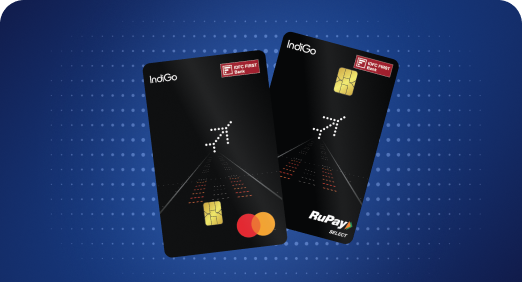

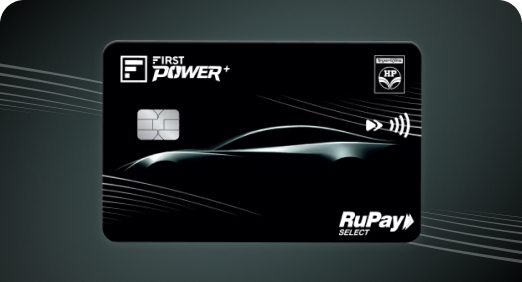
A Card that Powers your Savings & Lifestyle
IDFC FIRST Bank HPCL Credit Card









Most Searched
Earn up to 7% interest on your Savings Account
Open Account Now
Download our app
Get instant help for all your queries in one place
Unlock features, exclusively available
only on the IDFC FIRST Bank app
Trusted by 1.2+ million Indians.


4.8

4.8

Tools & Calculators
Privilege Program



Tools & Calculators

Unlock features, exclusively available
only on the IDFC FIRST Bank app
Finance
 Budget 2026 keeps tax slabs steady, shifting focus from tax-saving to post-tax returns on your savings
As interest income is fully taxable and rates are stable, post-tax returns matter more than headline rates
Budget reinforces balancing liquidity with safety and long term growth
Budget 2026 keeps tax slabs steady, shifting focus from tax-saving to post-tax returns on your savings
As interest income is fully taxable and rates are stable, post-tax returns matter more than headline rates
Budget reinforces balancing liquidity with safety and long term growth
As the Finance Minister unveils the Union Budget 2026, individuals and families across the country are scanning the fine print to see how their hard-earned money will grow. For them, the updates on ‘fiscal deficits’ and ‘capex outlays’ matter less than three simple questions:
Here is a breakdown of the budget and income tax updates, and how they impact your wallet.
The Union Budget 2026 is keeping income tax slab rates unchanged, so the familiar budget and income tax structure is continuing without major disruption. One of the biggest moves on the table is retaining the standard deduction for salaried taxpayers at ₹75,000. It will continue to give middle-class savers immediate tax-free breathing room without any extra documentation. That extra amount can be invested further in a fixed deposit (FD), a recurring deposit (RD), a systematic investment plan (SIP), or used to strengthen the monthly household budget.
At the same time, the government is keeping its focus on strengthening the New Tax Regime. It wants to make it the simpler, preferred route for most taxpayers going forward. That direction also means there isn’t much space for new benefits under the old regime.
This signals that the budget is not positioning tax benefits as the primary reason to save. Instead, it is encouraging customers to evaluate products based on suitability, time horizon, and the actual money received after tax.
So, any interest earned on FDs, RDs, and savings accounts is treated as part of taxable income. With banking systems now reporting interest earnings proactively, customers are seeing the impact of tax on returns rather than discovering it later. This makes post-tax returns more relevant than the headline interest rate the bank will offer.
Interest rates are staying under close watch post-budget 2026. With inflation management and economic growth both in focus, rates across bank deposits and government-backed savings schemes are holding steady. For savers, this stable environment sets realistic expectations for return on investment, especially after tax.
Small savings schemes such as the Public Provident Fund (PPF), National Savings Certificates (NSC), and the Senior Citizen Savings Scheme (SCSS) continue to offer consistency and reassurance. These options remain important for conservative savers who prioritise capital protection, predictable income, and clarity under the Income Tax Act and rules.
At the same time, the budget aims to promote longer-term financial participation. Market-linked savings options, retirement-focused products, and systematic investment habits are operating within a steady policy framework. Instead of introducing flashy new incentives, the focus of budget and income tax changes is to help you plan with more confidence rather than worrying about sudden changes.
Here’s what Budget 2026 is making clear:
Budget 2026 is pushing savers to focus on what they actually earn after tax and inflation. Instead of chasing nominal interest rates, customers need to compare net outcomes and real return on investment.
Savings accounts and fixed deposits are still essential for emergencies and near-term needs. They offer stability and quick access, which keeps them relevant across every savings plan.
Depending only on deposits can limit long-term growth. The current budget is highlighting the need to balance safety with options that support better long-term returns.
Short-term financial goals need stability and access. Long-term goals benefit from time, compounding, and consistency. Budget 2026 is strengthening this shift toward saving with a clear purpose.
Customers are actively reviewing which regime suits them. Understanding how the Income Tax Act and rules apply to your savings is now a key part of planning.
Budget 2026 is not asking savers to do more; it is asking savers to plan better. With interest rates holding steady, the budget and income tax are the main factors to consider regarding your savings plan. The money you earn on deposits is still taxable, and the way your returns are taxed will change your final income more than a slight change in rates ever will. This is why your savings plan works best when it is built around real return on investments. Use your bank’s FD calculator and RD calculator to compare returns and choose the right mix for your goals this year.
No, the budget has kept the slab rates unchanged and continued with the standard deduction for salaried taxpayers of India.
Yes, interest earned on Savings Account, FDs and RDs fall under taxable income.
The budget focuses on
a. Post-tax returns
b. Maintaining liquidity
c. Having a goal-based, diversified savings strategy
The contents of this article/infographic/picture/video are meant solely for information purposes. The contents are generic in nature and for informational purposes only. It is not a substitute for specific advice in your own circumstances. The information is subject to updation, completion, revision, verification and amendment and the same may change materially. The information is not intended for distribution or use by any person in any jurisdiction where such distribution or use would be contrary to law or regulation or would subject IDFC FIRST Bank or its affiliates to any licensing or registration requirements. IDFC FIRST Bank shall not be responsible for any direct/indirect loss or liability incurred by the reader for taking any financial decisions based on the contents and information mentioned. Please consult your financial advisor before making any financial decision.
The features, benefits and offers mentioned in the article are applicable as on the day of publication of this blog and is subject to change without notice. The contents herein are also subject to other product specific terms and conditions and any third party terms and conditions, as applicable. Please refer our website www.idfcfirst.bank.in for latest updates.