









Login to Internet banking
A brand-new experience - smarter, faster, and secured




You gain a dedicated partner committed to helping you reach your full potential and achieve new heights
Know More
BRAVO (Auto Sweep)
Convert the idle funds in your current account into a fixed deposit with the BRAVO feature.
Know More
Zero Forex Markup Current Account
Maximise your savings and boost profitability with our Zero Forex Markup current accounts
Know More






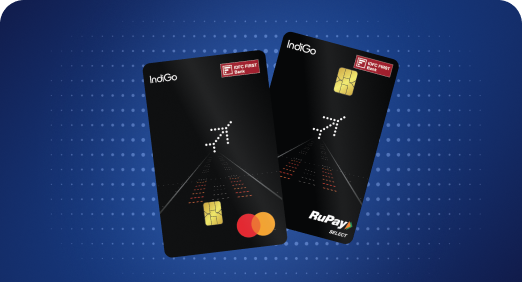


A Card that Powers your Savings & Lifestyle
IDFC FIRST Bank HPCL Credit Card









Most Searched
Earn up to 7% interest on your Savings Account
Open Account Now
Download our app
Get instant help for all your queries in one place
Unlock features, exclusively available
only on the IDFC FIRST Bank app
Trusted by 1.2+ million Indians.


4.8

4.8

Tools & Calculators
Privilege Program



Tools & Calculators

Unlock features, exclusively available
only on the IDFC FIRST Bank app
Finance
 Union Budget 2026-27, presented by Finance Minister Nirmala Sitharaman, marks her ninth consecutive Budget, the highest by any finance minister in the nation’s history.
The Budget prioritises action-led reforms instead of short-term populism, reinforcing long-term economic confidence.
A unified Yuva Shakti and Kartavya framework places people at the centre of growth and governance.
Strategic investments in manufacturing, technology, infrastructure, and human capital aim to reduce import dependence and boost productivity.
A clear commitment to fiscal discipline supports stability, affordable borrowing, and long-term and stable growth.
Union Budget 2026-27, presented by Finance Minister Nirmala Sitharaman, marks her ninth consecutive Budget, the highest by any finance minister in the nation’s history.
The Budget prioritises action-led reforms instead of short-term populism, reinforcing long-term economic confidence.
A unified Yuva Shakti and Kartavya framework places people at the centre of growth and governance.
Strategic investments in manufacturing, technology, infrastructure, and human capital aim to reduce import dependence and boost productivity.
A clear commitment to fiscal discipline supports stability, affordable borrowing, and long-term and stable growth.
Overview of the Budget: Setting India’s Economic Direction
Finance Minister Nirmala Sitharaman presented the Union Budget 2026-27 for the ninth consecutive year, underscoring policy continuity at a time of global uncertainty. With geopolitical tensions, supply chain realignments and uneven global growth, the Budget adopts a steady, confidence-building approach anchored in the vision of Viksit Bharat, where ambition is balanced with inclusion.
Guided by the philosophy of “Action over Ambivalence, Reform over Rhetoric, and People over Populism”, the Union Budget 26-27 focuses on moderating consumer inflation management, sustained economic growth, fiscal discipline and reduced dependence on imports. It reinforces the government’s belief that sustained prosperity comes from strong domestic capacity, resilient institutions and empowered citizens.
Budget 2026-27 integrates the “Yuva Shakti” vision with the government’s “Kartavya” framework. It presents a consolidated execution-driven approach to development. Prepared in Kartavya Bhawan, the Budget reflects the government’s “Sankalp” to prioritise the poor, underprivileged and disadvantaged, while facilitating citizens to become active participants in India’s growth path. The government’s Sankalp is divided into three Kartavya’s:
Rather than treating growth, capacity building and inclusion as separate objectives, the Budget aligns them into a single framework. This approach seeks rate growth, build people’s capacity, and ensure inclusive participation across families, regions and sectors, in line with the vision of Sabka Saath, Sabka Vikas.
Human capital development forms the backbone of the Budget’s growth strategy. By investing in healthcare, education, skills and care services, the government intends to improve quality of life while strengthening long-term economic participation.
Primary initiatives:
Trust-based governance is positioned as a force multiplier for economic efficiency. By simplifying rules and shifting to technology-led systems, the Budget aims to reduce friction, encourage compliance and deepen participation in the formal economy.
Primary initiatives:
Extension of advance ruling validity under customs from three to five years.
AI-enabled customs and cargo clearance processes.
Enhancement of duty-deferral period for Tier 2 and Tier 3 Authorised Economic Operators (AEO) from 15 to 30 days. Under this eligible manufacturer and importers will get the same duty deferral facility. Government agencies will be encouraged to leverage AEO accreditation.
Regular importers with trusted longstanding supply chains will be recognised in the risk system, so that the need for verification of their cargo every time can be minimised.
The filing of Bill of Entry by a trusted importer, and arrival of goods to automatically notify Customs.
Modernisation of customs warehousing and logistics frameworks into warehouse operator-centric systems with self-declarations etc.
Reforms focus on reducing compliance burdens, improving access to finance and making tax systems more citizen friendly.
Key initiatives:
A major thrust of Budget 2026-27 is reducing critical import dependence by strengthening domestic manufacturing in strategic sectors. The Budget specifies a precise roadmap to build globally competitive ecosystems.
Key initiatives:
The Budget strengthens healthcare services and the care economy to meet domestic needs while positioning India as a global medical tourism destination.
Key initiatives:
Education infrastructure is aligned with industrial and technological growth to support long-term productivity and youth participation.
Key initiatives:
The Budget recognises the Orange Economy as a rising source of jobs, innovation, and global cultural presence.
Key initiatives:
Tourism is positioned as a high-employment and regionally balanced growth sector, supported by digital tools, skill development, and sustainable practices.
Key initiatives:
To boost services exports and provide certainty to IT and digital businesses, the Budget introduces targeted tax and policy reforms.
Key initiatives:
Infrastructure still is a key growth multiplier. Public capital expenditure has been increased to ₹12.2 lakh crore, reinforcing momentum built over the past decade. The focus goes beyond metros to Tier II and Tier III cities, temple towns, and emerging economic regions.
Key initiatives:
The Budget reiterates the government’s commitment to fiscal consolidation without compromising social and growth priorities. A stable deficit and debt trajectory strengthens macroeconomic confidence and aids long-term affordability.
Key initiatives:
Union Budget 2026-27 displays a mature and execution-focused approach towards economic governance. Presented by Finance Minister Nirmala Sitharaman, it stresses on continuity, credibility and long-term intent. The government’s primary objective is to sustain growth whilst ensuring inclusion, stability and trust in institutions.
Through integrating Yuva Shakti with a clear Kartavya framework, strengthening domestic capabilities, investing in people and sustaining fiscal discipline, the Budget lays a sound foundation for India’s journey towards Viksit Bharat. The way forward lies in consistent execution, deeper reforms and people-led growth that transforms aspiration into achievement.
The contents of this article/infographic/picture/video are meant solely for information purposes. The contents are generic in nature and for informational purposes only. It is not a substitute for specific advice in your own circumstances. The information is subject to updation, completion, revision, verification and amendment and the same may change materially. The information is not intended for distribution or use by any person in any jurisdiction where such distribution or use would be contrary to law or regulation or would subject IDFC FIRST Bank or its affiliates to any licensing or registration requirements. IDFC FIRST Bank shall not be responsible for any direct/indirect loss or liability incurred by the reader for taking any financial decisions based on the contents and information mentioned. Please consult your financial advisor before making any financial decision.
The features, benefits and offers mentioned in the article are applicable as on the day of publication of this blog and is subject to change without notice. The contents herein are also subject to other product specific terms and conditions and any third party terms and conditions, as applicable. Please refer our website www.idfcfirst.bank.in for latest updates.