























Login to Internet banking
A brand-new experience - smarter, faster, and secured


Introducing the First-in-industry IDFC FIRST Bank's Super Account
Request a Callback
You gain a dedicated partner committed to helping you reach your full potential and achieve new heights
Know More
BRAVO (Auto Sweep)
Convert the idle funds in your current account into a fixed deposit with the BRAVO feature.
Know More
Zero Forex Markup Current Account
Maximise your savings and boost profitability with our Zero Forex Markup current accounts
Know More
Make more than one online payment in just a few clicks with IDFC FIRST Bank Bulk Payments
Know More

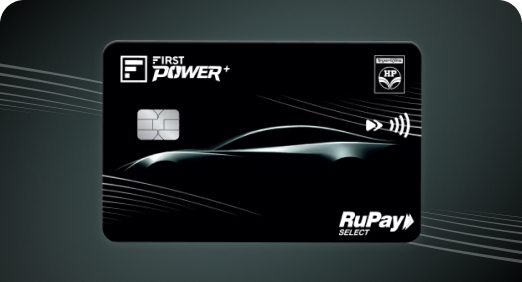
A Card that Powers your Savings & Lifestyle
IDFC FIRST Bank HPCL Credit Card

Most Searched

Earn up to 6.50% interest on your Savings Account
Open Account Now
Download our app
Get instant help for all your queries in one place
Unlock features, exclusively available
only on the IDFC FIRST Bank app
Trusted by 1.2+ million Indians.


4.8

4.8

Tools & Calculators
Privilege Program

Unlock features, exclusively available
only on the IDFC FIRST Bank app
Personal Loan
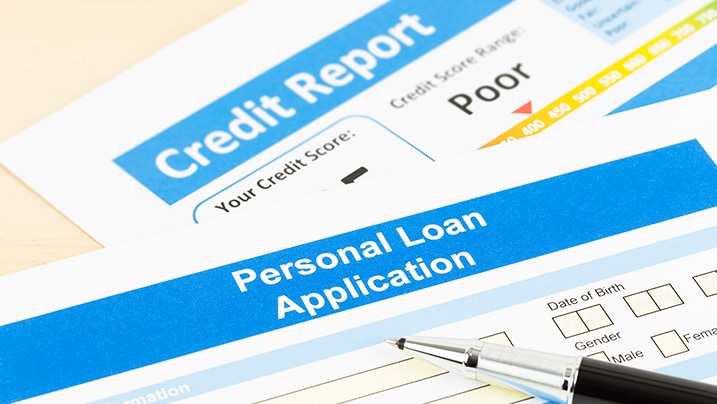
 Securing a personal loan with a low CIBIL score is challenging, but not impossible. Factors like employment status, income, and a clean credit report can improve your chances. It’s essential to calculate your needs and ensure all necessary documents are in place before applying. Using tools like the IDFC FIRST Bank personal loan EMI calculator can help you understand the repayment process better.
 Since approval decisions are strongly linked to your credit profile, your CIBIL score plays an important role in determining your eligibility.
If you are wondering, “Can I get a personal loan with a low CIBIL score?” The answer is yes, but approval is not guaranteed. A low or borderline score does not automatically disqualify you, though lenders may review your income, existing EMIs, job stability, and repayment capacity more closely.
Understanding how lenders assess applications and the steps you can take to improve your profile can increase your chances of getting a personal loan.
A CIBIL score is a credit score provided by TransUnion CIBIL, one of India’s leading credit information bureaus. The score reflects your credit history based on your financial behaviour. It includes loans and repayments, credit card payments, and more. The score ranges from 300 to 900, with higher scores indicating a healthier credit history.
Refer to the table below for quick insight into what is considered a good or a bad credit score:
| Credit score | Is it good or bad? | Chances of approval |
| Less than 600 | Poor | Extremely low |
| 600-649 | Bad | Low |
| 650-699 | Satisfactory | Possible |
| 700-749 | Good | High |
| Over 750 | Very good | Extremely high |
If you have a low CIBIL score, you may often face challenges while taking a loan. These challenges may include:
Higher interest rates: Lenders may offer loans at significantly higher interest rates to offset the perceived risk of lending to low-score borrowers like you.
Limited loan options: Many financial institutions or banks may reject applications outright or offer smaller loan amounts.
Strict eligibility checks: A low CIBIL score triggers closer scrutiny of your income, employment stability, and other financial obligations.
Obtaining a personal loan with a low CIBIL score can be challenging, but it's not impossible. By implementing the following strategies, you can enhance your chances of approval and secure the funds you need.
While a low CIBIL score can reduce your chances of approval, lenders do not rely solely on the score. They usually assess your overall repayment ability before making a decision. If you want a personal loan with a low or borderline score, focus on these factors:
A regular monthly salary or stable business income gives lenders more confidence in your repayment capacity. Frequent income gaps may weaken your application.
This shows how much of your monthly income already goes towards EMIs or fixed repayments. Lower existing obligations usually improve your eligibility.
Working with your current employer for a reasonable period can support your profile. Frequent job changes may be viewed cautiously.
If you already have multiple loans or high credit card balances, lenders may reduce the loan amount or decline the application. Lower outstanding debt helps.
While a low CIBIL score impacts the chances of getting approved for a personal loan, it is not impossible. There are other factors that affect your chances of getting a loan, such as your employment status, income, and credit report. Thus, if you want a personal loan but have a low CIBIL score, you need to plan your application as follows:
Estimate the actual amount you need and what you might be eligible for before applying. You can use the personal loan eligibility calculator to get a tentative loan estimate based on your monthly income and obligations. This will help avoid rejection. It’s a good idea to go through the eligibility criteria as well to check whether you meet the credit score requirements of the lender, before applying.
Personal loans require minimum documentation, so you only need to gather all the right documents and ensure they are as per requirements. Digital first lenders may not need any document uploads, since everything is checked online through secure digital systems.
Select a lender whose terms and conditions appear favourable. Applying to multiple places does not reflect well on your credit report. Once you secure a loan, ensure you use it responsibly. If you are using it to consolidate and pay off your previous loans, ensure that you are doing so in the right manner.
While you might qualify for certain personal loans with a low credit score, do note that it is quite likely that you’ll get offered unfavourable terms such as low loan amounts and high interest rates. Having a steady financial record and decent credit score always puts you in a good position with banks when it comes to getting the best loan deals.
For example, if your CIBIL score is around 710+ and your income, repayment history, and existing EMI obligations are stable, you are in a strong position to apply for the IDFC FIRST Bank FIRSTmoney Personal Loan.
With IDFC FIRST Bank FIRSTmoney, you also get:
Interest rates start from 9.99% p.a. for qualified applicants.
Choose tenures from 9 to 60 months.
Repay early without penalties.
Get multiple loans from your approved loan offer without reapplying from scratch.
A low credit score doesn’t mean you are stuck with it for life. You can improve your credit score in the following ways.
Make timely repayments: Always pay your EMIs, credit card bills, and other dues before the due date.
Limit credit utilisation: Keep your credit card usage under 30% of your total limit to show disciplined borrowing.
Check your credit report regularly: Identify and rectify any errors or outdated information affecting your score.
Avoid multiple loan applications: Applying to many lenders within a short period negatively impacts your credit profile.
Maintain a healthy credit mix: A balanced portfolio of secured (home loans) and unsecured loans (personal loans) boosts credit health.
While a low CIBIL score can make securing a personal loan more challenging, it’s certainly not the end of the road. With the right strategy, such as applying with a co-applicant, choosing smaller loan amounts, or exploring lenders like IDFC FIRST Bank who consider more than just your credit score, you can still access the funds you need.
Focus on building healthy financial habits, researching lenders carefully, and using credit responsibly to gradually improve your credit score. A thoughtful approach today can lead to stronger financial freedom tomorrow.
A personal loan with a low CIBIL score is possible, but you’ll need strong income visibility, low existing EMIs, and additional verification. Most lenders prefer more than 750; 700–749 can work with stable profiles, while less than 700 usually needs compensating strengths. Lenders may review longer statements or request additional documents. Keep KYC up to date and accounts current to improve approval odds and terms.
For the IDFC FIRST Bank FIRSTmoney personal loan, aim for a CIBIL score of 710+.
As a general guide, 750+ is considered strong for a personal loan with better terms; 700 to 749 is acceptable; 650 to 699 is marginal with tighter limits or higher rates; 600 to 649 is weak; and below 600/NH-NA is usually declined until history improves.
For the IDFC FIRST Bank FIRSTmoney personal loan, aim for a CIBIL score of 710+.
Here are some quick steps to improve your CIBIL score.
If your CIBIL score is low, the lender may offer a higher rate or a smaller loan amount. Your income stability, employer type, and existing EMIs also influence the final rate. Because pricing varies, compare APRs and read the schedule of charges. Choose a tenure you can manage and pay on time. Consistent repayments build your profile and can help you get better offers later.
No. Banks check your credit score before approving a loan. If your score is low, they usually charge a higher interest rate and may offer a smaller amount. If you don’t have a credit score, they may ask for additional documents, offer a lower limit, or charge a higher rate. Your job stability, employer, and current EMIs also matter. Compare the overall cost (APR) and fees. Pick a tenure you can repay easily and pay on time to get better offers later.
The contents of this article/infographic/picture/video are meant solely for information purposes. The contents are generic in nature and for informational purposes only. It is not a substitute for specific advice in your own circumstances. The information is subject to updation, completion, revision, verification and amendment and the same may change materially. The information is not intended for distribution or use by any person in any jurisdiction where such distribution or use would be contrary to law or regulation or would subject IDFC FIRST Bank or its affiliates to any licensing or registration requirements. IDFC FIRST Bank shall not be responsible for any direct/indirect loss or liability incurred by the reader for taking any financial decisions based on the contents and information mentioned. Please consult your financial advisor before making any financial decision.
The features, benefits and offers mentioned in the article are applicable as on the day of publication of this blog and is subject to change without notice. The contents herein are also subject to other product specific terms and conditions and any third party terms and conditions, as applicable. Please refer our website www.idfcfirst.bank.in for latest updates.


Check the latest rates.

Know your total loan cost.

Estimate your EMI instantly.

Compare EMIs for multiple loan types.

See why your score matters.