








Login to Internet banking
A brand-new experience - smarter, faster, and secured



You gain a dedicated partner committed to helping you reach your full potential and achieve new heights
Know More

BRAVO (Auto Sweep)
Convert the idle funds in your current account into a fixed deposit with the BRAVO feature.
Know More
Zero Forex Markup Current Account
Maximise your savings and boost profitability with our Zero Forex Markup current accounts
Know More



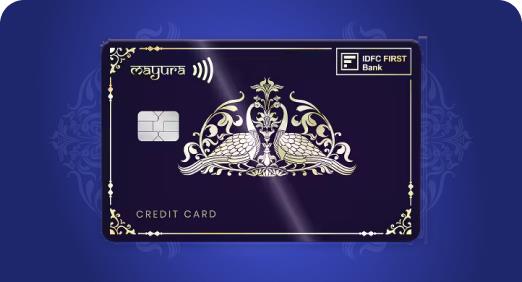


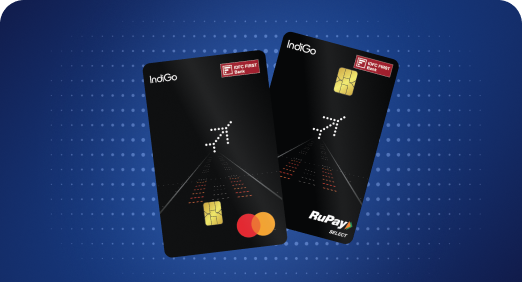

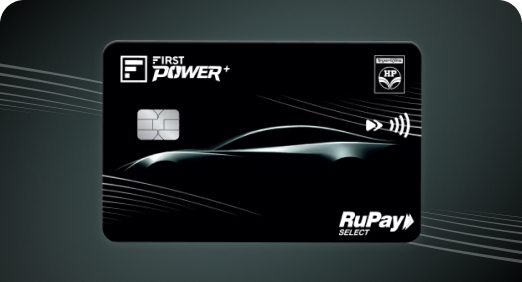
A Card that Powers your Savings & Lifestyle
IDFC FIRST Bank HPCL Credit Card









Most Searched
Earn up to 7% interest on your Savings Account
Open Account Now
Download our app
Get instant help for all your queries in one place
Unlock features, exclusively available
only on the IDFC FIRST Bank app
Trusted by 1.2+ million Indians.


4.8

4.8

Tools & Calculators
Privilege Program



Tools & Calculators

Unlock features, exclusively available
only on the IDFC FIRST Bank app
 A fixed deposit with IDFC FIRST Bank offers guaranteed returns at a predetermined interest rate, making it a safe choice when markets are volatile.
It provides flexibility such as choosing short or long tenures to match goals like saving for a car or building a retirement corpus.
You can avail a loan against your fixed deposit without prematurely breaking it, helping meet urgent fund needs while keeping your investment intact.
Investing in a fixed deposit is simple and convenient with quick setup, minimal documentation and easy linkage to your existing savings account.
A fixed deposit with IDFC FIRST Bank offers guaranteed returns at a predetermined interest rate, making it a safe choice when markets are volatile.
It provides flexibility such as choosing short or long tenures to match goals like saving for a car or building a retirement corpus.
You can avail a loan against your fixed deposit without prematurely breaking it, helping meet urgent fund needs while keeping your investment intact.
Investing in a fixed deposit is simple and convenient with quick setup, minimal documentation and easy linkage to your existing savings account.
Investing money is essential for attaining financial independence. Once you retire, there might not be an active income to rely on, which is when you need a strong corpus to manage your expenses. There are several investment avenues that one can choose from to build their wealth. Market-linked products are risky, that’s why people with low-risk appetite often opt for fixed deposits (FDs).
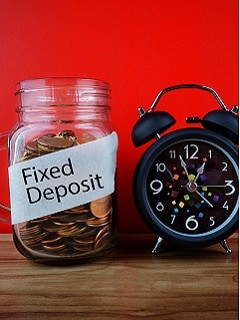
Fixed deposits are traditional instruments that many people choose to invest in, given the safety and security they offer. If you are looking to invest in an FD, read on to learn more about this investment avenue.
A fixed deposit is one of the many investment instruments that you can invest in. Fixed deposits are offered by both banks as well as non-banking financial institutions (NBFCs). You can invest a fixed sum in an FD for a specific period of time at a given rate of interest. The interest rate of a fixed deposit can vary as per each financial institution’s terms. You can choose fixed deposits with different tenures starting from 1 week to even 10 years.
For instance, IDFC FIRST Bank offers up to 7.10% p.a. returns on your fixed deposits (7.35% for Senior Citizens). You can choose to receive interest from your fixed deposit either monthly, quarterly or at maturity based on your needs.
Fixed deposit interest rates are usually higher than that of savings accounts.
Here are five reasons why you should consider investing in a fixed deposit:
Unlike market-linked investment options, such as stocks, a fixed deposit is not affected by market volatility. This means that the FD interest rates do not fluctuate and will remain stable throughout its tenure. The returns that you will receive after the fixed deposit matures are assured, which makes it easy to plan your financial goals.
Some investment instruments like tax saver deposits do not permit the investor to withdraw funds mid-way in their lock-in period. However, a fixed deposit provides a lot of flexibility in this regard. In case of a financial emergency, you can dip into your funds before the maturity of your fixed deposit. Banks may levy some nominal charges on premature withdrawals, but the funds are readily available during financial urgencies.
A fixed deposit is considered ideal for short-term financial goals as it protects your capital while actively earning interest on the amount invested. A lot of people invest in fixed deposits to achieve short-term goals such as buying a car, saving up for a vacation, buying an electronic gadget, and so on.
This is another benefit that fixed deposit investors can take advantage of. If you have a fixed deposit, you can always apply for a loan against your FD. The loan amount offered varies depending on the bank but you can avail of instant funds without disturbing your FD. For example, IDFC FIRST Bank lets you borrow up to 90% of your deposit amount at a rate roughly 2% higher than the FD interest rate.
Compared to other investment options, investing in FD is quick, convenient, and hassle-free. If you open an FD in the same bank in which you hold a savings account, you require minimal or no documentation. Moreover, such FDs are linked to your savings account so surplus funds in your bank account can easily be invested in fixed deposits.
Here are the types of fixed deposits that you can choose to invest in:
As the name suggests, these fixed deposits involve compounding interest that gets added to the investment amount at certain intervals. Investors get the final payout at the FD’s maturity. With these deposit accounts, you can apply for a loan as well as overdraft facilities. You can also withdraw funds in the account before maturity. However, do note that the bank will levy a certain penalty for doing so.
Those who have invested in non-cumulative fixed deposits receive interest payouts at regular intervals. This is a good option for those looking to obtain regular income from their investment.
Those with Flexi fixed deposits can enjoy the benefits of both fixed deposit and savings account. You can enjoy a fixed deposit’s high interest rate while having the liquidity of a savings account. This feature of FD is commonly known as sweep- in and sweep-out feature where surplus funds in your savings account is invested in FD and it can be liquidated if the saving account funds drop below certain limit depending on the account contract.
Banks offer a tax-saving fixed deposit that can help investors avail of tax deductions up to ₹1.5 lakh per annum (Section 123 read with Schedule XV of the Income Tax Act). These accounts typically involve a mandatory lock-in period of five years.
Individuals over 60 years of age can apply for senior citizen fixed deposits which offer higher interest rates than with regular fixed deposits.
Tax is deducted at source on interest earned on Fixed Deposits and Recurring Deposits held by the resident if the total interest paid or credited by the Bank on all such deposits for the tax year exceeds the threshold limit specified under Section 393(1) of Income Tax Act, 2025. The TDS shall be applicable on the entire amount of interest and not merely on the portion exceeding the threshold limit. Currently, the threshold limit for this purpose is Rs. 50,000/- for non-senior citizens and Rs. 1,00,000/- for senior citizens (60 years or more) in a tax year.
Since, under the provisions of law, the entire amount of interest paid or credited during the tax year is liable to TDS when the amount exceeds the prescribed threshold, the Bank, as a policy, will deduct TDS upon each interest event.
If eligible, you may submit Form 121 (previously known as Form 15G/H) or Certificate of Tax Exemption issued under Section 395 of the Income Tax Act, 2025 to prevent TDS on FD/RD interest. A valid PAN is mandatory for availing any exemption.
A fixed deposit is considered one of the safest and most secure forms of investment. It provides decent returns and flexibility when it comes to withdrawing funds. This makes it a great option for those looking for a safe avenue to park their funds and simultaneously earn interest on it.
Disclaimer
The contents of this article/infographic/picture/video are meant solely for information purposes. The contents are generic in nature and for informational purposes only. It is not a substitute for specific advice in your own circumstances. The information is subject to updation, completion, revision, verification and amendment and the same may change materially. The information is not intended for distribution or use by any person in any jurisdiction where such distribution or use would be contrary to law or regulation or would subject IDFC FIRST Bank or its affiliates to any licensing or registration requirements. IDFC FIRST Bank shall not be responsible for any direct/indirect loss or liability incurred by the reader for taking any financial decisions based on the contents and information mentioned. Please consult your financial advisor before making any financial decision.
The features, benefits and offers mentioned in the article are applicable as on the day of publication of this blog and is subject to change without notice. The contents herein are also subject to other product specific terms and conditions and any third party terms and conditions, as applicable. Please refer our website www.idfcfirst.bank.in for latest updates.