









Login to Internet banking
A brand-new experience - smarter, faster, and secured






You gain a dedicated partner committed to helping you reach your full potential and achieve new heights
Know More

BRAVO (Auto Sweep)
Convert the idle funds in your current account into a fixed deposit with the BRAVO feature.
Know More
Zero Forex Markup Current Account
Maximise your savings and boost profitability with our Zero Forex Markup current accounts
Know More






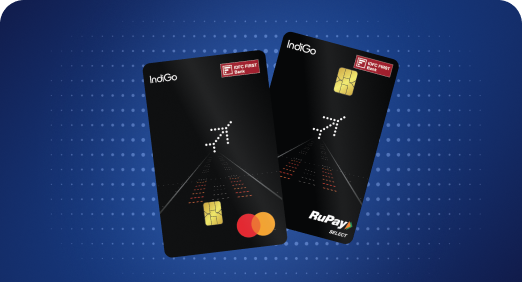

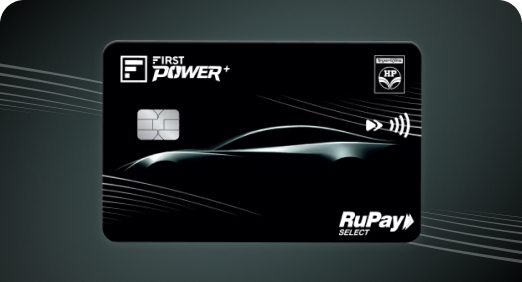
A Card that Powers your Savings & Lifestyle
IDFC FIRST Bank HPCL Credit Card









Most Searched
Earn up to 7% interest on your Savings Account
Open Account Now
Download our app
Get instant help for all your queries in one place
Unlock features, exclusively available
only on the IDFC FIRST Bank app
Trusted by 1.2+ million Indians.


4.8

4.8

Tools & Calculators
Privilege Program



Tools & Calculators

Unlock features, exclusively available
only on the IDFC FIRST Bank app
 An FCNR deposit lets NRIs grow foreign currency savings without exchange rate risk while earning assured, tax-free returns (subject to NRI status).
FCNR deposits offer multiple foreign currency options, flexible tenures, and full repatriation of both principal and interest.
Eligible NRIs, OCIs, seafarers, and oil rig employees can open an FCNR deposit with IDFC FIRST Bank through an active NRE account.
An FCNR deposit lets NRIs grow foreign currency savings without exchange rate risk while earning assured, tax-free returns (subject to NRI status).
FCNR deposits offer multiple foreign currency options, flexible tenures, and full repatriation of both principal and interest.
Eligible NRIs, OCIs, seafarers, and oil rig employees can open an FCNR deposit with IDFC FIRST Bank through an active NRE account.
An FCNR account is a type of fixed deposit for NRIs that allows you to park funds directly in foreign currencies. It eliminates the exchange rate risks associated with currency conversion. It gives you the familiarity of the Indian banking system and an assured interest rate of an FD. The funds are also freely repatriable with tax-free interest income as long as you maintain your NRI status
An FCNR account fits into your financial life seamlessly with the value it offers. Here are some of its core features highlighting the same:
Fully-exempt
Interest earned on an FCNR account is fully exempt from taxation in India, provided you maintain your NRI status. The same goes for the principal, as it originated in foreign currency.
Freely repatriable
Both the principal and the interest are freely repatriable to your overseas account whenever you want. This facilitates cross-border transactions without any restrictions and makes financial planning easier.
Multiple currency acceptance
You can open an FCNR account in multiple currencies. For example, IDFC FIRST Bank lets you make deposits in USD (Dollar), GBP (British Pound), AUD (Australian Dollar), EUR (Euro), and SGD (Singapore Dollar).
Currency risk protection
Since the FCNR account holds currency in its original form throughout the tenure, your savings are protected from fluctuations in the Indian rupee. This helps preserve value and gets rid of the uncertainty that comes with exchange rates.
Assured returns
You can earn higher returns on FCNR deposits than on your regular savings account. The rate is fixed for the chosen tenure, which also adds to the clarity and lets you plan for your short and long-term financial goals.
Flexible tenure
You can choose between a tenure of 1 to 5 years with banks like IDFC FIRST Bank to suit your goals. The duration you choose while onboarding carries forward until maturity. You can modify the tenure within the same range if your needs change upon account renewal.
An FCNR account is meant for those earning in foreign currency. It facilitates holding these funds in their original form in India. The RBI lays out fairly straightforward eligibility guidelines. Individuals falling under any of the below categories with an active NRI account ( NRE account / NRO account ) with IDFC FIRST Bank can open an FCNR Fixed Deposit.
NRIs
If you are an Indian citizen residing outside India for more than 182 days in a year for employment, business, or other legal reasons, you qualify as an NRI.
OCIs
OCI (Overseas Citizenship of India) cardholders are equally eligible to open an FCNR account online for managing foreign savings through Indian banks.
Seafarers
Indian seafarers working on foreign vessels and earning in foreign currency are treated similarly to NRIs for banking purposes. Thus, you qualify under this category to maintain an FCNR deposit account.
Oil rig employees
Indian citizens employed on offshore oil rigs for installations, maintenance, processing, or technical work outside India also qualify as NRIs and can open an FCNR account to manage foreign earnings.
How to Open FCNR Deposits with IDFC FIRST Bank
Active NRE Account holders can book FCNR deposit through the following ways:
Send an email from registered email ID to your RM.
Visit nearest branch for booking an NRE FD when in India.
If you are a new customer to IDFC FIRST Bank, opening an NRE Savings Account online is the first step to booking your FCNR FD
- Click on ‘ Open Account ’ and enter your mobile number and Email address.
- Fill in your details and upload your certified KYC documents along with photo and signature.
- Your account will be opened on successful verification of the documents.
Managing foreign income in India doesn’t have to involve compromises. You can do so easily with an FCNR deposit account that lets you manage funds and earn interest on them. So, hold, grow, and access your overseas earnings in the same currency you earn them and get rid of the hassle of currency conversion, taxation, and repatriation. Make sure to choose the right bank and think through the deposit terms to meet your financial goals.
Yes, interest earned on an FCNR account is exempt from Income tax in India (as per current Indian Tax Laws) as long as you qualify as a non-resident.
When you repatriate funds, you encounter no restrictions for both the principal and interest earned on FCNR deposits. You can transfer the money back to your overseas account just the way you deposited them.
Yes, premature withdrawal is allowed. However, banks may revise the interest rate, depending on how long the deposit was held and bank-specific terms.
The minimum deposit amount depends on the bank and currency you choose to deposit in. IDFC FIRST Bank sets it to 1,000 in the respective accepted currencies like USD, AUD, SGD, GBP, and EUR.
The contents of this article/infographic/picture/video are meant solely for information purposes. The contents are generic in nature and for informational purposes only. It is not a substitute for specific advice in your own circumstances. The information is subject to updation, completion, revision, verification and amendment and the same may change materially. The information is not intended for distribution or use by any person in any jurisdiction where such distribution or use would be contrary to law or regulation or would subject IDFC FIRST Bank or its affiliates to any licensing or registration requirements. IDFC FIRST Bank shall not be responsible for any direct/indirect loss or liability incurred by the reader for taking any financial decisions based on the contents and information mentioned. Please consult your financial advisor before making any financial decision.
The features, benefits and offers mentioned in the article are applicable as on the day of publication of this blog and is subject to change without notice. The contents herein are also subject to other product specific terms and conditions and any third party terms and conditions, as applicable. Please refer our website www.idfcfirst.bank.in for latest updates.