What's special about us

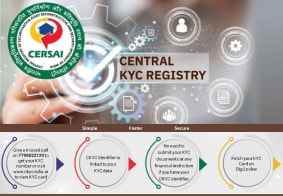
CKYC Registry



-
Customer Service Contact us Service request Locate a branch Complaints
Find all the help you need
Scan the QR, get our app, and find help on your fingertips

Help CenterSupport topics, Contact us, FAQs, Complaints and more
-
 Login
Login
Are you ready for an upgrade?
Login to the new experience with best features and services
-
Login
Are you ready for an upgrade?
Login to the new experience with best features and services
- Accounts
-
Deposits
IDFC FIRST Bank Deposits
View all Deposits -
Loans
IDFC FIRST Bank Loans
View all Loans - Wealth & Insure
-
Payments
IDFC FIRST Bank Payments
View all Payments -
Cards
IDFC FIRST Bank Cards
View all Cards - Blogs
- Corporate Account
-
Cash Management Services
IDFC FIRST Bank Cash Management Services
View all Cash Management Services - Supply Chain Finance
-
Corporate Lending
IDFC FIRST Bank Lending
View all -
Treasury
IDFC FIRST Bank Treasury
See more details - NBFC Financing
- BRAVO (Auto Sweep)
-
MSME Accounts
IDFC FIRST Bank MSME Accounts
View all Accounts -
Trade Services
- MSME Loan
-
MSME Solutions
- Debit Card
-
Offers




Help Center
Support topics, Contact us, FAQs, Complaints and more
Accounts
- IDFC FIRST Bank Accounts
-
Savings Account
-
Corporate Salary
Account -
Senior Citizens
Savings Account -
First Power
Account -
Current Account
-
NRI Savings
Account -
TASC Institutional
Account -
Savings Account
Interest Calculator
Deposits
- IDFC FIRST Bank Deposits
-
Fixed Deposit
-
Recurring Deposit
-
NRI Fixed Deposit
-
Safe Deposit Locker
-
FD Calculator
-
RD Calculator
Loans
- IDFC FIRST Bank Loans
-
Personal Loan
-
Consumer Durable
Loan -
Home Loan
-
Business Loan
-
Professional Loan
-
Education Loan
-
New Car Loan
-
Pre-owned Car Loan
-
Two Wheeler Loan
-
Pre-owned Two
Wheeler Loan -
Commercial Vehicle
Loan -
Gold Loan
-
Loan Against Property
-
Loan Against Securities
-
Easy Buy EMI card
-
Personal Loan
EMI Calculator -
Education Loan
EMI Calculator -
Home Loan
EMI Calculator -
EMI Calculator
-
Personal Loan Eligibility Calculator
Wealth & Insure
- IDFC FIRST Bank Wealth & Insure
-
FIRST Select
-
FIRST Wealth
-
FIRST Private
-
Mutual Funds
-
Sovereign Gold Bond
-
Demat Account
-
Term Insurance
-
Life Insurance
-
Health Insurance
-
General Insurance
-
Bonds
-
Loan Against
Securities -
Portfolio Management
Service
Payments
- IDFC FIRST Bank Payments
-
FASTag
-
Credit Card
Bill Payments -
UPI
-
Funds Transfer
-
Forex Services
-
Pay Loan EMI
Cards
- IDFC FIRST Bank Cards
-
Ashva :
Metal Credit Card -
Mayura :
Metal Credit Card -
FIRST Millennia
Credit Card -
FIRST Classic
Credit Card -
FIRST Select
Credit Card -
FIRST Wealth
Credit Card -
FIRST WOW!
Credit Card -
Deals
-
Debit Cards
-
Co-branded Cards
-
Credit Card
EMI Calculator -
FIRST Corporate
Credit Card -
FIRST Purchase
Credit Card -
FIRST Business
Credit Card
Premium Metal
- Premium Metal Credit Cards
-
AshvaLifestyle1% Forex₹2,999
-
MayuraLifestyleZero Forex₹5,999
-
FIRST PrivateInvite Only
Travel
- Best for travellers
-
Diamond Reserve Credit CardZero ForexTravel₹3,000
-
FIRST WOW! BlackZero ForexTravelDual Cards
-
IndiGo IDFC FIRST Dual Credit CardTravelLifestyle₹4,999
-
MayuraZero ForexMetal₹5,999
-
Ashva1% ForexMetal₹2,999
-
FIRST WOW!Zero ForexTravelLifetime Free
-
FIRST SWYPTravel OffersEMI₹499
-
FIRST Select1.99% ForexLifestyleLifetime Free
-
FIRST Wealth1.5% ForexLifestyleLifetime Free
-
Club VistaraTravelLifestyle₹4,999
Lifetime Free
- Max benefits, Free for life
-
FIRST Classic10X RewardsShoppingNever Expiring Rewards
-
FIRST Millennia10X RewardsShoppingNever Expiring Rewards
-
FIRST Select10X RewardsLifestyle1.99% Forex
-
FIRST Wealth10X RewardsLifestyle1.5% Forex
-
FIRST WOW!RewardsTravelZero Forex
-
LIC ClassicRewardsInsuranceShopping
-
LIC SelectRewardsInsuranceShopping
10X Rewards
- Reward Multipliers
-
Diamond Reserve Credit CardLifestyleZero Forex₹3,000
-
AshvaLifestyleMetal₹2,999
-
MayuraLifestyleZero Forex₹5,999
-
FIRST ClassicNever Expiring RewardsShoppingLifetime Free
-
FIRST MillenniaNever Expiring RewardsShoppingLifetime Free
-
FIRST SelectNever Expiring RewardsLifestyleLifetime Free
-
FIRST WealthNever Expiring RewardsLifestyleLifetime Free
UPI Cards
- Rewards & Credit on UPI
-
FIRST WOW! BlackUPIVirtualRewards
-
IndiGo IDFC FIRST Dual Credit CardUPITravelDual cards
-
FIRST Power+FuelUPI₹499
-
FIRST PowerFuelUPI₹199
-
FIRST EA₹NVirtual1% Cashback₹499
-
FIRST DigitalVirtualUPI₹199
Fuel & Utility
- Fuel and Savings
-
FIRST PowerRewardsUPI₹199
-
FIRST Power+RewardsUPI₹499
-
LIC ClassicRewardsInsuranceShopping
-
LIC SelectRewardsInsuranceShopping
Showstopper
- Express and Flaunt
-
Diamond Reserve Credit CardTravelZero Forex₹3,000
-
AshvaMetal1% Forex₹2,999
-
MayuraMetalZero Forex₹5,999
-
FIRST SWYPEMIOfferMAX₹499
-
FIRST MillenniaRewardsShoppingLifetime Free
Credit Builder
- FD Backed rewarding Credit Cards for all
-
FIRST WOW! BlackZero ForexTravelAssured
-
FIRST EA₹NVirtualCashback₹499
-
FIRST WOW!Zero ForexTravelLifetime Free
-
CreditPro Balance TransferTransfer & SaveReduce InterestPay Smartly
More
NRI Savings Account
NRI Fixed Deposit
FOREX Solutions
- IDFC FIRST Bank NRI Forex Solutions
-
Send money to India-Wire transfer
-
Send money to India-Digitally
-
Send money abroad
-
Max Returns FD (INR)
Transfer to NRE
Corporate Account
Cash Management Services
Corporate Lending
Treasury
MSME Accounts
- IDFC FIRST Bank MSME Accounts
-
Platinum Current
Account -
Gold
Current Account -
Silver Plus
Current Account -
Merchant Multiplier
Account -
Agri Multiplier
Account -
TASC Institutional
Account -
Dynamic Current
Account -
World business
Account -
First Startup
Current Account -
EEFC Account
-
RERA Account
-
Other Accounts
Trade Services
MSME Loan
- IDFC FIRST Bank Business Loans
-
Business Loan
-
Professional Loan
-
Loan Against Property
-
Business Loan for Women
-
Working Capital Loan
-
Construction Equipment Loan
-
Machinery Loan
-
Healthcare Equipment Loan
MSME Solutions
- IDFC FIRST Bank Business Solutions
-
Payment Solutions
-
Tax Payments
-
Doorstep Banking
-
Point of Sale (POS)
-
Escrow Accounts
-
NACH
-
Payment Gateway
-
UPI
-
Virtual Accounts
Offers
About Us
Investors
ESG
-
As per amendment in the Income Tax Rules, PAN or Aadhaar are to be mandatorily quoted for cash deposit or withdrawal aggregating to Rupees twenty lakhs or more in a FY. Please update your PAN or Aadhaar. Kindly reach out to the Bank’s contact center on 1800 10 888 or visit the nearest IDFC FIRST Bank branch for further queries.
-
-
Most Searched



Sorry!
We couldn’t find ‘’ in our website
Here is what you can do :
- Try checking the spelling and search
- Search from below suggestions instead
- Widen your search & try a more generic keyword
Suggested


Get a Credit Card
Enjoy Zero Charges on All Commonly Used Savings Account Services
Open Account Now
NRI taxation in India: Income Tax Rules, Exemptions & Deductions
Key Takeaways
 NRIs are taxed only on Indian-sourced income such as salary hire property rent interest and capital gains, while foreign income is exempt when you qualify as non-resident.
- Basic exemption for NRIs under the old regime starts at ₹2.5 lakh and under the new regime at ₹3 lakh, but certain slabs and surcharge apply when income is higher.
- Allowed deductions include standard deduction on rental income, tax-free interest on NRE/FCNR accounts, and exemptions under Sections 54 54EC and 54F for capital gains from property.
- Deductions under Chapter VI-A like Section 80C, 80D, 80E and 80G apply to NRIs only under the old regime and depend on the investment type and eligibility.

An Indian who is not residing in India may still be considered a citizen for tax purposes. But the tax rules are significantly different from the ones applicable to an Indian resident. Non-resident Indians (NRIs) must, therefore, understand NRI taxation. This will help the person to adhere to Indian tax laws and plan his or her finances, keeping the tax implications in mind.
READ MORE


Who is an NRI?
Before you understand the NRI taxation rules and regulations, let us find out when you become a tax-paying NRI.
- A person is a resident in India if he or she has resided in India for 182 or more days during the financial year, OR
- Was in India for 60 days in the financial year and a total of 365 or more days in four financial years.
Only the first condition applies to Indian citizens working abroad or on an Indian ship, and for People of Indian Origin (PIO) with a total income of ₹15 lakh or less (excluding foreign sources).
People who don’t meet any of these criteria are NRIs. Besides, an individual can also be a Resident but Not-Ordinary Resident (RNOR) if the person,
- Is an NRI in 9 out of 10 years preceding the previous year, or,
- The person has stayed for 729 days or less in India during the seven years preceding the previous year
Indian citizens and PIOs will be considered RNOR if they meet the following conditions,
- Total non-foreign income is ₹15 lakh or more
- The person has stayed in India during the previous year for more than 120 days but less than 182 days
- The person has stayed for 365 or more days in the four years preceding the previous year
Also read - NRI deposits in India: Your guide to smart and safe investing
India and NRI taxation
NRI taxation in India follows the ‘source rule.’ This means that income that accrues or arises in India or through an Indian source is taxable here. This could include,
- Salary received in India
- Salary received for services rendered in India
- Rent received from property situated in India
- Capital gain on transfer of property or asset in India
- Interest on deposit in India
- Interest on savings account in India
Profits or Gains from a Business in India
Thus, the income of a non-resident which accrues or arises outside India is not taxable in India. An NRI must file tax returns in India if the annual income exceeds ₹2.5 lakhs. NRIs can file their income tax return in India using either ITR-2 or ITR-3. ITR-2 is used to file income other than income from business or profession. ITR-3 is filed if the NRI has any income from business or profession carried out in India.
Deductions and exemptions in NRI taxation
The following NRI taxation-related deductions are allowed under the taxation rules.
- Income from property situated in India is taxable in the hands of the NRI owner. However, a standard deduction of 30% is allowed on such income
- Interest on deposits and savings accounts is taxable. However, interest earned on NRE and FCNR accounts is tax-free
- Exemptions are available on long-term capital gains earned from the sale of a house property.
- Section 54 allows exemption on long-term capital gains on the sale of residential property
- Section 54F provides exemption on capital assets other than a house property
- Section 54EC also allows exemption on the sale of residential house property up to ₹50 lakhs
The capital gain exemptions are subject to the fulfilment of the terms and conditions mentioned in the respective sections and sub-sections. Besides, several of the Chapter VI A deductions are also available under NRI taxation in India. These include,
- Section 80C – Up to ₹1.5 lakhs on LIC premium, tuition fee, home loan principal repayment, stamp duty and registration charges on purchase of property, unit-linked insurance policy and equity-linked saving scheme. Options like PPF, NSC, Post-office five-year deposit and senior citizen saving scheme are not available to NRIs
- Section 80D – Medical insurance
- Section 80E – Education loan interest
- Section 80G – Eligible donations paid
- Section 80TTA – Interest on savings bank account
NRI taxation slab and rates
Indian citizens are taxed at different rates, depending on their age, i.e., below 60 years, 60 to 80 years, and 80 years or above. However, NRIs, irrespective of their age, are taxed uniformly. The only slabs applicable are the ones based on income levels, which is different for the old and new tax regimes.
Old regime
- Up to ₹2.5 lakhs – Nil
- More than ₹2.5 lakhs and up to ₹2.5 lakhs – 5%
- More than ₹5 lakhs and up to ₹10 lakhs – 20%
- Above ₹10 lakhs – 30%
New regime
- Up to ₹3 lakh - Nil
- More than ₹3 lakhs and up to ₹6 lakhs - 5%
- More than ₹6 lakhs and up to ₹9 lakhs - 10%
- More than ₹9 lakhs and up to ₹12 lakhs - 15%
- More than ₹12 lakhs and up to ₹15 lakhs - 20%
- Above ₹15 lakhs - 30%
The section 87A rebate is not available in NRI taxation.
Surcharge in NRI taxation
- On total income exceeding ₹50 lakhs and up to ₹1 crore - 10% of income tax payable
- On total income exceeding ₹1 crore and up to ₹2 crores - 15% of income tax payable
- On total income exceeding ₹2 crores and up to ₹5 crores - 25% of income tax payable
- On total income exceeding ₹5 crores - 37% of income tax payable
The surcharge is subject to marginal relief.
Advance tax rules in NRI taxation
Apart from the rates of income tax and surcharge applicable, an NRI must also keep the advance tax due dates in mind. If the estimated tax liability of the NRI is more than ₹10,000, he or she must pay advance tax during the financial year in four instalments. The advance tax payment schedule is,
- Up to 15% of total advance tax - on or before 15th June
- Up to 45% - on or before 15th September
- Up to 75% - on or before 15th December
- Up to 100% - on or before 15th March
DTAA - The tax sweetener
The Double Taxation Avoidance Agreement (DTAA) helps people avoid paying taxes for the same income in two countries. DTAA treaties between India and other countries establish the country with a primary right to tax the NRI. It reduces the total tax burden on the person and may also allow tax credits and exemptions.
Also read - A guide to invest in Indian stocks for NRIs
Concluding thoughts
NRIs must keep their Indian taxability in mind to avoid tax-related queries on their income. Their income is also subject to tax deduction at source (TDS). By filing an ITR they can claim the excess amount deducted as TDS. Your ITR will also serve as proof of your residential status.
IDFC FIRST Bank offers premium NRI banking services, starting with a digital savings account with attractive interest rates. IDFC FIRST Bank offers multiple savings account options to NRIs as well as FDs with attractive deposit options. Open a Portfolio Investment Account, manage your Indian investments from the mobile app, transfer money quickly and economically, and enjoy many more exciting features – only with services.
Disclaimer
The contents of this article/infographic/picture/video are meant solely for information purposes. The contents are generic in nature and for informational purposes only. It is not a substitute for specific advice in your own circumstances. The information is subject to updation, completion, revision, verification and amendment and the same may change materially. The information is not intended for distribution or use by any person in any jurisdiction where such distribution or use would be contrary to law or regulation or would subject IDFC FIRST Bank or its affiliates to any licensing or registration requirements. IDFC FIRST Bank shall not be responsible for any direct/indirect loss or liability incurred by the reader for taking any financial decisions based on the contents and information mentioned. Please consult your financial advisor before making any financial decision.
The features, benefits and offers mentioned in the article are applicable as on the day of publication of this blog and is subject to change without notice. The contents herein are also subject to other product specific terms and conditions and any third party terms and conditions, as applicable. Please refer our website www.idfcfirst.bank.in for latest updates.