









Login to Internet banking
A brand-new experience - smarter, faster, and secured



You gain a dedicated partner committed to helping you reach your full potential and achieve new heights
Know More
BRAVO (Auto Sweep)
Convert the idle funds in your current account into a fixed deposit with the BRAVO feature.
Know More
Zero Forex Markup Current Account
Maximise your savings and boost profitability with our Zero Forex Markup current accounts
Know More



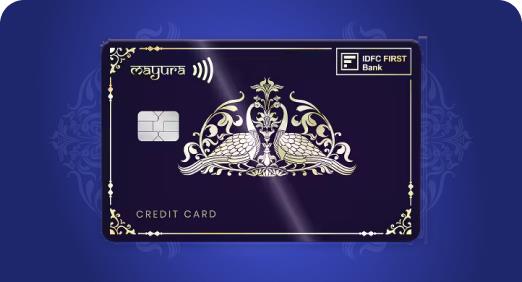
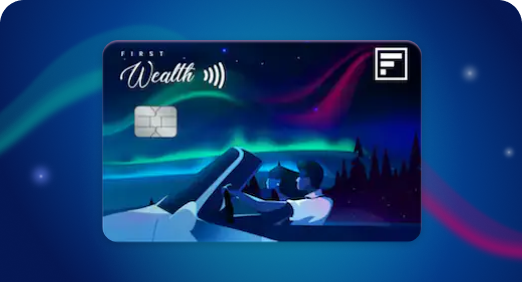
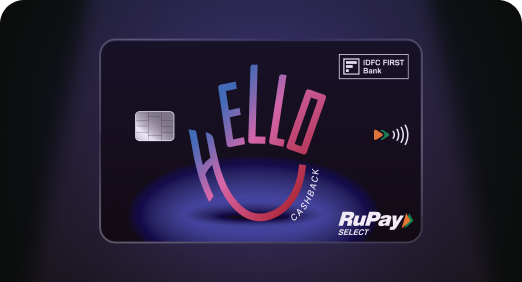
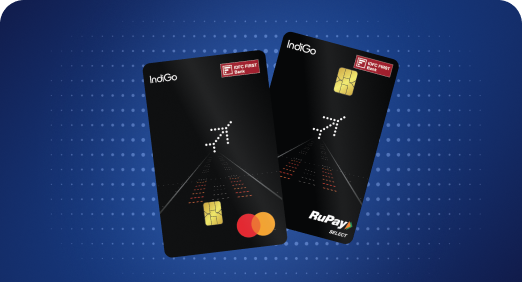
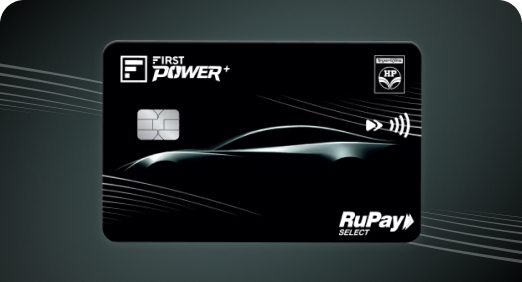
A Card that Powers your Savings & Lifestyle
IDFC FIRST Bank HPCL Credit Card









Most Searched
Earn up to 7% interest on your Savings Account
Open Account Now
Download our app
Get instant help for all your queries in one place
Unlock features, exclusively available
only on the IDFC FIRST Bank app
Trusted by 1.2+ million Indians.


4.8

4.8

Tools & Calculators
Privilege Program



Tools & Calculators

Unlock features, exclusively available
only on the IDFC FIRST Bank app
Personal Loan
 In India, a personal loan EMI is usually more cost-effective than a credit card EMI due to lower interest rates, longer tenures, and predictable repayment schedules.
Credit card EMI works best for short-term repayments, while personal loan EMI is better suited larger financial needs with affordable costs.
High credit card EMI usage increases credit utilisation and may impact your credit score, whereas a personal loan EMI helps keep card limits free and credit health stable.
In India, a personal loan EMI is usually more cost-effective than a credit card EMI due to lower interest rates, longer tenures, and predictable repayment schedules.
Credit card EMI works best for short-term repayments, while personal loan EMI is better suited larger financial needs with affordable costs.
High credit card EMI usage increases credit utilisation and may impact your credit score, whereas a personal loan EMI helps keep card limits free and credit health stable.
Borrowers are often confused about how to simplify their existing debt. Unexpected expenses, high-value purchases and credit card payments can be repaid either through a personal loan EMI or through credit card EMI.
Both options offer structured repayment, fixed instalments, and predictable costs. However, they are vastly different in terms of interest rates, documentation, flexibility and long-term impact on financial stability. In this article, we will compare both options to help you make an informed decision that is best aligned with your long-term financial goals.
Listed below are seven crucial points of comparison to understand the differences between credit card EMI and personal loan EMI:
1) Interest rates: Typically, credit card EMI interest rates are higher compared to personal loan EMI. Credit card EMI rates can vary depending on the bank and card type. Personal loans, on the other hand, typically offer more consistent rates with more precise terms. Digital lenders and banks often provide competitive personal loan interest structures that reduce repayment burden over time.
2) Flexibility: A credit card EMI is best suited for converting a specific purchase into instalments. It applies only to card transactions or outstanding dues. A personal loan offers more flexibility because you can use the funds for multiple expenses of your choice. With an instant personal loan online option, you can use the borrowed amount for any financial need.
3) Documentation: Credit card EMIs require almost no document verification process since it is done during the time of card issuance. A personal loan EMI requires basic KYC verification and income proof. To make this process more effortless, IDFC FIRST Bank offers quick digital and paperless processing. Borrowers can apply through online portals, without any documents upload, and complete verification in minutes.
4) Tenure options: Credit card EMI tenures usually range from three months to eighteen months. Personal loans offer longer tenures, often between 9 months and 60 months, allowing borrowers to choose instalments that fit their monthly budget.
5) Credit utilisation impact: Converting credit card dues into EMIs is calculated as credit utilisation on your card. High credit utilisation can affect your credit score. A personal loan shifts the burden away from the card and spreads it over a fixed schedule, helping maintain healthier credit utilisation levels.
6) Foreclosure rules: Many credit card EMI structures do not allow foreclosure without a fee. Personal loans generally have clear foreclosure rules, and banks like IDFC FIRST Bank offer zero foreclosure charges on personal loans.
IDFC FIRST Bank benefits: IDFC FIRST Bank provides competitive advantages for borrowers considering a personal loan. These include a fully digital application process, zero foreclosure charges for eligible customers, and flexible repayment options supported by tools such as personal loan EMI calculator. These features can help borrowers plan repayments more effectively and manage debt effectively.
Choosing between card EMI and personal loan EMI depends on your financial situation and repayment goals. Here are tips to help you decide which one to choose and when:
· Choose credit card EMI when:
o When you want to convert a single purchase into instalments.
o The EMI interest on a specific transaction is low or on offer.
o Short-term borrowing, and you plan on a quick repayment.
· Choose a personal loan when:
o You want to consolidate multiple debts.
o You need a larger amount than a card limit allows.
o You want longer repayment tenures.
o You prefer predictable instalments.
o You want to keep card utilisation low and avoid high APR (Annual Percentage Rate).
· Evaluating cost difference:
o You can compare the total repayment amount using a personal loan EMI calculator. This helps you understand which option results in a lower cost in the long term. Even a small difference in interest rate or processing fee can significantly change the total repayment dues.
Anyone looking for a structured, flexible, and manageable repayment solution, can apply for a personal loan through IDFC FIRST Bank can help you sort your finances more effectively. The bank offers a fully digital application process, instant eligibility checks, and quick disbursal within 10 minutes.
Interest rates starting at 9.99% p.a., zero foreclosure charges, clear repayment plans which you can estimate using a personal loan EMI calculator, and flexible tenures from 9 months to 60 months make IDFC FIRST Bank a reliable option for borrowers who want to simplify debt repayment.
The answer depends on your current financial needs and preferences. A personal loan offers lower interest, longer tenures, and better flexibility. A credit card EMI is suitable only for a specific purchase or short-term repayment and may be more expensive in comparison to a personal loan EMI.
A personal loan is better when you need a larger amount, want manageable instalments, lower interest costs or want to avoid high credit card utilisation.
A credit card loan applies to card transactions or dues, while a personal loan provides a lump sum for varied expenses with longer tenures and manageable EMIs.
Yes, when you convert dues to EMI, the outstanding amount continues to reflect as credit utilisation on your card. If the utilisation stays high, it may affect your score even though you are paying EMIs on time. Choosing a personal loan EMI instead can reduce credit utilisation and would not impact your credit score negatively.
It is better to avoid credit card EMI when the interest rate is significantly higher than a personal loan, when you need a longer tenure, or when your credit utilisation is already high.
The contents of this article/infographic/picture/video are meant solely for information purposes. The contents are generic in nature and for informational purposes only. It is not a substitute for specific advice in your own circumstances. The information is subject to updation, completion, revision, verification and amendment and the same may change materially. The information is not intended for distribution or use by any person in any jurisdiction where such distribution or use would be contrary to law or regulation or would subject IDFC FIRST Bank or its affiliates to any licensing or registration requirements. IDFC FIRST Bank shall not be responsible for any direct/indirect loss or liability incurred by the reader for taking any financial decisions based on the contents and information mentioned. Please consult your financial advisor before making any financial decision.
The features, benefits and offers mentioned in the article are applicable as on the day of publication of this blog and is subject to change without notice. The contents herein are also subject to other product specific terms and conditions and any third party terms and conditions, as applicable. Please refer our website www.idfcfirst.bank.in for latest updates.