









Login to Internet banking
A brand-new experience - smarter, faster, and secured




You gain a dedicated partner committed to helping you reach your full potential and achieve new heights
Know More
BRAVO (Auto Sweep)
Convert the idle funds in your current account into a fixed deposit with the BRAVO feature.
Know More
Zero Forex Markup Current Account
Maximise your savings and boost profitability with our Zero Forex Markup current accounts
Know More





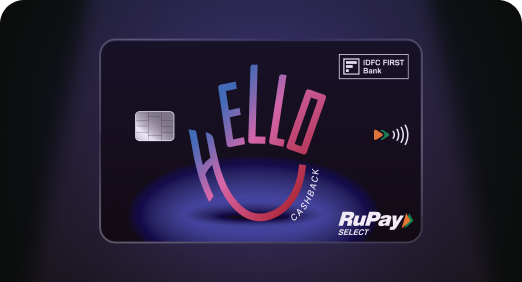

Enjoy Zero Forex on all IDFC FIRST Bank Credit Cards
Save more on all international spends
Know More
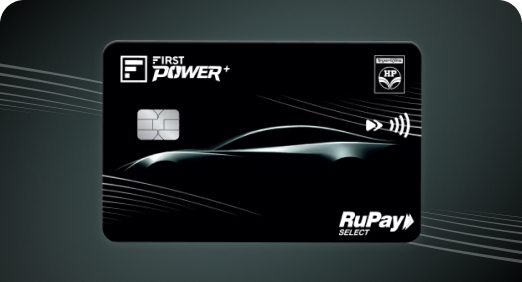
A Card that Powers your Savings & Lifestyle
IDFC FIRST Bank HPCL Credit Card









Most Searched
Earn up to 7% interest on your Savings Account
Open Account Now
Download our app
Get instant help for all your queries in one place
Unlock features, exclusively available
only on the IDFC FIRST Bank app
Trusted by 1.2+ million Indians.


4.8

4.8

Tools & Calculators
Privilege Program



Tools & Calculators

Unlock features, exclusively available
only on the IDFC FIRST Bank app
Personal Loan
 Travel loans suit planned, high-value trips, offering lower interest rates and predictable EMIs over longer tenures.
Credit card EMIs work best for smaller or spontaneous bookings, letting you convert select travel spends into short-term instalments.
Overall travel financing cost depends on interest rates and added charges, making it important to compare beyond just EMI amounts.
The right travel financing option depends on trip size, urgency, and repayment comfort, not just ease of access to credit.
Travel loans suit planned, high-value trips, offering lower interest rates and predictable EMIs over longer tenures.
Credit card EMIs work best for smaller or spontaneous bookings, letting you convert select travel spends into short-term instalments.
Overall travel financing cost depends on interest rates and added charges, making it important to compare beyond just EMI amounts.
The right travel financing option depends on trip size, urgency, and repayment comfort, not just ease of access to credit.
If you feel the urge to go on a vacation for a break from your mundane routine, the lack of funds should not get in the way. Banks and financial institutions offer two easy travel financing options in the form of a travel loan and a credit card. Which one would work better for you? Learn from this informative blog.
A travel loan is a type of personal loan which gives you a lump sum amount upfront. You can expect quick access to funds if you meet the eligibility criteria. This makes it easier to plan flights, stays, and the overall itinerary in one go. In return, you pay an interest rate along with the borrowed amount in flexible EMIs. You can choose the tenure to suit your comfort.
With a credit card, instead of borrowing the entire amount at once, you can convert your travel expenses into EMIs while paying for flight tickets, hotel, and other expenses. You can borrow against your credit limit. It’s a convenient method to convert purchases into smaller, monthly instalments. It lets you spread out your costs and keeps the payments flexible. Financing for travel this way works well for transaction-based spending.
Now that you know how each travel financing option works, here’s a side-by-side look at some of the main differences between financing for travel with a travel loan vs a credit card EMI:
Points of comparison |
Travel loan |
Credit card EMI |
Loan amount & flexibility |
Fixed lump sum that you decide upfront. Suitable for planned trips. |
Depends on the credit limit and your actual individual spends. Better sought for smaller or evolving plans. |
Interest rate |
Generally lower and predictable (9.99-18% p.a.) |
Often higher and varies based on the card variant and issuer. Typical range (12-24% p.a.).
You may also incur a zero to low interest rate on EMI purchases made via the no-cost EMI or Low-cost EMI option. |
Repayment flexibility |
You can fix EMI and tenure to your liking. Most lenders let you plan with EMI calculators. |
Specific purchases can be converted into EMIs based on your preferred tenure between 6, 12, 24, 26 months. |
Processing |
Includes a simple application process completed entirely online with instant travel loans. |
Your payments are instantly converted into EMIs if you pay with an active credit card.
|
Eligibility & documentation |
Requires basic details like your age, income, and credit score for instant travel loans. The verification is completed via video KYC. |
If you have an active credit card, you need not undergo the process. For a fresh card, eligibility and documentation depends on the type of credit card. |
When considering the cost of taking a travel loan vs funding your travel expenses with a credit card EMI, it comes down to the interest rate and additional charges.
Travel loans: Often come with fixed interest rates, which means your EMIs are predictable throughout the tenure. The other charges include processing fee, late payment penalty, prepayment penalty, EMI bounce charge, etc.
Financing for travel through credit card EMIs: Attracts a relatively higher and more variable interest rate, based on the type of card, the transaction converted, and the issuer. Some other credit card charges include cash advance fee, late payment charge, over-limit charge, reward redemption fee, card replacement fee, etc.
Ultimately, choosing between these two financing options depends on your financial needs for the trip and how you prefer to handle repayments. Explained below are different scenarios where using a travel loan vs a credit card makes sense:
Here are some additional tips to help choose between a travel loan and credit card EMI for financing your trip:
· Assess your total trip cost
Plan out the entire trip to understand the funds you need. If the expenses are high and you’re booking everything at once, you can apply for a travel loan. For smaller, scattered expenses, a credit card EMI makes sense.
· Consider the repayment comfort
Longer tenures with fixed EMIs make a travel loan easier on the monthly budget. Credit card EMIs are ideal if you prefer shorter, quicker repayment cycles.
· Compare overall cost
Besides the interest rate, review other additional and hidden charges on travel loans and credit card EMIs to make an informed pick to finance your travel.
· Factor in urgency
If you need instant financing with your existing credit card, credit card EMIs are better-suited. For planned travel, covering extensive expenses, a travel loan makes more sense.
· Check eligibility
Instant travel loans include a simple eligibility criterion. If you meet the requirements, you can apply and get quick access to funds. If not, use your existing credit card to convert travel bookings into EMIs.
Travel loans and credit card EMI are both convenient credit options that support your trip cost in different ways. Choosing between them comes down to what aligns with your financial needs, travel plans, and repayment style.
As you compare travel loan vs credit card EMI financing for travel, focus on what feels manageable to you. Consider the immediate convenience and the repayment flexibility over the next few months. With the right choice, your trip becomes far more enjoyable.
Turn your travel goals into reality with FIRSTmoney Personal Loan from IDFC FIRST Bank!
✅ Low Interest Rates starting at just 9.99% p.a., so your holiday stays affordable.
✅ Zero Foreclosure Charges : close your loan anytime without extra cost.
✅ Instant Approval & 30-Minute Disbursal, perfect for those last-minute getaways.
✅ 100% Digital Process : apply anytime, anywhere, no paperwork hassle.
✅ Flexible On-Demand Loans to cover additional travel expenses with ease.
With FIRSTmoney, you get predictable EMIs, complete transparency, and the freedom to plan your trip without any financial worries. Make the smart choice for your next adventure!
A travel loan is usually cheaper as it typically comes with a lower and more predictable interest rate. Credit card EMIs often carry higher rates unless you’re opting for promotional no-cost or low-cost EMIs.
Both affect your credit score differently. A travel loan appears as a new loan account, also leading to a new hard inquiry, while a credit card EMI uses your credit limit, leading to a higher credit utilization ratio. Any missing or delayed EMIs in both travel financing options can hurt your credit score.
Yes, both can be prepaid, but may attract charges like a prepayment penalty in the case of travel loans, and foreclosure charges for credit card EMIs, subject to lender’s policy.
With a FIRSTmoney personal loan for travel, you can enjoy zero foreclosure charges.
The contents of this article/infographic/picture/video are meant solely for information purposes. The contents are generic in nature and for informational purposes only. It is not a substitute for specific advice in your own circumstances. The information is subject to updation, completion, revision, verification and amendment and the same may change materially. The information is not intended for distribution or use by any person in any jurisdiction where such distribution or use would be contrary to law or regulation or would subject IDFC FIRST Bank or its affiliates to any licensing or registration requirements. IDFC FIRST Bank shall not be responsible for any direct/indirect loss or liability incurred by the reader for taking any financial decisions based on the contents and information mentioned. Please consult your financial advisor before making any financial decision.
The features, benefits and offers mentioned in the article are applicable as on the day of publication of this blog and is subject to change without notice. The contents herein are also subject to other product specific terms and conditions and any third party terms and conditions, as applicable. Please refer our website www.idfcfirst.bank.in for latest updates.