









Login to Internet banking
A brand-new experience - smarter, faster, and secured




You gain a dedicated partner committed to helping you reach your full potential and achieve new heights
Know More
BRAVO (Auto Sweep)
Convert the idle funds in your current account into a fixed deposit with the BRAVO feature.
Know More
Zero Forex Markup Current Account
Maximise your savings and boost profitability with our Zero Forex Markup current accounts
Know More





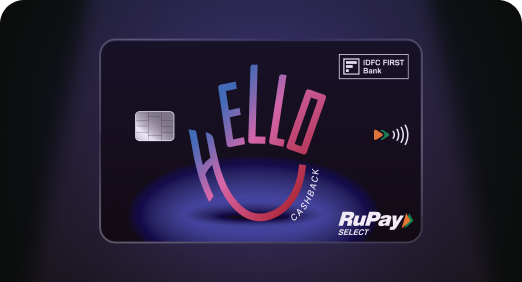
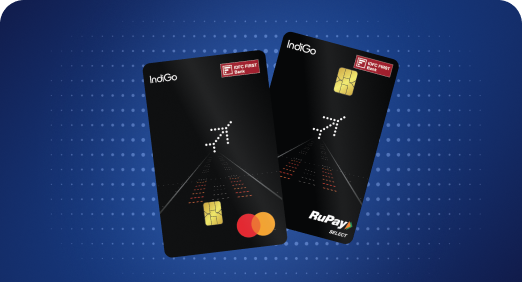

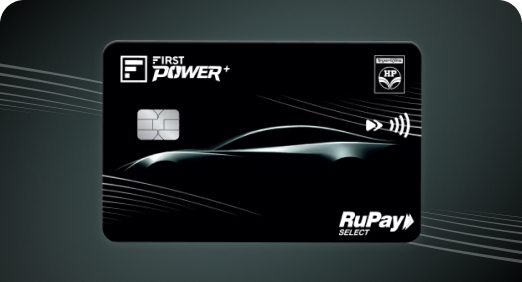
A Card that Powers your Savings & Lifestyle
IDFC FIRST Bank HPCL Credit Card









Most Searched
Earn up to 7% interest on your Savings Account
Open Account Now
Download our app
Get instant help for all your queries in one place
Unlock features, exclusively available
only on the IDFC FIRST Bank app
Trusted by 1.2+ million Indians.


4.8

4.8

Tools & Calculators
Privilege Program



Tools & Calculators

Unlock features, exclusively available
only on the IDFC FIRST Bank app
Personal Loan
 Banks use different methods to calculate your personal loan eligibility.
The maximum personal loan that you can get depends on key eligibility criteria like income, credit score, existing debts, etc.
If the approved loan amount is lower than expected, you can enhance your eligibility to qualify for a higher amount.
A FIRSTmoney personal loan from IDFC FIRST Bank can be a good choice for getting the funds you require up to ₹15 lakh.
Banks use different methods to calculate your personal loan eligibility.
The maximum personal loan that you can get depends on key eligibility criteria like income, credit score, existing debts, etc.
If the approved loan amount is lower than expected, you can enhance your eligibility to qualify for a higher amount.
A FIRSTmoney personal loan from IDFC FIRST Bank can be a good choice for getting the funds you require up to ₹15 lakh.
Ever seen a message saying “Get a personal loan of ₹5 lakh in two minutes” just when you’re short on funds? It feels like the perfect solution - until you're approved for a maximum personal loan amount of just ₹3 lakh.
What happened? Where did the other ₹2 lakh go?
This gap often confuses borrowers. But it doesn’t mean something went wrong with your personal loan approval. It simply reflects your personal loan eligibility.
Banks evaluate multiple risk factors to assess your eligibility criteria and calculate the loan amount you qualify for. In this article, we’ll break down how that number is decided, why it may fall short of your expectations, and how you can bridge the gap effectively.
Banks don’t factor in how much loan you want. Instead, they assess how much you can realistically repay when calculating the maximum personal loan that can be sanctioned. While there are multiple ways to assess the loan amount, two of the most common calculations are:
Under this simple method, banks use a multiple of your monthly income to determine the maximum loan amount. For instance, if the multiplier is 15X and your monthly income is ₹50,000, you can be eligible for a loan of up to ₹7.5 lakh.
The multiple is fixed by the bank after assessing your personal loan eligibility qualifications.
This method measures your existing debts against your monthly income. The value that you get is the FOIR.
For instance, if you have a monthly income of ₹50,000 and you’re already paying an EMI of ₹10,000, the FOIR is 20%.
A low FOIR, within 40%, is considered healthy and increases your chances of qualifying for a higher loan amount. However, if the FOIR is high, your eligible loan amount reduces.
While these methods help banks determine the maximum personal loan amount you are eligible for, the approved funds can still differ from what you expect. Here’s why.
It’s not uncommon to be offered a lower maximum personal loan amount than what you were hoping for. While you may have a figure in mind based on your needs, banks rely on specific parameters to determine how much they can safely lend you. This isn’t just about caution; it’s about ensuring you can repay the loan comfortably without straining your finances.
Here are a few factors that influence the final approved loan amount:
While personal loans are available to both salaried and self-employed individuals, your employment type impacts how banks assess your repayment ability. Salaried borrowers with steady jobs, especially in reputed, established organisations, are often considered lower risk due to predictable income.
Self-employed individuals can also qualify for high loan amounts, but they may need to provide stronger financial proof or a longer track record to support their repayment capacity.
Your income directly affects the maximum personal loan amount you’re eligible for. A higher income typically translates to better repayment capability, making lenders more confident in approving a larger amount. Conversely, a lower income may limit the loan size, especially if your fixed obligations already take up a significant portion of it.
If you’re already paying EMIs for loans or have significant outstanding credit card dues, it reduces your disposable income. This impacts your loan eligibility since lenders prioritise borrowers who don’t appear financially overextended.
A credit score reflects your financial behaviour – how responsibly you’ve managed loans and credit in the past. It factors in your repayment history, credit utilisation ratio, number of open accounts, and the length of your credit history. A score above 750 is generally considered good and improves your chances of a higher loan approval. A low score, on the other hand, may restrict your loan amount or lead to higher interest rates.
For a FIRSTmoney personal loan by IDFC FIRST Bank, you are eligible with a CIBIL score starting at 710.
Your age can play a surprisingly important role in the maximum personal loan amount you qualify for. Younger applicants may have limited credit history or lower income levels, which can affect loan eligibility. On the other hand, older individuals nearing retirement may be offered shorter repayment tenures to ensure the loan is repaid during their working years.
Lenders generally look for age profiles that align with stable earning potential and a reasonable repayment window.
If you’re an existing customer with a solid track record, like maintaining savings or salary accounts or repaying previous loans responsibly, you may be offered better terms. A strong banking relationship builds trust and can help boost your approved loan amount.
Meet Ramesh and Ankit – both urgently needed ₹5 lakh. Ramesh wanted to renovate his home, while Ankit needed funds for his sister’s wedding. They applied for a personal loan with similar timelines, but the results were very different.
Here’s a quick comparison of their profiles and choices:
Factor |
Ramesh |
Ankit |
Occupation |
Salaried (private company, four years) |
Self-employed (freelancer, two years) |
Monthly income |
₹60,000 |
₹55,000 |
Existing obligations |
One EMI of ₹5,000 |
Two EMIs totalling ₹15,000 |
Credit score |
770 |
685 |
Credit history |
5+ years with consistent repayment |
Less than 2 years, a few delays |
Documents submitted |
Income slips, Form 16, address proof |
Bank statements only |
Loan amount approved |
₹4.75 lakh |
₹3 lakh |
*The above example is for illustrative purposes only
Despite similar incomes, Ramesh qualified for a loan amount much closer to his requirement. His stable job, low FOIR, strong credit history, and clean documentation helped increase his maximum personal loan eligibility.
The good news? You can improve your loan prospects, too.
Now that you know why your sanctioned loan may fall short, here’s the good news – there are practical ways to boost your eligibility and get a higher maximum personal loan.
Here’s how:
Looking for a loan that aligns with both your needs and your eligibility? The FIRSTmoney personal loan from IDFC FIRST Bank is designed to offer high-value funding with simple, transparent terms, making it easier to access the amount you need, when you need it.
Here’s why it stands out:
Eligibility for the FIRSTmoney personal loan is simple and inclusive. Whether you’re salaried or self-employed, you can apply as long as you’re between 21 and 60 years of age and have a CIBIL score of 710 or above.
Once eligible, here’s how to get a FIRSTmoney personal loan in a few quick steps:
A little awareness can go a long way when applying for a personal loan. By understanding the factors that influence your eligibility and applying the right strategies, you can increase your chances of getting the maximum personal loan to match your needs.
If you're looking for a loan that balances flexibility with simplicity, explore the FIRSTmoney personal loan from IDFC FIRST Bank for a reliable option that fits your needs.
You can increase your loan eligibility by adding a co-applicant (if the borrower allows), increasing your credit score, clearing off existing debts, or choosing a longer repayment tenure.
Yes, closing your home loan can increase the maximum personal loan amount you qualify for. This is because if you close your existing debts, like a home loan, you free up your income. This improves your FOIR and increases your eligibility, helping you secure a higher personal loan.
The maximum personal loan amount depends on factors like your income, occupation, existing debts, credit score, and credit history. Banks typically use methods like the multiplier or FOIR to calculate eligibility. With a strong financial profile, you can qualify for amounts of up to ₹10 lakh with lenders like IDFC FIRST Bank.
The contents of this article/infographic/picture/video are meant solely for information purposes. The contents are generic in nature and for informational purposes only. It is not a substitute for specific advice in your own circumstances. The information is subject to updation, completion, revision, verification and amendment and the same may change materially. The information is not intended for distribution or use by any person in any jurisdiction where such distribution or use would be contrary to law or regulation or would subject IDFC FIRST Bank or its affiliates to any licensing or registration requirements. IDFC FIRST Bank shall not be responsible for any direct/indirect loss or liability incurred by the reader for taking any financial decisions based on the contents and information mentioned. Please consult your financial advisor before making any financial decision.
The features, benefits and offers mentioned in the article are applicable as on the day of publication of this blog and is subject to change without notice. The contents herein are also subject to other product specific terms and conditions and any third party terms and conditions, as applicable. Please refer our website www.idfcfirst.bank.in for latest updates.