









Login to Internet banking
A brand-new experience - smarter, faster, and secured



You gain a dedicated partner committed to helping you reach your full potential and achieve new heights
Know More

BRAVO (Auto Sweep)
Convert the idle funds in your current account into a fixed deposit with the BRAVO feature.
Know More
Zero Forex Markup Current Account
Maximise your savings and boost profitability with our Zero Forex Markup current accounts
Know More





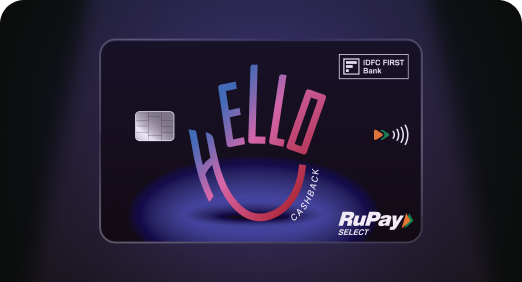
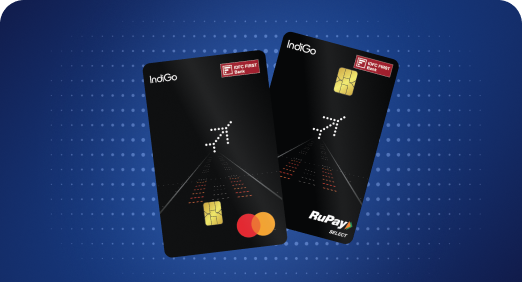
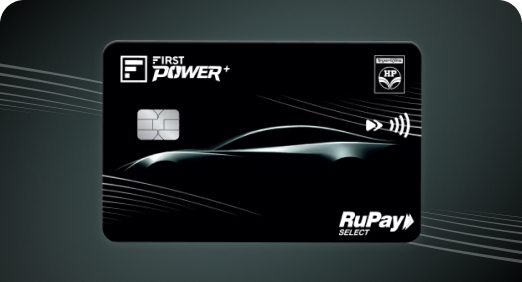
A Card that Powers your Savings & Lifestyle
IDFC FIRST Bank HPCL Credit Card









Most Searched
Earn up to 7% interest on your Savings Account
Open Account Now
Download our app
Get instant help for all your queries in one place
Unlock features, exclusively available
only on the IDFC FIRST Bank app
Trusted by 1.2+ million Indians.


4.8

4.8

Tools & Calculators
Privilege Program



Tools & Calculators

Unlock features, exclusively available
only on the IDFC FIRST Bank app
Personal Loan
 Rising school fees require planning and quick financing, which can be met with an easily accessible personal loan.
A personal loan helps when school fees start weighing on family finances and helps meet deadlines or sudden expenses.
The smartest approach to managing school fees with an emergency loan is advance planning and selective borrowing.
Rising school fees require planning and quick financing, which can be met with an easily accessible personal loan.
A personal loan helps when school fees start weighing on family finances and helps meet deadlines or sudden expenses.
The smartest approach to managing school fees with an emergency loan is advance planning and selective borrowing.
If you are planning your child’s schooling, you already know the host of expenses awaiting you. The inflation and the digital shift in education are taking place, which are evolving the education experience. The fees, accommodation, materials, and more all culminate in a greater budget than you’d imagine. A simple solution to fund such expenses is getting a personal loan, especially in times of need. Learn how a personal loan can help your child’s studies.
Yes, a personal loan can be used to pay school fees in India. There are no restrictions on usage. It can help cover tuition fees, admission charges, books, uniforms, and other education-related expenses, especially when payments are urgent.
School fees are a matter of overnight stress. They build up in specific situations where timing, cash flow, responsibilities, and added expenses don’t align. These are the moments when your family usually starts feeling the pressure the most, and an emergency loan serves as a solution.
Many schools require large fee payments at once, whether it is during admission or for the semester. Even with a steady income, paying such big amounts in one go disrupts budgets.
Situations like mid-year school change, new curriculum requirement, that school trip which shapes your child’s memories, or additional academic support create the need for emergency funding.
School fees can collide with other non-negotiable expenses like rent, medical needs, family obligations, and existing EMIs. Such phases can compromise your finances.
A job change, delayed salary credit, business slowdown, or a short career break can make routine expenses harder to manage. School fees can feel heavier during such transitions.
Funding for school fees usually comes with a mix of planning, adjustments due to sometimes deviating budget, short-term decisions, or a dedicated account.
Here are some of the common methods used to fund school fees in India:
For many families, school fees are managed through disciplined monthly budgeting. Whether they earn through salaries or business income, a portion is set aside for predictable fee schedules.
Other go-to means to fund school fees are education-focused savings, recurring deposits, or fixed deposits built with steady contributions over time.
In some cases, when finances fall short, families also seek help from close family members, especially during the admission season when the fee payment is highly time-sensitive.
A personal loan serves as an emergency loan when school fees are high or timelines are tight. It gives easy and quick access to funds and helps spread the cost into manageable EMIs.
When the pressure of school fees starts getting to you, it’s much better to look for practical support. This is where a personal loan proves useful. Here’s what you can expect from it:
School fees are usually charged in a lump sum, but your household expenses are managed on a monthly basis. So, saving up for a big amount every semester can make you lose track. Also, it can cause an immediate dent in your savings. This is where a personal loan helps, as it spreads the big expense across fixed EMIs.
The EMI varies by case. Using the Personal Loan EMI calculator can help you get an estimate.
For example:
You are applying for a Personal Loan of ₹ 2 lakhs with FIRSTmoney by IDFC FIRST Bank.
Suppose the applicable interest rate is 9.99%.
You have opted for a tenure of 24 months.
Enter these parameters into the designated fields of the calculator.
The estimated EMI will appear on the screen.
In this case, the EMI is approximately ₹ 9,228 per month.
Schools are strict with their fee deadlines. They rarely offer flexibility once the last fee clearance date is set. With such tight timelines, you may struggle when the funds aren’t readily available.
A personal or urgent loan helps you with meeting such payments on time with quick access to funds. This way, you can avoid penalties, late fees, and unnecessary stress during a busy academic period. For instance, consider FIRSTmoney by IDFC FIRST Bank. You can get instant funds starting from ₹50,000 to ₹15 lakh with disbursement within 10 minutes and zero foreclosure charges, helping you keep up with the strict deadlines.
When you’re saving through fixed deposits and other lucrative investments, you are building for a secure future and the achievement of milestones. In such a case, breaking your funds to pay for the school fees can get in the way of other goals. With an urgent loan, you can keep those funds intact. You can use them for other goals and emergencies when need be.
Despite your best planning, some scenarios can throw your budget for school fees off balance. Maybe it's the mid-year transfer, need for additional academic support, a student cost hike, a change in management demanding new allowances, etc. These expenses don’t always come with prior notice. In such cases, an emergency loan gives you quick access to funds.
A personal loan lets you choose the tenure according to your repayment comfort from a flexible range. For instance, IDFC FIRST Bank’s FIRSTmoney personal loan lets you pick a tenure between 9 to 60 months. You can extend it as per your income cycle and other expenses. However, make sure the comfort of a longer tenure doesn’t result in a higher interest burden. Balance the convenience with cost.
It’s not just the tuition fees; a personal loan covers a wide range of expenses like books, uniforms, transport, digital devices, exam fees, extracurricular activities, and more. It comes with the flexibility to use. Lenders do not restrict you to using it for a specific purpose. So, you can also use it for household expenses once you’re done with school fees if your finances fall short.
When you take out an urgent loan for school fees, you also need to ensure you manage it well with strategic repayments. The EMI shouldn’t strain your budget. A little planning goes a long way. Here are some practical tips to follow:
Before finalising an urgent loan, select an EMI that you can comfortably manage for the entire loan tenure. Take a close look at your monthly commitments like rent, groceries, existing EMIs, savings, and other financial responsibilities.
The way you adjust your tenure influences the EMI and interest outgo significantly. The longer the tenure, the lower the EMI but a higher interest outgo, and vice versa. Thus, strike the right balance that aligns with your monthly income.
School fees are only part of the bigger picture. As the academic year moves forward, you will incur charges for specialised activities, materials, exams, and more. Accounting for those and maintaining a buffer helps you avoid compromising with emergency loan EMIs.
What’s more, with the IDFC FIRST Bank’s FIRSTmoney personal loan, you can apply for on-demand loans which allows you to withdraw funds multiple times from your approved loan offer and pay interest only on the withdrawn amount.
Paying EMIs on time protects your credit score and makes future borrowing easier. So, make it a point to clear EMIs on time by setting reminders and auto-debits. Make sure your account has a sufficient balance to avoid EMI bounce charges.
You may receive variable income, like bonuses, incentives, interest income, maturity benefit on redeeming assets, etc. Use them for prepaying the loan. Some lenders, such as IDFC FIRST Bank, allow early closure with zero foreclosure charges on their FIRSTmoney personal loan.
As the school fees start stretching the budget, you can choose between multiple borrowing options to ease the load. Each works differently, and the right choice typically depends on your needs, urgency, flexibility, and repayment capacity.
Here are the three popular financing options for school fees and the differences between them:
Feature |
Personal Loan | Education Loan | Overdraft |
| Usage | Flexible | Mostly higher education | Flexible |
| Disbursal time | Fast | Slower | Instant |
| Collateral | Not required | May be required | Depends |
| Repayment | Fixed EMIs | Moratorium possible | No fixed EMI |
| Best for | Urgent school fees | College/university | Short-term liquidity |
Insight: For school fees, personal loans are often more practical due to speed and flexibility.
The pressure of school fees can be long-standing if not planned well. You need to build flexibility so education costs don’t leave you off guard. Here are some ways to achieve that:
School fees rarely stay the same. Every academic year is met with a new structure, or sometimes, there are mid-year hikes. Factoring in such possibilities while planning a budget for school fees helps avoid sudden jolts.
Even small, regular contributions to a savings account specific to building an education fund can prove useful in the long run. It lowers the dependence on other sources and simplifies school fee payments.
The goal is to save as much as possible systematically. Urgent loans are a boon but should come after you’ve tried your best. They are more of a strategic choice for urgent and unexpected expenses.
What you planned initially may not hold up as time passes by. Reassess income, expenses, and upcoming school costs once a year to realign plans before the fee deadlines arrive.
You need not rely on one financing option to meet your school fees needs. Use a mix of savings, budgeting, borrowing, and variable income to spread risk and reduce the pressure that a single option brings.
As discussed, school fees are not the only cost. You want to account for all the possible expenses like uniforms, transport, books, materials, activities, etc. Track them to get a clearer picture of real costs.
Final words
School fees become easily manageable with the right decisions. You want to plan ahead, make adjustments to the said plan, and get an emergency loan when it makes sense. Adding a loan to the mix isn’t always risky if you plan it well. In fact, it works in your favour with the flexibility and quick access to funds. Make sure you are equipped to meet the EMI deadlines and maintain your credit score. Borrow thoughtfully, choose a manageable tenure, and understand the loan terms properly.
Not always. Education loans are specifically designed to finance higher education including undergraduate and post-graduate studies. On the other hand, personal loan is a versatile financing option that can be used to manage multiple financial requirements including education financing.
It will, based on how you manage the repayment. Paying EMIs on time can improve your credit profile, while delays can impact it negatively.
A good rule is to keep EMIs within a level that doesn’t disrupt essential expenses, savings, and other EMIs. If the EMI feels tight and strains your finances, it is too high to sustain long-term. Ideally, the total EMIs should not exceed 30% to 40% of your available income. This is necessary to ensure that you are left with a reasonable amount for your day-to-day living.
The contents of this article/infographic/picture/video are meant solely for information purposes. The contents are generic in nature and for informational purposes only. It is not a substitute for specific advice in your own circumstances. The information is subject to updation, completion, revision, verification and amendment and the same may change materially. The information is not intended for distribution or use by any person in any jurisdiction where such distribution or use would be contrary to law or regulation or would subject IDFC FIRST Bank or its affiliates to any licensing or registration requirements. IDFC FIRST Bank shall not be responsible for any direct/indirect loss or liability incurred by the reader for taking any financial decisions based on the contents and information mentioned. Please consult your financial advisor before making any financial decision.
The features, benefits and offers mentioned in the article are applicable as on the day of publication of this blog and is subject to change without notice. The contents herein are also subject to other product specific terms and conditions and any third party terms and conditions, as applicable. Please refer our website www.idfcfirst.bank.in for latest updates.