









Login to Internet banking
A brand-new experience - smarter, faster, and secured





You gain a dedicated partner committed to helping you reach your full potential and achieve new heights
Know More

BRAVO (Auto Sweep)
Convert the idle funds in your current account into a fixed deposit with the BRAVO feature.
Know More
Zero Forex Markup Current Account
Maximise your savings and boost profitability with our Zero Forex Markup current accounts
Know More





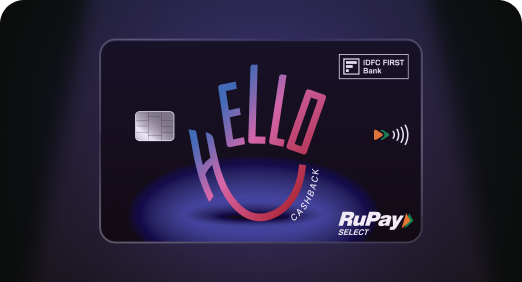
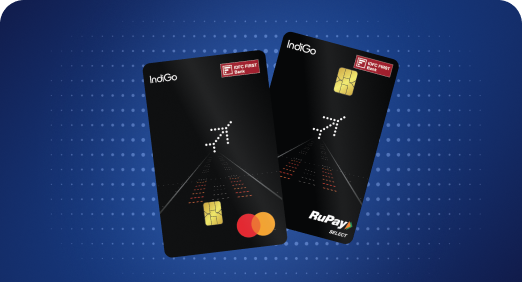

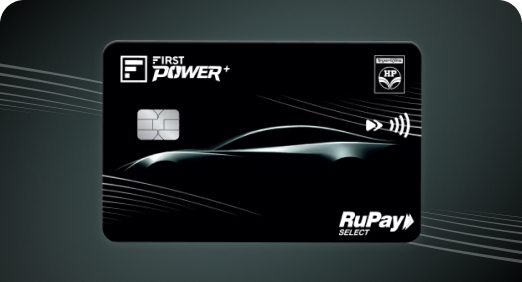
A Card that Powers your Savings & Lifestyle
IDFC FIRST Bank HPCL Credit Card









Most Searched
Earn up to 7% interest on your Savings Account
Open Account Now
Download our app
Get instant help for all your queries in one place
Unlock features, exclusively available
only on the IDFC FIRST Bank app
Trusted by 1.2+ million Indians.


4.8

4.8

Tools & Calculators
Privilege Program



Tools & Calculators

Unlock features, exclusively available
only on the IDFC FIRST Bank app
Personal Loan
 Travel loan interest rates in India typically range from 10% and above, and your credit score, income stability, and repayment tenure play a key role in securing the best rate.
Understanding the travel loan rate of interest helps you estimate EMIs accurately and choose financing for travel that fits your monthly budget.
Vacation loan rates are lower for borrowers with strong credit profiles, shorter tenures, and manageable existing EMIs, making smart preparation essential before applying.
Comparing lenders, checking additional charges, and opting for transparent fixed rates can help you reduce the overall cost of travel loan financing.
Travel loan interest rates in India typically range from 10% and above, and your credit score, income stability, and repayment tenure play a key role in securing the best rate.
Understanding the travel loan rate of interest helps you estimate EMIs accurately and choose financing for travel that fits your monthly budget.
Vacation loan rates are lower for borrowers with strong credit profiles, shorter tenures, and manageable existing EMIs, making smart preparation essential before applying.
Comparing lenders, checking additional charges, and opting for transparent fixed rates can help you reduce the overall cost of travel loan financing.
A travel loan can help you fund flights, hotels, and other trip expenses without disturbing your savings, but the interest rate decides how much that convenience will cost you. In India, travel loan interest rates usually range from 10% to 30% p.a., based on factors such as your credit score, income stability, existing EMIs, loan amount, and repayment tenure. You can get a FIRSTmoney personal loan for travel starting at just 9.99% p.a.
A lower rate can make your monthly EMI lighter, while a higher rate can increase the total amount you repay over time. Knowing where you may fall in this range helps you borrow wisely and plan your trip with greater confidence.
Read on to learn more about travel loan interest rates and how they affect the borrowing cost.
Travel loan interest rate is the percentage charged by the bank on the amount you borrowed for your travel expenses. It determines the interest (extra amount) you will have to pay over the course of your loan tenure.
Interest can be calculated and charged on a monthly or annual basis. This is why it is essential to compare loan providers to find the best deal possible.
Digital-first lenders like IDFC FIRST Bank offer travel loans with a completely digital process with the following features:
1. You get a competitive interest rate starting at 9.99% p.a.
2. You can get up to ₹15 lakhs instantly
3. Loans are disbursed in 10 minutes
4. You can enjoy zero foreclosure charges
5. Avail zero processing fee on select loan amounts
Paying attention to this vacation loan rate helps you smartly plan your loan application. Note that the lowest rate is reserved for applicants with a good credit profile.
Travel loan rate of interest is not uniformly applicable for all borrowers. It is determined based on eligibility factors such as the following:
A credit score is often the first thing lenders check. A strong score reassures them of your disciplined repayments, which brings down the travel loan interest rate, and vice versa. In general:
| Credit score range | Profile strength | Likely travel loan rate outcome |
| 750 and above | Strong profile | Higher chance of getting the most competitive rates |
| 700 to 749 | Good profile | Likely to qualify for standard market rates |
| 650 to 699 | Moderate profile | Rates may be slightly higher, with closer scrutiny |
| Below 650 | Limited credit strength | Approval may be harder, and rates can be higher |
Your steady income helps gain lenders’ confidence. If you have a consistent monthly income, longer job tenure, or stable business earnings, you can finance travel with a vacation loan at a lower interest rate.
The amount you borrow may influence the vacation loan rate you attract. A larger sum leads to a higher rate due to greater perceived risk, and the opposite holds true for limited borrowing. Therefore, borrowing only what you need may improve your chances of getting a better offer.
Shorter tenure means repaying the loan sooner. Hence, it attracts a better interest rate. Conversely, a longer tenure comes with a slightly higher interest cost as the lender’s risk extends over a longer period. If you can manage a higher EMI comfortably, choosing a shorter tenure may reduce your total borrowing cost.
If a major part of your income already goes toward EMIs, lenders may adjust the travel loan rate of interest at a higher range to safeguard themselves against the risk of repayment.
For example, borrowers with lower existing EMI commitments and a lower debt-to-income ratio are more likely to receive favourable rates than those who already have multiple loans or credit card dues.
Besides the travel loan interest rates, the interest structure also makes a huge difference to your repayment journey. Banks determine the calculation of EMIs based on your choice between a fixed and floating interest rate. Here’s how they work:
A fixed rate is offered as a constant rate against the travel loan. It remains unchanged for the entire tenure. Your EMIs stay the same, regardless of what happens in the market. This makes planning your repayment easier with a rough calculation of EMIs.
Some lenders, such as IDFC FIRST Bank, also offer a monthly-reducing fixed travel loan interest rate. In this case, the interest rate remains the same but is applied to a decreasing principal balance. This means your total interest and EMI go down as you pay off the loan.
Also known as a variable rate, a floating travel loan interest rate is linked to an external benchmark, such as the RBI repo rate. The interest moves as the benchmark and general market conditions fluctuate. Your EMIs adjust accordingly. You pay more during high-rate periods but stand to benefit when the market rates fall.
Note: Most travel loans are offered at a fixed interest rate, but you can check with the lender to make your pick between a fixed and floating rate.
Understanding how EMIs are calculated helps you see the real impact the travel loan rate of interest has on your monthly budget. Lenders use a standard formula to calculate EMI, which includes variables such as the loan amount, tenure, and the applicable interest rate.
The formula is: EMI = P x r x (1+r) ^n/ [(1+r) ^ (N-1)]
Here, P denotes the principal amount, r denotes the applicable interest rate, and N denotes the loan tenure. This is calculated against the interest rate, typically between 10% and 18%.
For lenders like IDFC FIRST Bank offering interest rates starting at 9.99% p.a. on the FIRSTmoney instant travel loan, the EMI calculation for a loan amount of ₹1,00,000 will be as follows:
Tenure |
Approximate EMI |
Total interest payable |
12 months |
₹8,791 |
₹5,493 |
24 months |
₹4,614 |
₹10,737 |
36 months |
₹3,226 |
₹16,145 |
48 months |
₹2,536 |
₹21,717 |
60 months |
₹2,124 |
₹27,453 |
*The above calculation is for illustrative purposes only. Actual EMI may vary based on your offered rate, applicable fees and charges.
The headline interest rate is only one part of the borrowing cost. The APR gives a broader picture by factoring in charges such as processing fees. If two loans have similar rates, the lower APR may be the better deal. Always review fees before applying.
While the travel loan interest rate plays a major role in shaping the loan cost, it’s not the only element. These additional charges influence the overall loan cost:
This is a small fee levied for processing your loan application. Even though it’s a one-time charge, it adds to the cost of borrowing.
If you decide to close your loan early or prepay with variable income, some lenders may charge a nominal penalty against the interest.
IDFC FIRST Bank offers zero foreclosure charges on its FIRSTmoney personal loan.
Missing or delaying your EMIs not only affects your credit score but also results in additional fees. This is charged as a nominal percentage against the unpaid EMI.
This is a statutory charge subject to change under state law. It is applicable to the travel loan agreement.
If your EMI payment fails due to insufficient balance in your bank account or any other technical issue affecting your auto-debit, you incur an EMI bounce charge.
Some lenders may levy a small fee for manual collection of your EMI.
This covers duplicate issuance of no-objection certificates, physical statements of account, and document retrieval.
You can get a lower interest rate on a travel loan by strengthening your application. Here are effective ways to do that:
Lenders reward responsible credit behaviour. Hence, a credit score above 750 is ideal for getting a lower interest rate. It depicts timely repayments and low credit utilisation.
If your budget allows, opting for a shorter tenure can help you secure a lower rate. While EMIs may be higher each month, the total interest outgo is lower.
If you have existing debt, try to repay as much as possible before financing travel with a vacation loan. This way, you reduce your debt-to-income ratio and qualify for a lower interest rate.
The amount you borrow today becomes a financial responsibility tomorrow. So, you want to think about the required funds realistically. The less you borrow, the lower the interest rate and vice versa.
Different lenders offer varying promotional rates on vacation loans. It is worth comparing such offers to ensure you’re not missing out on a better interest rate.
If you want competitive pricing along with transparent terms and convenience, FIRSTmoney Personal Loan from IDFC FIRST Bank can be a strong option. You get:
1. Low interest rates starting at just 9.99% p.a., so your holiday stays within budget
2. Zero foreclosure charges. Close your loan at any time without a foreclosure penalty
3. Instant approval and 10-minute disbursal, perfect for those spontaneous getaways
4. 100% digital process. Apply anytime, anywhere, no paperwork required
5. Flexible on-demand loans to cover additional travel expenses with ease
You can prepare for a travel loan application with a much clearer mindset once you understand how the travel loan interest rate works. As is evident, the interest rate differs based on lenders’ offers and your eligibility. Boosting your eligibility is a surefire way to get a lower interest rate.
You can also compare offers to get the best deal. Also, pay attention to other additional charges to get a clear understanding of the overall loan cost. With such thoughtful preparation, financing your travel becomes both easier and more fulfilling.
Make your dream vacation a reality with the IDFC FIRST Bank FIRSTmoney Personal Loan!
You can get a travel loan with FIRSTmoney by IDFC FIRST Bank at interest rates starting from 9.99% p.a.
Rates differ because each bank assesses risk differently based on its policy and your eligibility.
In most cases, yes. Banks may offer preferential rates to existing customers with a clean repayment history.
You can assess travel loan affordability by calculating your EMI based on the loan amount, tenure, and interest rate. Ensure that your total EMIs (including existing loans) do not take up a large portion of your monthly income.
The contents of this article/infographic/picture/video are meant solely for information purposes. The contents are generic in nature and for informational purposes only. It is not a substitute for specific advice in your own circumstances. The information is subject to updation, completion, revision, verification and amendment and the same may change materially. The information is not intended for distribution or use by any person in any jurisdiction where such distribution or use would be contrary to law or regulation or would subject IDFC FIRST Bank or its affiliates to any licensing or registration requirements. IDFC FIRST Bank shall not be responsible for any direct/indirect loss or liability incurred by the reader for taking any financial decisions based on the contents and information mentioned. Please consult your financial advisor before making any financial decision.
The features, benefits and offers mentioned in the article are applicable as on the day of publication of this blog and is subject to change without notice. The contents herein are also subject to other product specific terms and conditions and any third party terms and conditions, as applicable. Please refer our website www.idfcfirst.bank.in for latest updates.