









Login to Internet banking
A brand-new experience - smarter, faster, and secured




BRAVO (Auto Sweep)
Convert the idle funds in your current account into a fixed deposit with the BRAVO feature.
Know More

Zero Forex Markup Current Account
Maximise your savings and boost profitability with our Zero Forex Markup current accounts
Know More
BRAVO (Auto Sweep)
Convert the idle funds in your current account into a fixed deposit with the BRAVO feature.
Know More

You gain a dedicated partner committed to helping you reach your full potential and achieve new heights
Know More





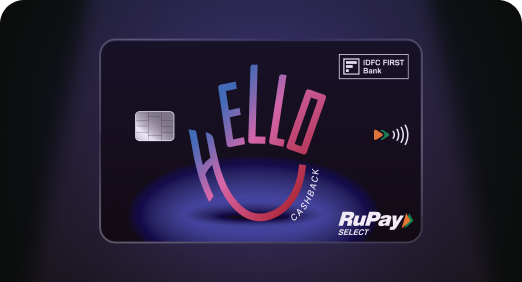

Enjoy Zero Forex on all IDFC FIRST Bank Credit Cards
Save more on all international spends
Know More
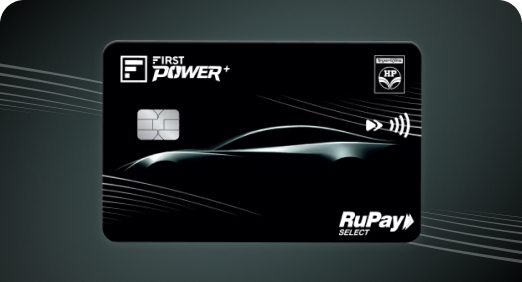
A Card that Powers your Savings & Lifestyle
IDFC FIRST Bank HPCL Credit Card









Most Searched
Earn up to 7% interest on your Savings Account
Open Account Now
Download our app
Get instant help for all your queries in one place
Unlock features, exclusively available
only on the IDFC FIRST Bank app
Trusted by 1.2+ million Indians.


4.8

4.8

Tools & Calculators
Privilege Program



Tools & Calculators

Unlock features, exclusively available
only on the IDFC FIRST Bank app
Credit Card
 The 30% rule works best when your credit card utilisation rate stays within 30% on each card and across your total available credit.
One heavily used card can still affect your CIBIL score, even if your overall card usage looks comfortable.
Digital-first tools from IDFC FIRST Bank can help you better track spending and manage card usage.
The 30% rule works best when your credit card utilisation rate stays within 30% on each card and across your total available credit.
One heavily used card can still affect your CIBIL score, even if your overall card usage looks comfortable.
Digital-first tools from IDFC FIRST Bank can help you better track spending and manage card usage.
Credit utilisation rate is the percentage of your total credit limit that you are currently using on your credit card. It is calculated by dividing your used credit by your total credit limit.
Managing your credit card utilisation rate is essential as it plays a crucial role in determining your overall credit score. Many credit card users follow the 30% credit utilisation rate rule to ensure that their credit score remains healthy.
However, what happens if you already have multiple credit cards? Does the 30% credit card utilisation rate rule apply to each card individually, or do you need to maintain it across all your cards? Let’s find out in detail.
Your credit card utilisation rate is the percentage of your available credit limit that you’re currently using. It’s one of the signals that lenders and credit bureaus may use to understand how dependent you’re on revolving credit.
Here is what that usually means in practice:
In simple terms, this metric helps show whether you’re using credit comfortably or stretching it too far.
The 30% benchmark applies to your total credit usage across all cards, but lenders also look at how much of each individual card's limit you are using. Keeping both in check gives you the strongest credit profile.
To understand it clearly, keep these points in mind:
So, if you have three cards, the safest approach is to manage balances, so usage stays moderate on each card and across your total available credit.
A common mistake is assuming that only the combined limit matters. In reality, one card with very high usage can still make your profile look stressed. This is where many users get caught off guard.
Suppose you have three cards with a combined limit of ₹3 lakhs, and your total outstanding is ₹60,000, your overall utilisation is only 20%, which looks fine. But if ₹45,000 of the ₹60,000 sits on one card with a ₹50,000 limit, that card is at 90% usage. Even though your total credit card utilisation rate appears healthy, that one card may still signal overdependence on a single credit line.
That is why relying only on the combined number can give a false sense of safety. A balanced pattern across cards usually reflects stronger credit behaviour.
The formula is simple. You just divide the outstanding balance by the credit limit and multiply by 100.
Utilisation Rate = (Outstanding Balance ÷ Credit Limit) × 100.
A quick way to look at it is:
This makes it easier to monitor your credit card utilisation rate from both angles. Once you understand the math, it becomes much easier to tell whether the issue is with a specific card or your overall usage pattern.
You do not need to stop using your cards. You just need a pattern that keeps balances from piling up too heavily in one place.
A few practical habits can make a real difference:
Instead of loading most expenses onto one card, distribute them across cards where it makes sense.
A part-payment before statement generation can reduce the reported balance.
Even if your total usage is low, crossing 80% or 90% on one card is best avoided.
If your income and repayment record support it, a higher limit can reduce your usage ratio.
Monitoring your credit card utilisation rate through digital banking tools can help you act before usage climbs too high.
These steps are simple, but they work best when followed consistently rather than occasionally.
The number of cards you hold is not the real issue. What matters more is whether you’re using them in a controlled and disciplined way.
That is worth remembering for a few reasons:
So, the goal is not to collect more cards or avoid them completely. The goal is to manage the limits you already have with care.
The safest way to view the 30% rule is this: treat it as a benchmark both for each card and for your total usage. A healthy credit card utilisation rate is less about chasing a magic number and more about showing that you can use credit without leaning on it too heavily.
When you can track spending clearly, act early, and manage balances smoothly, staying within healthier limits becomes much easier.
Take a closer look at IDFC FIRST Bank Credit Cards to find options that help you monitor usage more effectively and manage spending with greater control.
A higher limit only helps if your spending stays the same. If expenses rise along with the limit, your utilisation ratio remains unchanged, and your score sees no benefit.
Yes. If a high balance is reported before payment is made, it can still affect how your credit usage appears for that cycle.
Not always. Closing a card can reduce your total available limit, potentially increasing your overall utilisation if your spending stays the same.
Yes, making multiple payments during a billing cycle can help reduce your outstanding balance sooner. It may also lower your reported credit utilisation, which can positively influence your credit profile.
Always pay the full outstanding amount. Paying only the minimum due prevents late fees but interest continues to build on the remaining balance, making your debt more expensive over time.
The contents of this article/infographic/picture/video are meant solely for information purposes. The contents are generic in nature and for informational purposes only. It is not a substitute for specific advice in your own circumstances. The information is subject to updation, completion, revision, verification and amendment and the same may change materially. The information is not intended for distribution or use by any person in any jurisdiction where such distribution or use would be contrary to law or regulation or would subject IDFC FIRST Bank or its affiliates to any licensing or registration requirements. IDFC FIRST Bank shall not be responsible for any direct/indirect loss or liability incurred by the reader for taking any financial decisions based on the contents and information mentioned. Please consult your financial advisor before making any financial decision.
The features, benefits and offers mentioned in the article are applicable as on the day of publication of this blog and is subject to change without notice. The contents herein are also subject to other product specific terms and conditions and any third party terms and conditions, as applicable. Please refer our website www.idfcfirst.bank.in for latest updates.


Earn IndiGo BluChips | Redeem on IndiGo flights | Power of Dual cards | 1.49% Forex Mark Up

Lounge access, 10X Reward, ₹4000 cashback, Zero Forex, Spa, Golf access

1% Forex, 10X rewards, Lounge, Spa, Golf and Movies

Buy-1-Get-1 Movie ticket offers, airport lounge access, 1.5% forex markup, railway lounge visits









Earn IndiGo BluChips | Redeem on IndiGo flights | Power of Dual cards | 1.49% Forex Mark Up
Know MoreLounge access, 10X Reward, ₹4000 cashback, Zero Forex, Spa, Golf access
Know MoreBuy-1-Get-1 Movie ticket offers, airport lounge access, 1.5% forex markup, railway lounge visits
Know MoreLounge access, 10X Reward, ₹4000 cashback, Zero Forex, Spa, Golf access
Know MoreFuel Card, 5% fuel savings, 2.5% Grocery & Utility Savings, 0 interest cash
Know MoreZero Annual Fee, Complimentary airport lounge access, Low forex mark-up at 1.99%, Buy-1-Get-1 Movie ticket offers
Know More