









Login to Internet banking
A brand-new experience - smarter, faster, and secured






You gain a dedicated partner committed to helping you reach your full potential and achieve new heights
Know More

BRAVO (Auto Sweep)
Convert the idle funds in your current account into a fixed deposit with the BRAVO feature.
Know More
Zero Forex Markup Current Account
Maximise your savings and boost profitability with our Zero Forex Markup current accounts
Know More






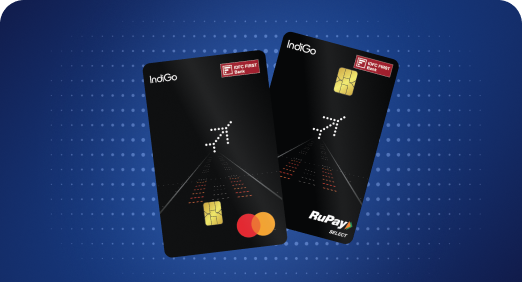


A Card that Powers your Savings & Lifestyle
IDFC FIRST Bank HPCL Credit Card









Most Searched
Earn up to 7% interest on your Savings Account
Open Account Now
Download our app
Get instant help for all your queries in one place
Unlock features, exclusively available
only on the IDFC FIRST Bank app
Trusted by 1.2+ million Indians.


4.8

4.8

Tools & Calculators
Privilege Program



Tools & Calculators

Unlock features, exclusively available
only on the IDFC FIRST Bank app
Finance
 Union Budget 2026 focuses on simplifying the tax filing process for middle-class families.
No changes to income tax in the Union Budget 2026, meaning that tax slabs remain the same as last year.
Families should use 2026 to strengthen their financial basics by building an emergency fund, investing consistently in long-term goals, and protecting savings with adequate health insurance coverage.
Union Budget 2026 focuses on simplifying the tax filing process for middle-class families.
No changes to income tax in the Union Budget 2026, meaning that tax slabs remain the same as last year.
Families should use 2026 to strengthen their financial basics by building an emergency fund, investing consistently in long-term goals, and protecting savings with adequate health insurance coverage.
Union Budget 2026 Impact on Individuals & Households
As the Finance Minister of India presents the Union Budget 2026, headlines are filled with massive spending numbers, fiscal deficit targets, and sectoral allocations. But for individuals and families, not every budget announcement changes daily life. What matters most to the average person is how much they can set aside for their day-to-day spending.
It is important to understand what the union budget is from a household perspective. It is the government’s financial roadmap that decides your salary deductions, savings returns, loan costs, and cost of living. The Union Budget 2026 is focused on simplifying the tax filing process for family and extending timelines to help them with compliance. Disposable income, digital finance, and middle-class savings behavior have all been taken into consideration, making this year’s budget relevant for families.
Let’s explore the Union Budget 2026 highlights.
Below are the key highlights that are taking centre stage in the Union Budget 2026.
A major highlight of the Union Budget 2026 is that standard deduction on salary continues to be at ₹75,000. From a policy standpoint, this supports higher disposable income without complicating the tax system. Importantly, the tax slabs for both regimes (New Tax and Old Tax Regime) remain unchanged.
The Budget 2026 has extended the due date for filing revised income tax returns to March 31. This gives taxpayers more time to correct errors and ensure compliance. Additionally, non-audit business taxpayers can now file their income tax returns by August 31, which is a significant timeline increase over last year.
Among the notable budget announcements, the Union Budget has significantly neutered the tax advantage provided by Sovereign Gold Bonds (SGBs). Previously, any investor who purchased an SGB, whether from the RBI or from the secondary market, could benefit from its tax-free status if they held it till maturity. However, Budget 2026 clarifies that only investors who directly issue the SGB from the RBI will be able to claim its tax-free status at maturity. Any person who buys an SGB from the secondary market will have to pay capital gain taxes without exception. This greatly reduces the tax saving potential that SGBs have held for the past few years.
The Union Budget 2026 reinforced the expansion of health insurance coverage for senior citizens aged 70 and above, providing a ₹5 lakh annual cashless cover regardless of income. Additionally, the budget has also provided full exemptions on basic customs duty for 17 cancer drugs and seven rare disease medicines. This change will help patients get the medication they need at lower costs and will also reduce the claim burden on health insurance providers.
Budget 2026 aims to reduce compliance burden on regular taxpayers. To achieve this goal, the government has reworked regulations around Tax Deduction at Source (TDS) and Tax Collection at Source (TCS). These changes will improve cash flow for everyday taxpayers while also simplifying compliance requirements. Regulation changes for TDS and TCS will come into effect on April 1, 2026.
The underlying message of the Union Budget 2026 is clear; savings behavior and everyday affordability are receiving renewed attention. Here’s how the budget affects families' expense management and future planning.
The previous budget had already increased disposable income for the average taxpayer, and this budget hopes to continue the same trend. Additional savings naturally flow into savings instruments, emergency funds, and long-term investments. The Union Budget 2026 is prioritizing disciplined saving rather than tax efficiency, encouraging families to plan beyond short-term consumption.
Families that focus their investments into tax-saving instruments will have to review their portfolio this year. With big changes to SGB tax exemptions, investors will have to find different tax efficient investments to maximize their savings. Additionally, those who invest in cryptocurrencies also need to be wary of the new penalty structure added for non-reporting of crypto transactions. Non-filing of cryptocurrency transactions can lead to a fine of ₹200/day, while inaccurate reporting can lead to a hefty fine of ₹50,000.
Collectively, these budget announcements support financial stability. They will allow families to balance rising living costs with steady wealth building.
In light of the Union Budget 2026, your financial planning needs quick recalibration. Here is what you should focus on:
While income tax rates remain unchanged in the Union Budget 2026, you may still want to review both regimes to find the best choice for your financial goals. The New Tax Regime may be more attractive if you prefer simplicity and don’t have any tax-saving investments to begin with. On the other hand, if you are already a high-income earner and have multiple tax saving instruments, the Old Tax Regime might continue to be the best choice for you based on your savings potential.
Union Budget 2026 maintains attractive rates from the previous budget, meaning that your disposable income will continue to remain as is. However, rising inflation rates and future uncertainty are always something to be wary of. This is why it is advisable to create an emergency fund that is sufficient for 6 months of essential expenses.
Convert monthly surplus into fixed deposits (FDs), recurring deposits (RDs), or systematic investment plans (SIPs) in mutual funds to prevent inflation from derailing your plans.
With rising medical costs, review your policy cover and add a top-up if needed to protect your savings.
The Union Budget 2026 is not just about government spending but also about household decisions on taxes, savings, borrowing, and financial security. This budget did not provide much relief when it comes to tax saving, but it did simplify the taxpaying process and reduced regulatory compliance for average families. Use the information here to start planning for FY 26-27 today and make your 2026 money goals a reality!
The contents of this article/infographic/picture/video are meant solely for information purposes. The contents are generic in nature and for informational purposes only. It is not a substitute for specific advice in your own circumstances. The information is subject to updation, completion, revision, verification and amendment and the same may change materially. The information is not intended for distribution or use by any person in any jurisdiction where such distribution or use would be contrary to law or regulation or would subject IDFC FIRST Bank or its affiliates to any licensing or registration requirements. IDFC FIRST Bank shall not be responsible for any direct/indirect loss or liability incurred by the reader for taking any financial decisions based on the contents and information mentioned. Please consult your financial advisor before making any financial decision.
The features, benefits and offers mentioned in the article are applicable as on the day of publication of this blog and is subject to change without notice. The contents herein are also subject to other product specific terms and conditions and any third party terms and conditions, as applicable. Please refer our website www.idfcfirst.bank.in for latest updates.