









Login to Internet banking
A brand-new experience - smarter, faster, and secured





BRAVO (Auto Sweep)
Convert the idle funds in your current account into a fixed deposit with the BRAVO feature.
Know More

Zero Forex Markup Current Account
Maximise your savings and boost profitability with our Zero Forex Markup current accounts
Know More
BRAVO (Auto Sweep)
Convert the idle funds in your current account into a fixed deposit with the BRAVO feature.
Know More

You gain a dedicated partner committed to helping you reach your full potential and achieve new heights
Know More







Enjoy Zero Forex on all IDFC FIRST Bank Credit Cards
Save more on all international spends
Know More
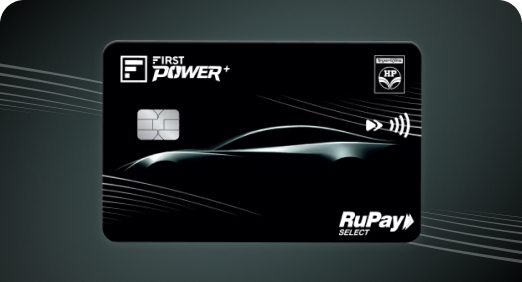
A Card that Powers your Savings & Lifestyle
IDFC FIRST Bank HPCL Credit Card









Most Searched
Earn up to 7% interest on your Savings Account
Open Account Now
Download our app
Get instant help for all your queries in one place
Unlock features, exclusively available
only on the IDFC FIRST Bank app
Trusted by 1.2+ million Indians.


4.8

4.8

Tools & Calculators
Privilege Program



Tools & Calculators

Unlock features, exclusively available
only on the IDFC FIRST Bank app
 Your banking rights change when you become an NRI. Investments, savings, and repatriation are governed by new rules.
Compliance with FATCA and CRS is not optional. UK-based NRIs must report Indian interest income to HM Revenue and Customs (HMRC), and Indian banks are required to share account information.
FEMA restricts the use of resident savings accounts once your status changes; you must switch to NRE, NRO, or FCNR accounts.
IDFC FIRST Bank offers end-to-end digital onboarding, full FATCA compliance support, and time-zone-friendly services for UK-based NRIs.
Your banking rights change when you become an NRI. Investments, savings, and repatriation are governed by new rules.
Compliance with FATCA and CRS is not optional. UK-based NRIs must report Indian interest income to HM Revenue and Customs (HMRC), and Indian banks are required to share account information.
FEMA restricts the use of resident savings accounts once your status changes; you must switch to NRE, NRO, or FCNR accounts.
IDFC FIRST Bank offers end-to-end digital onboarding, full FATCA compliance support, and time-zone-friendly services for UK-based NRIs.
Living and working in the UK as an Indian expatriate presents its own unique set of opportunities and responsibilities. One of the most important parts of settling in is managing your banking from the UK smoothly. Whether you are a new arrival or have been here for years, having a clear financial plan and regularly reviewing your NRI accounts can make a real difference.
You need to understand your banking rights, keep track of updates from your bank, and know how your financial goals align with the services available to you. Let’s see what regulations you need to be aware of.
An NRI bank account is specially designed to cater to the needs of NRIs. With an NRI account, you can seamlessly send money from abroad, repatriate funds from India, make investments, avail of loans and insurance, conduct a wide range of financial transactions, etc.
Yes, you can open both accounts at the same bank.
No, your regular savings account can only be converted to an NRO account. If you need an NRE account, you must open a new one.
When you become a Non-Resident Indian (NRI) while living in the UK, your financial responsibilities and banking rights shift significantly. Here’s what you need to know to stay compliant and manage your cross-border finances efficiently.
The Foreign Exchange Management Act (FEMA) regulates how NRIs can move money in and out of India. It’s the legal framework that governs your ability to hold and manage Indian financial assets once your residential status changes.
What FEMA allows you to do:
What FEMA restricts:
FEMA violations can result in financial penalties and legal complications, so it’s essential to update your accounts and investments as soon as your status changes.
The Foreign Account Tax Compliance Act (FATCA) and the Common Reporting Standard (CRS) are global frameworks designed to increase financial transparency. Under FATCA and CRS:
Non-disclosure of overseas income can lead to penalties in both India and the UK. Understanding these reporting obligations is critical to remaining compliant with Indian tax authorities.
The Reserve Bank of India (RBI) has established clear guidelines for how NRIs may access Indian banking services. Key permissions include:
However, you are required to:
Along with these, here are some tax-related regulations you must know.
Regulations for banking in the UK and related taxes are always changing. Here are a few important ones:
From April 2025, the UK will eliminate the non-domiciled (non-dom) tax regime. All UK residents will be taxed on their worldwide income and gains, regardless of domicile status.
New UK residents, including returning NRIs who haven't been UK tax residents in the past 10 years, can benefit from a four-year exemption on foreign income and gains. Eligible individuals can claim relief on income earned from overseas duties during the four-year FIG regime period.
Between April 2025 and April 2028, individuals can remit pre-2025 foreign income to the UK at reduced tax rates — 12% for 2025–26 and 2026–27, and 15% for 2027–28.
From April 2025, IHT will apply based on UK residency rather than domicile. Individuals residing in the UK for 10 out of the last 20 years may be liable, with exposure lasting up to 10 years after leaving the UK. The IHT threshold remains frozen at £325,000 until 2030, potentially increasing tax liabilities due to appreciation in asset values. From April 2027, pensions will be included as part of the assets subject to IHT.
Capital Gains Tax rates have risen to 18% for basic-rate taxpayers and 24% for higher-rate taxpayers, aligning with property sale rates.
As an NRI in the UK, you can primarily use three accounts for banking NRE, NRO, and FCNR. Each serves a different purpose.
Rupee-denominated. Funds must be from overseas income. Fully repatriable. Tax-free in India.
Rupee-denominated. Used to manage income earned in India, such as rent, pension, and dividends. Interest is taxable in India and partially repatriable.
Held in major foreign currencies (like GBP or USD). No currency conversion loss. Principal and interest are tax-free and fully repatriable.
Key differences lie in taxation, repatriation, and the denomination of the currency. Choose NRE for tax-free savings from UK earnings, NRO for managing Indian income, and FCNR to protect from exchange rate risks.
Next, let’s look at how to open NRI account from UK.
You have been compliant and responsible as an NRI; now it's time to choose the correct bank. Why? With increasing regulatory oversight in UK Banking and banking in India, it’s essential to select a provider that not only simplifies compliance but also supports seamless cross-border access.
The right bank account for NRIs in the UK should offer:
As your banking rights shift under laws like FEMA and FATCA, choosing a bank that ensures timely reporting, tax documentation, and account conversion support becomes vital. When researching how to open an NRI account, look for banks that offer simplified digital onboarding, have UK-based branches or support teams, and transparent fees.
Now that you are updated with the regulations and requirements. Let’s talk about why IDFC FIRST Bank is one of the most reliable banking partners, especially when banking from the UK.
At IDFC FIRST Bank, you get the following benefits as an NRI:
With IDFC FIRST Bank’s fully digital onboarding, getting started is as easy as logging in.
From real-time account controls to seamless transactions, the IDFC FIRST Bank app puts complete banking access at your fingertips, anytime, anywhere.
Your FATCA and FBAR obligations are made simpler with ready-to-download interest certificates and TDS reports, all formatted for international tax filings.
Repatriate up to USD 1 million a year from your NRO account, with expert support to guide you through the required documentation.
Whether you're in London or Mumbai, the Bank’s global helplines and dedicated NRI services ensure help is always available when you need it.
Recognised by Forbes as one of the World’s Best Banks 2025, IDFC FIRST Bank combines global trust with deep local insight — a smarter way to start your NRI banking journey.
It’s clear that staying compliant with changing financial regulations is essential when living in the UK as an NRI. And understanding FEMA, FATCA, and your banking rights ensures your money is secure and accessible across borders. Pairing that knowledge with the right bank account — one that offers seamless digital services, regulatory support, and ease of repatriation — makes managing your finances smoother. Stay informed about the evolving rules, daily news, and geopolitical developments. And if you're serious about efficient, compliant, and stress-free Banking from the UK, open an NRI account with IDFC FIRST Bank today.
Interest earned on Non-Resident External (NRE) accounts is tax-free in India. However, as a UK resident, you're liable to pay tax on this interest in the UK, as per your income tax band. Conversely, interest from NRO accounts is taxable in India at a rate of 30% along with surcharge and cess as applicable and must also be declared in your UK tax returns. Understanding these tax implications is crucial for maintaining your banking rights and ensuring compliance with both Indian and UK Banking regulations.
For rental income from Indian properties, NRIs should use an NRO account. This account is designed to handle income earned in India, including rent, dividends, and pensions. While the interest earned is taxable in India, you can repatriate up to USD 1 million annually after paying applicable taxes. Using an NRO account ensures adherence to UK Banking standards and safeguards your banking rights by complying with Indian tax laws.
The contents of this article/infographic/picture/video are meant solely for information purposes. The contents are generic in nature and for informational purposes only. It is not a substitute for specific advice in your own circumstances. The information is subject to updation, completion, revision, verification and amendment and the same may change materially. The information is not intended for distribution or use by any person in any jurisdiction where such distribution or use would be contrary to law or regulation or would subject IDFC FIRST Bank or its affiliates to any licensing or registration requirements. IDFC FIRST Bank shall not be responsible for any direct/indirect loss or liability incurred by the reader for taking any financial decisions based on the contents and information mentioned. Please consult your financial advisor before making any financial decision.
The features, benefits and offers mentioned in the article are applicable as on the day of publication of this blog and is subject to change without notice. The contents herein are also subject to other product specific terms and conditions and any third party terms and conditions, as applicable. Please refer our website www.idfcfirst.bank.in for latest updates.