









Login to Internet banking
A brand-new experience - smarter, faster, and secured




You gain a dedicated partner committed to helping you reach your full potential and achieve new heights
Know More
BRAVO (Auto Sweep)
Convert the idle funds in your current account into a fixed deposit with the BRAVO feature.
Know More
Zero Forex Markup Current Account
Maximise your savings and boost profitability with our Zero Forex Markup current accounts
Know More





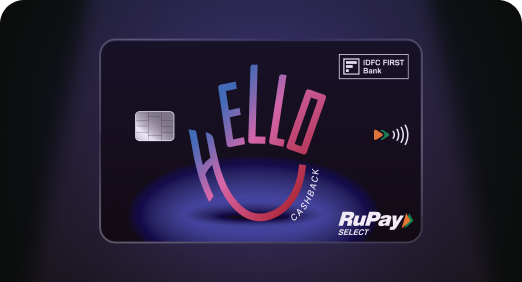

Enjoy Zero Forex on all IDFC FIRST Bank Credit Cards
Save more on all international spends
Know More
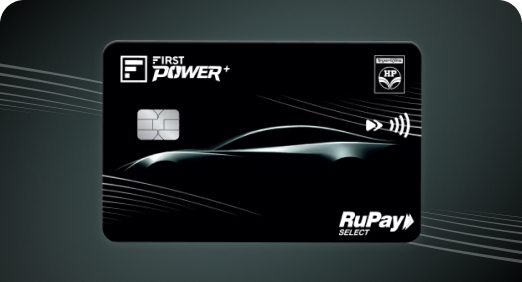
A Card that Powers your Savings & Lifestyle
IDFC FIRST Bank HPCL Credit Card









Most Searched
Earn up to 7% interest on your Savings Account
Open Account Now
Download our app
Get instant help for all your queries in one place
Unlock features, exclusively available
only on the IDFC FIRST Bank app
Trusted by 1.2+ million Indians.


4.8

4.8

Tools & Calculators
Privilege Program



Tools & Calculators

Unlock features, exclusively available
only on the IDFC FIRST Bank app
Personal Loan
 Having a good CIBIL score improves chances of loan approval with better interest rates.
Pay bills on time, limit credit usage, avoid multiple loan applications, maintain a credit mix, and check reports for errors to steadily increase your score.
Checking your own score doesn’t hurt it, closing old credit cards may lower your score, and low scores don’t always mean rejection, other factors like income also matter.
IDFC FIRST Bank’s FIRSTmoney personal loan offers instant, paperless access to up to ₹15 lakh, flexible EMIs, no prepayment charges, and competitive interest, making it ideal for prudent borrowers.
Having a good CIBIL score improves chances of loan approval with better interest rates.
Pay bills on time, limit credit usage, avoid multiple loan applications, maintain a credit mix, and check reports for errors to steadily increase your score.
Checking your own score doesn’t hurt it, closing old credit cards may lower your score, and low scores don’t always mean rejection, other factors like income also matter.
IDFC FIRST Bank’s FIRSTmoney personal loan offers instant, paperless access to up to ₹15 lakh, flexible EMIs, no prepayment charges, and competitive interest, making it ideal for prudent borrowers.
Applying for a personal loan can feel stressful, especially when you're unsure if your credit score is good enough.
Perhaps you’ve recently checked your CIBIL score and wondered what the number actually means. Or perhaps you applied for a loan and were surprised when it wasn’t approved.
You’re not alone. People across India often face similar confusion. Whether it's a wedding, medical emergency, home renovation, or even a long-awaited trip, a personal loan can help manage large expenses. However, before applying, it’s essential to understand how your CIBIL score impacts your chances.
Here’s the good news: once you understand what makes a good CIBIL score and learn how to increase your CIBIL score, you’re in a much better position to borrow smartly and confidently.
Your CIBIL score is a three-digit number ranging from 300 to 900. TransUnion CIBIL assigns it based on your credit history, i.e. how you’ve handled loans, credit cards, and repayments in the past.
Banks and lenders use this score to understand:
In short, your credit score gives them an idea of how risky or safe it is to lend to you. A higher score increases your chance of loan approval and getting better loan terms.
Many people believe checking your credit score costs money or lowers your score. That’s a myth.
Here’s how you can do it easily and without affecting your score:
You can check your score for free once a year. Several finance apps also offer free checks more frequently.
Here’s a simple table to help you understand where your score stands:
CIBIL score |
Chances of loan approval |
What you can expect |
750 – 900 |
Very high |
Fast approval, best interest rates |
700 – 749 |
Good |
Approval likely, standard rates |
650 – 699 |
Moderate |
May get approved, but with higher rates or lower amount |
300 – 649 |
Low |
High chance of rejection or stricter conditions |
A score of 750+ is ideal. Even a score of 700–749 is usually acceptable if your income is steady and your repayment record is clean.
Below 700, your options may become limited, but knowing how to increase your CIBIL score can significantly boost your chances in the future.
Pro tip: IDFC FIRST Bank considers additional factors, such as income, job profile, and existing debt, when assessing applications. So, even if your score is not perfect, you may still qualify.
Understanding how to increase your CIBIL score gives you a practical advantage when applying for a personal loan. Here are some actionable steps.
Even one missed payment can reduce your score sharply.
For example, if your limit is ₹1,00,000, keep usage under ₹30,000–₹40,000.
Each application triggers a hard check, which can reduce your score temporarily.
A combination of secured (such as a home or auto loan) and unsecured credit (such as a personal loan or credit card) helps build a healthy profile.
Incorrect entries or duplicate records can negatively impact your score. Raise disputes to fix them.
A long credit history builds credibility. Closing old accounts can negatively impact your score.
By consistently following these steps, you’ll learn not only how to increase your CIBIL score but also how to maintain it in the long run.
Let’s clarify a few misunderstandings that often confuse borrowers.
Fact: This is not true. Personal checks are soft enquiries and have no impact on your score.
Fact: It can actually hurt your score by reducing your total credit limit and raising your utilisation ratio.
Fact: Not always. Lenders like IDFC FIRST Bank consider income, employer profile, and repayment habits in addition to your score.
Knowing how to increase your CIBIL score also helps debunk these myths and encourages better financial decisions.
If you've built a good credit score, it's time your loan options reflect it. IDFC FIRST Bank’s FIRSTmoney personal loan is designed for credit-savvy individuals who want fast access to funds, flexible terms, and full control over how they borrow.
With FIRSTmoney, you’re not just taking a loan, you’re unlocking the kind of borrowing experience your credit score deserves.
Your credit score is not a barrier, it’s a building block. Once you understand how to increase your CIBIL score, you’ll be better prepared to access the financial support you need, when you need it.
When you’re ready to take the next step, partner with a lender who values transparency and your financial journey. With IDFC FIRST Bank FIRSTmoney, you get convenience, flexibility, and a better borrowing experience, designed with you in mind.
Take the first step today. Understand your score, take control of it, and explore your options with FIRSTmoney.
Yes, but the interest rate may be higher, and the loan amount might be lower.
With the right financial behaviour, noticeable improvements can be seen in 3–6 months.
Yes, especially if you’ve paid on time. However, the loan should run long enough to build a positive credit history.
Start small with a credit card or consumer loan and use it responsibly. This will help you begin building your score.
The contents of this article/infographic/picture/video are meant solely for information purposes. The contents are generic in nature and for informational purposes only. It is not a substitute for specific advice in your own circumstances. The information is subject to updation, completion, revision, verification and amendment and the same may change materially. The information is not intended for distribution or use by any person in any jurisdiction where such distribution or use would be contrary to law or regulation or would subject IDFC FIRST Bank or its affiliates to any licensing or registration requirements. IDFC FIRST Bank shall not be responsible for any direct/indirect loss or liability incurred by the reader for taking any financial decisions based on the contents and information mentioned. Please consult your financial advisor before making any financial decision.
The features, benefits and offers mentioned in the article are applicable as on the day of publication of this blog and is subject to change without notice. The contents herein are also subject to other product specific terms and conditions and any third party terms and conditions, as applicable. Please refer our website www.idfcfirst.bank.in for latest updates.