









Login to Internet banking
A brand-new experience - smarter, faster, and secured



You gain a dedicated partner committed to helping you reach your full potential and achieve new heights
Know More
BRAVO (Auto Sweep)
Convert the idle funds in your current account into a fixed deposit with the BRAVO feature.
Know More
Zero Forex Markup Current Account
Maximise your savings and boost profitability with our Zero Forex Markup current accounts
Know More






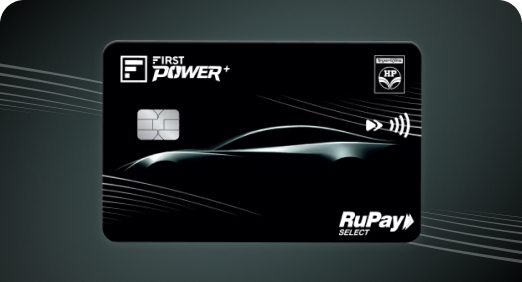
A Card that Powers your Savings & Lifestyle
IDFC FIRST Bank HPCL Credit Card









Most Searched
Earn up to 7% interest on your Savings Account
Open Account Now
Download our app
Get instant help for all your queries in one place
Unlock features, exclusively available
only on the IDFC FIRST Bank app
Trusted by 1.2+ million Indians.


4.8

4.8

Tools & Calculators
Privilege Program



Tools & Calculators

Unlock features, exclusively available
only on the IDFC FIRST Bank app
Personal Loan
 Your personal loan interest is decided based on your credit behaviour, income, existing debt obligations, lender policies, etc.
The type of interest rate also influences a low-interest loan, and the overall cost includes other charges.
Avoid making common mistakes with your loan application to secure a low personal loan interest rate.
Your personal loan interest is decided based on your credit behaviour, income, existing debt obligations, lender policies, etc.
The type of interest rate also influences a low-interest loan, and the overall cost includes other charges.
Avoid making common mistakes with your loan application to secure a low personal loan interest rate.
Personal Loan interest rates vary across banks and lenders depending on their policies. Typically, the interest rate ranges from 9% to 12%.
In addition to varying from one bank to another, personal loan interest rates also differ for each individual, as they are based on personal eligibility factors and risk assessment by lenders.
This blog will help you understand these factors and explore ways to improve on them to obtain a lower interest rate on personal loan.
When lenders advertise personal loans “starting from’’ a very low interest rate, it’s usually for the best-case scenario. These rates are reserved for applicants with an excellent profile. For most applicants, the final personal loan interest rate is decided only after a full assessment of eligibility.
Here are some of the key factors that directly influence your personal loan interest rate:
Your credit score is often the first thing lenders check. It gives a snapshot of your timely repayments and credit usage. A higher score, usually 710+, signals lower risk. This improves your chances of getting a low personal loan interest rate.
FOIR or Fixed Obligation to Income Ratio represents how much of your monthly income is committed to existing EMIs. If a large portion of your salary is tied up in repayments, you have little room left to accommodate a personal loan. Such a higher FOIR can hamper your chances of approval or a good personal loan interest rate, and vice versa.
Tenures also have a key role in influencing loans with low interest rates. If you opt for a shorter tenure, the lender’s exposure period is smaller. Hence, you get a low personal loan interest rate. On the other hand, a longer tenure reduces your EMI but increases the lender’s risk, which can push the personal loan interest rate upward. With IDFC FIRST Bank’s FIRSTmoney personal loan, the tenure period is between 9 to 60 months, allowing you to repay flexibly.
Every lender internally categorises borrowers into different risk tiers. This is determined based on income stability, employer profile, location, and credit behaviour. The overall assessment of your eligibility places you in either a high- or low-risk tier. The higher the risk, the costlier the loan. You need stability and showcase creditworthiness to prove yourself as a low-risk borrower.
Unlike car or home loans, personal loans don’t need you to pledge collateral. There is no means for lenders to recover the loan amount in case of repeated defaults. This naturally makes them riskier for lenders, which is why the interest rates are higher. However, your financial profile decides how close you get to the lower end of the offer.
The amount you borrow directly impacts the personal loan interest rate. When you borrow small, you can secure a personal loan with a low interest rate. On the other hand, borrowing more directly correlates to higher interest. Thus, understanding your needs and borrowing according to your needs and affordability is important.
Besides the personal loan eligibility factors, broader aspects like RBI policy rates, liquidity conditions within the economy, lender’s internal targets, and overall market conditions can influence personal loan pricing. This is why interest rates periodically differ.
Here are common ways personal loan interest rates are structured:
A flat interest rate applies a fixed percentage of interest on the total loan amount throughout the loan tenure, irrespective of how much has already been repaid.
For example:
Loan amount: ₹1,00,000
Interest rate: 12% per year (flat rate)
Tenure: 12 months
In this case, interest is calculated on the full ₹1,00,000 for the entire year, even as you repay the loan. Total interest payable would be ₹12,000 for the year, making the total repayment ₹1,12,000, typically split into equal monthly instalments.
The interest rate applies to your loan balance that reduces after each EMI payment.
Here’s an example to understand this better:
Loan amount: ₹1,00,000
Interest rate: 12% per year (reducing balance)
Tenure: 12 months
EMI: ~₹8,885 (approx.)
Month 1
Interest = 12% yearly → 1% monthly
Interest on ₹1,00,000 = ₹1,000
EMI paid = ₹8,885
Principal repaid = ₹7,885
Outstanding balance = ₹92,115
Month 2
Interest calculated on ₹92,115 (not ₹1,00,000)
Interest ≈ ₹921
Principal repaid increases slightly
Balance keeps reducing
By last EMI
Interest portion becomes very small
Most of EMI goes toward principal repayment
Approx EMI = ₹8,885
Total paid over 12 months ≈ ₹1,06,620
Using the example mentioned above,
Flat rate method = ~₹12,000 total interest
Reducing balance method = ~₹6,620 total interest
Reducing balance leads to lower total interest compared to flat-rate loans.
FIRSTmoney by IDFC FIRST Bank offers low-interest personal loans starting at 9.99% p.a using a reducing balance method.
With a fixed rate, the interest stays the same for the entire loan tenure.
Your EMI remains unchanged unless you incur fees for defaulting or delaying.
Predictability makes it easier to budget.
Works well if you prefer some level of certainty and don’t want to be concerned with market movements affecting your repayments.
Personal loans with fixed interest rates might not always be directly marketed, but you can check with the lender for a practical and stress-free repayment experience.
A floating interest rate changes with market conditions and lender benchmarks.
If the repo rate set by the Reserve Bank of India falls, the personal loan becomes cheaper. You can then benefit from the low personal loan interest rate. However, the reverse is also true.
Floating rates are ideal if you are comfortable with some uncertainty, while it offers the potential for lower rates based on the economic conditions.
Choosing between a fixed and floating interest rate on a personal loan is about understanding your risk tolerance and financial comfort. Also, check with the loan provider for further practical guidance.
Even with a low-interest personal loan, you may end up paying more on your loan based on other charges. It is important to round up all the possible expenses to get a realistic picture of the personal loan cost.
Here are some of the additional charges you can expect based on lenders:
This is a one-time charge that lenders levy for evaluating and setting up your loan. It is usually fcharged as a nominal percentage of the loan amount.
It is deducted upfront from the disbursed amount. Even loans with low interest rates may carry processing fees based on the lender. You will get slightly less than what you applied for, so plan the loan amount accordingly
In the case, of IDFC FIRST Bank FIRSTmoney personal loan, the processing fee is charged over and above the loan amount. Thus, there is no reduction in your disbursed amount, unless you choose to withdraw the full approved loan amount.
A stamp duty is a statutory charge specifically applied to loan agreements. The fee varied based on state laws and the loan value. While it may seem like an insignificant cost compared to interest, it is an unavoidable cost once. Since it is added at the beginning, you may miss out on factoring in for comparison.
When you miss an EMI, you attract overdue charges. This is usually calculated as a fixed amount or a percentage of the outstanding EMI. This fee increases your immediate cost and may also invite additional interest on the overdue amount. Over time, the delays also affect your credit score, which affects the future personal loan interest rates you get.
Sometimes, you may have the money and still miss out on the EMI. This is due to the failure of your EMI mandate or insufficient balance at the time of auto-debit. Regardless, you incur a penalty in the form of bounce charges. Frequent bounce fees can add up quickly. Also, they dampen your repayment record.
When your financial situation allows, you can also close the personal loan early, subject to a prepayment or foreclosure fee. This is a percentage of the outstanding loan amount. Check for this fee to understand the trade-off when you choose to close the loan.
Some lenders, like IDFC FIRST Bank, allow loan foreclosure for their personal loan with zero charges.
Here’s the detailed list of all applicable fees and charges for a FIRSTmoney personal loan.
If you’re anticipating a higher personal loan interest rate based on your eligibility assessment, there’s still a way. You can take a few action steps to make a big difference in securing a low-interest personal loan, such as:
Focus on building a healthy credit score. Pay your EMIs and credit card dues on time, keep your credit utilisation in check, avoid unnecessary borrowing, and check for credit report errors. Taking steady actions can move you closer to a score that can get you loans with a lower interest rate.
If a large part of your income is already going towards EMIs, lenders see you as a risky borrower. This impacts the personal loan interest rate you get and your credit score. So, try to close smaller loans or prepay high-interest credit card balances to lower your FOIR. A cleaner profile is more likely to attract better interest rates.
Borrow what you can realistically repay. Consider your needs and the reason to get a personal loan. The same practically extends to the tenure. Don’t overstretch it for comfort to the point that it increases the interest outgo significantly. Strike the right balance between the loan amount and tenure to signal better repayment capacity at a low cost.
Applying to several lenders in a short span results in multiple credit enquiries. It impacts your credit score temporarily and can make you appear credit hungry. That is why, applying to multiple lenders in the hopes of approval is not a good idea. Compare and understand eligibility before shortlisting lenders and only apply when you’re confident.
Make sure you build a strong case with your income. Other than your regular income, make sure all the variables are clearly documented. Present clear records of your salary credits/business income, updated bank statements, and tax filings. This helps lenders assess your stability more confidently.
If you already have a savings account, investments, or have repaid a past loan with the lender, use that history to your advantage. Banks, especially, offer preferential rates to known customers. This is because of the awareness you create with your long-standing banking relationship.
Most credit options are easy to secure today thanks to digitisation and relaxed terms. Such convenience shouldn’t cost you in the long run. So, avoid multiple loans, BNPL plans, multiple credit cards, etc. Reduce reliance, especially on unsecured credit, to showcase better financial control to prospective lenders.
You can improve the loan terms you get even after you submit your application. There are short and long-term strategies based on your situation. Find what works for you among these options:
Many lenders are open to discussing a low personal loan interest rate if your profile is favourable and/or when you have a good existing relationship with them. Don’t shy away from leveraging this, as even a small reduction can affect your total interest outgo.
Some lenders let you restructure the type of interest rate, as discussed earlier. Thus, you can move from fixed to floating rate and vice versa to effectively lower the cost of your loan. Make sure to weigh the pros and cons carefully before you make the move to protect your risk interest.
After your loan application is accepted, the lenders send you a legally binding loan agreement. It states the loan terms and other important clauses clearly. Comb through the fine print to understand the crucial factors and avoid unwanted surprises.
Most lenders are willing to reassess borrower risk if you’ve made all EMI payments on or before the time your credit score has improved since disbursal. So, make it a point to repay on time. You can then formally request an interest rate revision.
Even if your interest rate stays unchanged, you can make a partial or full prepayment to directly lower the due principal, which reduces or clears the total interest paid over the repayment tenure. Note that this can attract a minimal charge based on the lender’s policies.
If you’re juggling multiple high-interest loans, you can consolidate them into a single loan to focus on one interest rate, which is lower than the multiple interest rates. It reduces your overall interest outgo and simplifies repayments. This strategy is also great to improve your credit profile when you have multiple loans.
If your personal loan interest rate still seems expensive despite your best efforts, a last option is refinancing. It is also known as a balance transfer, where you shift to another lender. You look for competitive terms and a low personal loan interest rate. This option works best if your financial profile has improved since you first borrowed.
When you refinance or balance transfer, the new lender you prefer, based on competitive offers, evaluates you based on your current credit score, income stability, and repayment behaviour. The profile must have evolved from the time you applied initially. If these factors are stronger, you may qualify for a low-interest personal loan. With the new loan transfer, your existing one is closed, and you continue repayments under the revised terms.
Refinancing is ideal when you notice a significant gap between your current and desired interest rate. Here are some things to do before opting for it:
Check if you qualify for refinancing.
Make note of the additional fees such as processing, GST, and documentation.
The payoff should outweigh such a cost, before opting for refinancing.
Also, check how much flexibility you enjoy with tenure selection and prepayments.
Urgency is one of the biggest enemies in making any financial decision wisely. You are more likely to accept half-baked offers with little to no understanding.
The “starting from” rate is advertised, but setting your expectations based on it can quickly lead to disappointment. Make sure you check the interest rate you get against your eligibility.
Avoid stretching the loan amount beyond what your income can comfortably support, as it increases the lender’s perceived risk. In such cases, even if approved, lenders may increase the personal loan interest rate.
Check your credit score months before you choose to apply so you have the time to steadily fix it by clearing dues, improving credit utilisation, etc.
Sticking to one lender works great for negotiating a low-interest personal loan. But nothing is guaranteed. While banking relationships help, you can’t rely on that alone for a competitive offer.
The terms laid out by the lender are not always ultimate. Some may be open to negotiation with respect to prepayment, tenure, etc., along with the interest rate.
Final words
Even if you get a high personal loan interest rate initially, there is a workaround with a few tweaks. Don’t get disheartened and work on the tips suggested above. You can either boost your profile or take corrective steps for a better interest rate after you’ve been sanctioned the loan. There are both short and long-term strategies based on where you stand in your repayment journey. Apply the tips that are relevant to your particular situation and see the results of your consistency.
Income is just one factor. Lenders also check credit history, repayment behaviour, existing loans, and overall risk profile, which changes how the interest rate is decided for two people earning similar incomes.
No, basic eligibility checking usually has no impact on your credit score or interest rate. But applying for a loan leads to a hard enquiry, which can affect your credit score, and thereby the interest rate offered in the future.
Yes, if you have a floating interest rate, it can move up or down based on market conditions. Fixed interest rate, on the flip side, remains unchanged. Most lenders offer fixed interest rate for a personal loan.
The contents of this article/infographic/picture/video are meant solely for information purposes. The contents are generic in nature and for informational purposes only. It is not a substitute for specific advice in your own circumstances. The information is subject to updation, completion, revision, verification and amendment and the same may change materially. The information is not intended for distribution or use by any person in any jurisdiction where such distribution or use would be contrary to law or regulation or would subject IDFC FIRST Bank or its affiliates to any licensing or registration requirements. IDFC FIRST Bank shall not be responsible for any direct/indirect loss or liability incurred by the reader for taking any financial decisions based on the contents and information mentioned. Please consult your financial advisor before making any financial decision.
The features, benefits and offers mentioned in the article are applicable as on the day of publication of this blog and is subject to change without notice. The contents herein are also subject to other product specific terms and conditions and any third party terms and conditions, as applicable. Please refer our website www.idfcfirst.bank.in for latest updates.