









Login to Internet banking
A brand-new experience - smarter, faster, and secured





You gain a dedicated partner committed to helping you reach your full potential and achieve new heights
Know More
BRAVO (Auto Sweep)
Convert the idle funds in your current account into a fixed deposit with the BRAVO feature.
Know More
Zero Forex Markup Current Account
Maximise your savings and boost profitability with our Zero Forex Markup current accounts
Know More





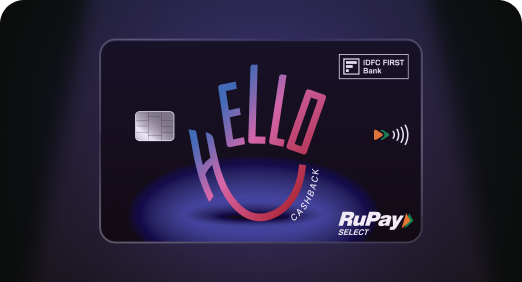
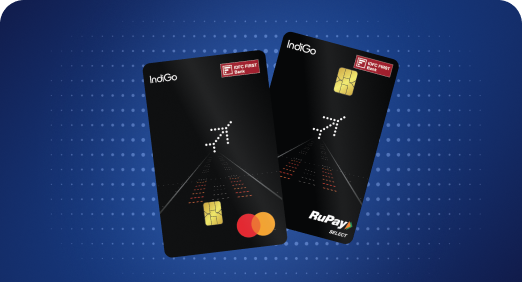

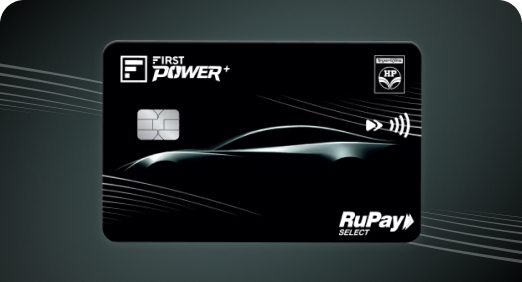
A Card that Powers your Savings & Lifestyle
IDFC FIRST Bank HPCL Credit Card









Most Searched
Earn up to 7% interest on your Savings Account
Open Account Now
Download our app
Get instant help for all your queries in one place
Unlock features, exclusively available
only on the IDFC FIRST Bank app
Trusted by 1.2+ million Indians.


4.8

4.8

Tools & Calculators
Privilege Program



Tools & Calculators

Unlock features, exclusively available
only on the IDFC FIRST Bank app
Personal Loan
 A higher basic salary under the new rule can improve your personal loan eligibility.
A reduction in your salary will reduce your EMI repayment capacity.
Lenders consider multiple assessment factors, beyond your salary structure changes.
A higher basic salary under the new rule can improve your personal loan eligibility.
A reduction in your salary will reduce your EMI repayment capacity.
Lenders consider multiple assessment factors, beyond your salary structure changes.
Until recently, employers had the freedom to design the salary structure to maximise take-home pay. However, a new salary rule has now been introduced in India that may affect your take-home income going forward.
It’s important for all salaried individuals to understand the impact of this change on all aspects of their professional and financial lives. For now, let’s go through how this change can impact your personal loan eligibility.
Under the new salary rules, basic salary, including dearness allowance and retaining allowance, must constitute at least 50% of a person’s total salary. Earlier, employers had the freedom to design a salary structure with a lower basic salary and higher allowances. What this did was:
Increase your take-home salary, as basic salary could be as low as 30-40% of the Cost-to-Company (CTC)
Reduced your mandatory contributions like the Provident Fund (PF) and gratuity, which are calculated based on your basic salary
Now, with the new salary code in place, the immediate effect of the change includes:
Basic salary will constitute at least50% of total compensation
Allowances will automatically reduce
Contributions to PF will increase
The impact of these changes on your personal loan eligibility is twofold. While there are a few positives, a lower take-home salary may reduce the amount of loan you’re eligible for.
A higher basic salary improves your financial profile, thereby enhancing your personal loan eligibility. This is because a lender typically considers:
Your stable income components
Your job stability
And your monthly salary structure
As basic salary is a stable component of your salary, its increase can:
Improve your credibility as a loan applicant
Increases the chance of loan approval
Increase your personal loan eligibility
A personal loan eligibility calculator with detailed salary inputs will help you identify the effects of changes in your salary structure on your borrowing capacity.
The flipside of a hike in basic salary is that it lowers your allowance component and increases your mandatory deductibles. Therefore, your take-home salary will decline. Don’t worry, the difference amount remains secured in the form of PF and gratuity.
However, a lower take-home salary means that you now also have a lower EMI capacity. This can negatively impact your personal loan eligibility, as your EMI repayment capacity is one of the main factors that determine your loan amount and eligible tenure.
So far, we have studied both the positive and the negative impact of the salary rule change on personal loan eligibility. For a lender, a loan assessment is not about any single factor. The approval criteria for a personal loan include:
Gross salary vs net salary
Debt-to-income ratio
Credit score
Employment duration and type
Existing liabilities and EMI burden, etc.
Irrespective of what your new basic salary is, repayment capacity holds the key in loan assessments. You can use a personal loan eligibility calculator and find out your eligible loan amount before applying.
Lenders prefer to approve loans to borrowers whose EMI burden is not more than 30-40% of their net monthly income. A reduced take-home salary means that the EMI threshold will decrease. However, a higher basic salary may mean longer repayment terms and structured repayment options.
To understand the mixed impact of the new salary rule on personal loan eligibility, let us consider the following example:
Salary structure, personal loan eligibility and repayment capacity comparison of a person whose:
Total annual salary is ₹10,00,000
Has no other liabilities
Lender’s EMI threshold is 40% of net monthly income
Salary structure comparison:
| Component | Old Salary Structure | New Salary Structure |
| Total Monthly gross salary | ₹83,333 | ₹83,333 |
| Basic Salary | ₹25,000 (30%) | ₹41,667 (50%) |
| Allowances | ₹58,333 | ₹41,666 |
| PF Contribution (Employee) | ₹3,000 | ₹5,000 |
| Net Take-Home Salary | ₹80,333 | ₹78,333 |
Eligibility and repayment capacity comparison:
| Factor | Pre-change | Post-change | Impact |
| Basic salary | Lower | Higher | Better eligibility |
| Net monthly income | Higher | Lower | Reduced EMI capacity |
| Estimated loan eligibility (subject to tenure and interest rate) | High and driven by cash flow | Balanced, based on income and structure | Mixed impact |
| Lender confidence | Moderate | Higher | Improves approval chances |
Summing up the impact
Based on the various impacts of the salary rule change on personal loan eligibility, we can conclude the following:
The earlier scenario allowed a higher take-home, which meant better EMI affordability and, therefore, better loan eligibility
The higher basic salary improves your financial profile, but marginally reduces your net disposable income
IDFC FIRST Bank FIRSTmoney personal loan offers flexible loan amounts based on your profile, at competitive interest rates starting at 9.99% p.a. It also offers customisable repayment options, including a wide range of repayment tenures from 9 to 60 months. Its quick processing means that you are never too far away from your eligible loan amount. Once approved, IDFC FIRST Bank disburses the approved personal loan amount within just 10 minutes.
Moreover, IDFC FIRST Bank’s FIRSTmoney charges no foreclosure charges, allowing you to close your loan at your convenience directly via the app. You can also enjoy zero processing fee& on select loan amounts.
Yes. A higher basic salary will improve your financial profile. You can leverage it to negotiate better loan terms with the lender.
Yes, personal loan eligibility can be increased with a higher salary, while meeting other eligibility criteria.
It has an indirect impact. Higher PF contributions reduce your net salary, thereby lowering your disposable income. Lenders may see it as a detriment to your EMI repayment capacity.
The contents of this article/infographic/picture/video are meant solely for information purposes. The contents are generic in nature and for informational purposes only. It is not a substitute for specific advice in your own circumstances. The information is subject to updation, completion, revision, verification and amendment and the same may change materially. The information is not intended for distribution or use by any person in any jurisdiction where such distribution or use would be contrary to law or regulation or would subject IDFC FIRST Bank or its affiliates to any licensing or registration requirements. IDFC FIRST Bank shall not be responsible for any direct/indirect loss or liability incurred by the reader for taking any financial decisions based on the contents and information mentioned. Please consult your financial advisor before making any financial decision.
The features, benefits and offers mentioned in the article are applicable as on the day of publication of this blog and is subject to change without notice. The contents herein are also subject to other product specific terms and conditions and any third party terms and conditions, as applicable. Please refer our website www.idfcfirst.bank.in for latest updates.