









Login to Internet banking
A brand-new experience - smarter, faster, and secured



You gain a dedicated partner committed to helping you reach your full potential and achieve new heights
Know More

BRAVO (Auto Sweep)
Convert the idle funds in your current account into a fixed deposit with the BRAVO feature.
Know More
Zero Forex Markup Current Account
Maximise your savings and boost profitability with our Zero Forex Markup current accounts
Know More





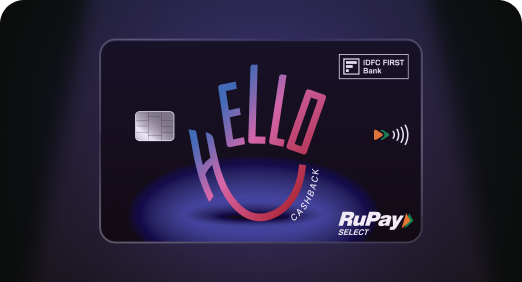

Enjoy Zero Forex on all IDFC FIRST Bank Credit Cards
Save more on all international spends
Know More
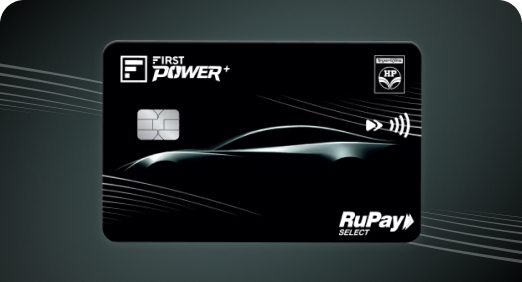
A Card that Powers your Savings & Lifestyle
IDFC FIRST Bank HPCL Credit Card








Most Searched
Earn up to 7% interest on your Savings Account
Open Account Now
Download our app
Get instant help for all your queries in one place
Unlock features, exclusively available
only on the IDFC FIRST Bank app
Trusted by 1.2+ million Indians.


4.8

4.8

Tools & Calculators
Privilege Program



Tools & Calculators

Unlock features, exclusively available
only on the IDFC FIRST Bank app
Savings Account
 Opening a children’s savings account with a daily spending limit helps develop financial discipline and prevents overspending.
Checking the minimum balance requirement is essential, as not maintaining it can lead to penalties.
Banks usually allow children above 10–12 years to manage their accounts independently, while younger ones need parental supervision.
Convenient options like standing orders and internet banking make fund transfers simple and secure, giving both parents and children ease of use.
Opening a children’s savings account with a daily spending limit helps develop financial discipline and prevents overspending.
Checking the minimum balance requirement is essential, as not maintaining it can lead to penalties.
Banks usually allow children above 10–12 years to manage their accounts independently, while younger ones need parental supervision.
Convenient options like standing orders and internet banking make fund transfers simple and secure, giving both parents and children ease of use.
One of the best life lessons you can impart to your child is that of financial responsibility. Introducing them early to the basics of earning, mindful spending, saving, and growing their money lays the foundation for confident money management as adults. Alongside these lessons, opening a children’s bank account can be a practical and empowering step, helping them put financial concepts into action and build healthy money habits from a young age.
Let’s understand what a children’s savings account is, explore its benefits, and review the key factors to consider before choosing the right account for your child.
A children’s savings account helps young account holders learn the basics of managing money from an early age. Parents or guardians open these accounts to encourage regular saving, promote financial responsibility, and provide a safe place to keep funds. Over time, the account becomes a practical way for children to experience banking and prepare for independent financial decisions.
· Encourages saving habits
A dedicated account helps children learn the importance of saving regularly. It creates a strong foundation for responsible financial behaviour.
· Provides financial security
Funds kept in the account remain safe while earning interest. This ensures both protection and gradual growth of money.
· Builds money management skills
Operating a savings account gives children real exposure to handling finances. It teaches them how to plan, save, and spend wisely.
· Promotes independence
Older children can manage their accounts under guided limits. This gradual independence prepares them for future financial responsibilities.
· Offers convenient banking features
Many accounts include internet banking, fund transfer options, and debit cards with restrictions. These features allow safe and easy access to money.
A children’s bank account isn’t just a place to save; it’s a real-world classroom where kids learn how to manage, grow, and value money.
Looking to open a bank account for your kid? Here’s what you need to keep in mind:
One of the most crucial points to check before opening children’s bank accounts is the daily maximum spending limit. This will ensure your child does not spend more than they need to. Communicating to your child what these limits are will introduce them to the idea of spending responsibly. Most banks offer a daily spending and cash withdrawal limit of anywhere between ₹1,000 and ₹5,000.
Always check the minimum balance requirement for a children’s savings account. Falling below this limit may result in penalties. Most banks usually set the minimum balance between ₹2,000 and ₹10,000.
Most banks allow children above 10-12 years of age to operate an account on their own. However, accounts can also be opened for younger children below this age limit, in which case a parent or guardian must operate the account on their behalf. IDFC FIRST Bank offers 2 types of Minor Accounts, one operated under guardian and the other self operated
· For all minors under 18, the account can be operated under a guardian. This is a 0 AMB account, and offers Child Education Cover & Visa Platinum Debit Card
· For minors above 10 and below 18, the FIRST Prodigy account is a self-operated, 10K AMB account, with offerings like Child Education Cover, and higher spending limits
To be able to easily transfer money into your children's bank accounts, make sure that the bank offers the facility of a standing order. You can set up a standing order to transfer a fixed amount on a fixed date each month. This way, the transfer can happen in the auto mode, saving you the hassle of remembering and manually transferring money to your child’s account.
Internet banking has made it remarkably easy to conduct all kinds of transactions without ever having to set foot inside a bank branch. It is a good idea to check the internet banking facilities available for children’s bank accounts. Check the internet banking limits and the security features offered, such as two-factor authentication. Keep a note of the login credentials to access the account and regularly monitor transactions, particularly when the account is used by younger children.
Introduce your children to the basics of banking and finance by opening a savings bank account for them. You can get them started on this journey with IDFC FIRST Bank’s minor savings account, which offers one of the best savings account interest rates in the industry. Different savings account variants of IDFC FIRST Bank also provide added benefits, such as purchase protection of ₹50,000 for an Average Monthly Balance (AMB) of ₹10,000 and ₹1 lakh for an AMB of ₹25,000. As your child dreams big, the money grows bigger too!
The contents of this article/infographic/picture/video are meant solely for information purposes. The contents are generic in nature and for informational purposes only. It is not a substitute for specific advice in your own circumstances. The information is subject to updation, completion, revision, verification and amendment and the same may change materially. The information is not intended for distribution or use by any person in any jurisdiction where such distribution or use would be contrary to law or regulation or would subject IDFC FIRST Bank or its affiliates to any licensing or registration requirements. IDFC FIRST Bank shall not be responsible for any direct/indirect loss or liability incurred by the reader for taking any financial decisions based on the contents and information mentioned. Please consult your financial advisor before making any financial decision.
The features, benefits and offers mentioned in the article are applicable as on the day of publication of this blog and is subject to change without notice. The contents herein are also subject to other product specific terms and conditions and any third party terms and conditions, as applicable. Please refer our website www.idfcfirst.bank.in for latest updates.