








Login to Internet banking
A brand-new experience - smarter, faster, and secured


You gain a dedicated partner committed to helping you reach your full potential and achieve new heights
Know More
BRAVO (Auto Sweep)
Convert the idle funds in your current account into a fixed deposit with the BRAVO feature.
Know More
Zero Forex Markup Current Account
Maximise your savings and boost profitability with our Zero Forex Markup current accounts
Know More





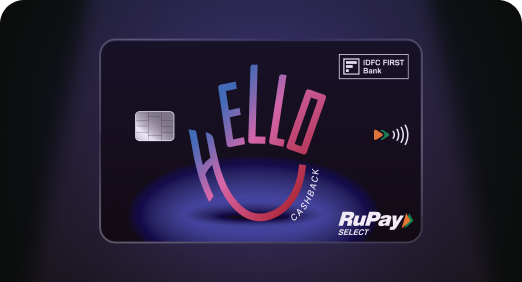
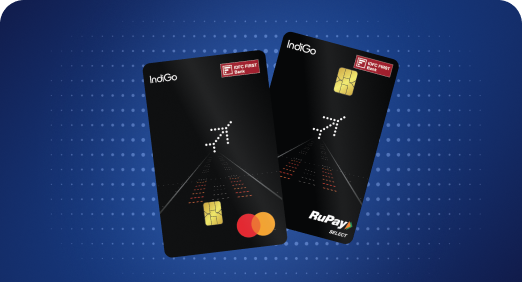

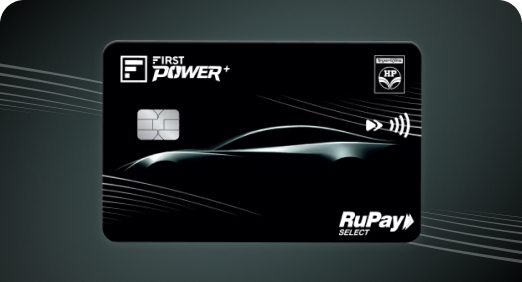
A Card that Powers your Savings & Lifestyle
IDFC FIRST Bank HPCL Credit Card









Most Searched
Earn up to 7% interest on your Savings Account
Open Account Now
Download our app
Get instant help for all your queries in one place
Unlock features, exclusively available
only on the IDFC FIRST Bank app
Trusted by 1.2+ million Indians.


4.8

4.8

Tools & Calculators
Privilege Program



Tools & Calculators

Unlock features, exclusively available
only on the IDFC FIRST Bank app
Savings Account
 A high-yield savings account gives greater returns than traditional accounts while ensuring liquidity for daily or emergency use.
Unlike market-linked investments, high-interest savings accounts deliver safe, predictable growth and are regulated by RBI norms.
Choosing the best bank for a savings account means finding a balance - higher interest, and digital-first convenience.
The IDFC FIRST Bank Savings Account offers up to 6.50% p.a., monthly interest credits, and features that directly improve overall yield.
A high-yield savings account gives greater returns than traditional accounts while ensuring liquidity for daily or emergency use.
Unlike market-linked investments, high-interest savings accounts deliver safe, predictable growth and are regulated by RBI norms.
Choosing the best bank for a savings account means finding a balance - higher interest, and digital-first convenience.
The IDFC FIRST Bank Savings Account offers up to 6.50% p.a., monthly interest credits, and features that directly improve overall yield.
As we approach the final stretch of the year, it’s natural to reflect on our habits, be it personal, professional, or financial. On the financial front, a savings checklist is a simple way to take stock of where your finances stand. It helps you understand what worked and what needs tweaking for the next year. It lets you enter the new year with a sense of calmness and conviction. Refer to this simple guide on preparing a year-end savings checklist to stay financially ahead.
An NRI bank account is specially designed to cater to the needs of NRIs. With an NRI account, you can seamlessly send money from abroad, repatriate funds from India, make investments, avail of loans and insurance, conduct a wide range of financial transactions, etc.
Yes, you can open both accounts at the same bank.
No, your regular savings account can only be converted to an NRO account. If you need an NRE account, you must open a new one.
A good place to start is understanding where your money currently sits and making the required adjustments. A simple review of your accounts can reveal things you might have overlooked. Here’s how it works:
Your savings and the income they’ve generated through investments dictate your financial health. Get a low-down on your bank account balances through downloadable statements. Check the inflow and outflow to understand how you’ve fared. Review how your investment portfolio is doing and decide if it needs rebalancing.
Digital banking’s convenience can make it easy to accumulate accounts and lose track of them. With the year-end savings checklist, you can pay attention to such inactive accounts. Update the ones you still use with KYC details and close the ones you don’t. This helps prevent small charges and clutter of maintenance notices.
Opening a savings account is not a one-and-done process. You can always upgrade if you come across a better alternative. This starts with reviewing the interest rate on your accounts and the various charges they attract. If you find them unsatisfactory, you can compare and make a switch.
Once you’re done setting your accounts in order, the next area of focus in your savings checklist is taxation and investments. Plan to optimise your tax benefits and portfolio for long-term growth. Estimate your tax liability, invest in tax-saving instruments and move idle funds to high-yield savings or FDs. If you have surplus funds lying in your savings account, consider shifting them to a high-yield savings account or FDs. Banks like IDFC FIRST Bank offer such accounts with interest rates going up to 6.50% p.a. You can open these accounts digitally with minimal KYC formalities.
The high-interest rate savings account offers debit card benefits, and the FD comes with zero penalty on withdrawals for senior citizens.
Besides parking a lump sum in FD, IDFC FIRST Bank also provides an alternative of an auto-sweep feature. This feature helps you transfer the surplus in a savings account to an FD while maintaining the liquidity of a savings account.
There’s always room for improvement in your financial profile based on your new goals and life updates. Hence, it helps to prepare for the next year with new targets. This can include building an emergency fund, investing more consistently, building more income sources, adjusting your budgeting goals, etc. Setting such purposeful targets gives you a clear direction.
As you wrap up your savings checklist, it’s worth paying heed to a few simple but easily missed tasks. These are quick moves that help you leverage opportunities and simplify financial management.
With the ease of mobile banking apps and personal finance trackers, you can track all your financial products in one place. Whether it is your savings account, credit cards, investments, or loans, you can monitor transactions in a single app. This simple habit helps organise your cash inflows and outflows and lets you better manage your money.
It is a good practice to reduce liabilities as and when possible. Hence, this should be an essential part of your year-end savings checklist. Check your ongoing EMIs and credit card dues. See if you can close the outstanding balances early without incurring a high penalty. Even small adjustments can make more room in your monthly budget and reduce financial stress.
Insurance providers are known to upgrade their offers for a competitive edge. Hence, the health, life, or vehicle insurance policy you bought years ago can be upgraded. Review your current coverage and premium cost and compare with other providers. If you find better deals, port your insurance for maximum value at a low cost. Also, track the policy renewal date to prevent last-minute hassle.
At a glance:
Category
|
Key Actions
|
Review Your Accounts
|
• Check balances and statements• Review and rebalance investments• Close unused accounts; update KYC• Compare interest rates and charges
|
Plan Taxes & Investments
|
• Estimate income and tax liability• Review 80C usage; invest to complete limit• Consider NPS for extra deduction• Shift idle funds to high-yield savings/FD or auto-sweep• Set next year’s savings goals
|
Smart Wrap-Up Tasks
|
• • Review/cancel unnecessary auto-debits• Track accounts on a single app• Review EMIs; consider early repayment• Update and compare insurance policies
|
Now that you understand the essentials of a year-end savings checklist, you can close this year with more clarity and preparedness. All the steps essentially focus on tying up loose ends and setting up your finances for a better future. It is a good method to stay on top of your savings, investments, taxes, expenses, debt, and insurance. So, make this a ritual and enter the new year confidently!
A year-end savings checklist helps you pause and understand where your finances stand. You can use this information to cut unnecessary costs, plan your taxes better, close unused accounts, adjust your investment approach, and stay organised with your money.
You can increase your savings by investing in lucrative financial instruments that match your goals and risk sensitivity. Some sought-after options to consider include FD for predetermined fixed returns and mutual fund SIPs for flexible investments with higher returns.
You can start by tracking your spending regularly. Banks help you with this through their multifunctional apps and SMS alerts. Spot problematic patterns and stay mindful. Set a realistic monthly budget and stick to it. It will give you the direction to spend cautiously and stop yourself from going off track.
The 50-30-20 rule is a simple way to organise your money. It implies spending 50% on essential expenses (rent, utility, groceries), 30% on lifestyle choices (eating out, shopping, experiences), and 20% towards savings and investments.
The contents of this article/infographic/picture/video are meant solely for information purposes. The contents are generic in nature and for informational purposes only. It is not a substitute for specific advice in your own circumstances. The information is subject to updation, completion, revision, verification and amendment and the same may change materially. The information is not intended for distribution or use by any person in any jurisdiction where such distribution or use would be contrary to law or regulation or would subject IDFC FIRST Bank or its affiliates to any licensing or registration requirements. IDFC FIRST Bank shall not be responsible for any direct/indirect loss or liability incurred by the reader for taking any financial decisions based on the contents and information mentioned. Please consult your financial advisor before making any financial decision.
The features, benefits and offers mentioned in the article are applicable as on the day of publication of this blog and is subject to change without notice. The contents herein are also subject to other product specific terms and conditions and any third party terms and conditions, as applicable. Please refer our website www.idfcfirst.bank.in for latest updates.


You will earn