









Login to Internet banking
A brand-new experience - smarter, faster, and secured





You gain a dedicated partner committed to helping you reach your full potential and achieve new heights
Know More

BRAVO (Auto Sweep)
Convert the idle funds in your current account into a fixed deposit with the BRAVO feature.
Know More
Zero Forex Markup Current Account
Maximise your savings and boost profitability with our Zero Forex Markup current accounts
Know More





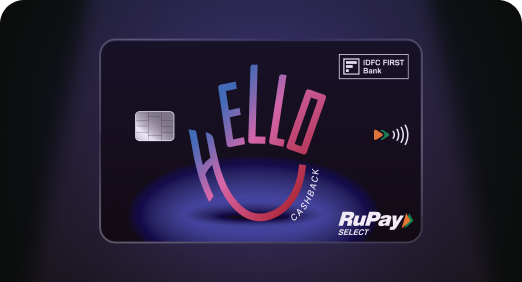
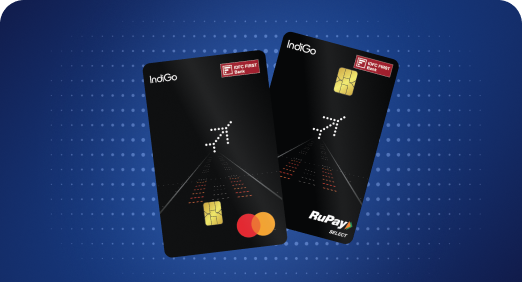

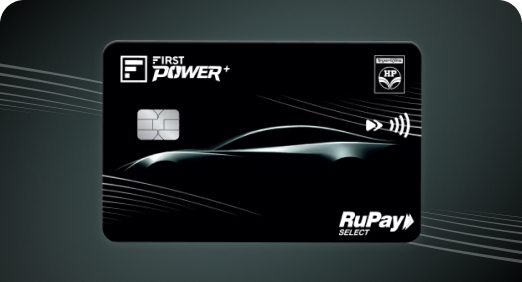
A Card that Powers your Savings & Lifestyle
IDFC FIRST Bank HPCL Credit Card









Most Searched
Earn up to 7% interest on your Savings Account
Open Account Now
Download our app
Get instant help for all your queries in one place
Unlock features, exclusively available
only on the IDFC FIRST Bank app
Trusted by 1.2+ million Indians.


4.8

4.8

Tools & Calculators
Privilege Program



Tools & Calculators

Unlock features, exclusively available
only on the IDFC FIRST Bank app
Credit Card
 The best credit card for insurance payments depends on rewards eligibility, caps, costs, and overall fit.
Insurance premiums can contribute to rewards, milestone benefits, and short-term cash flow value.
Fees, EMI costs, and redemption limits can reduce the actual benefit of insurance spends.
IDFC FIRST Bank credit cards can support insurance payments with transparent rewards, EMI flexibility, and digital tracking tools.
The best credit card for insurance payments depends on rewards eligibility, caps, costs, and overall fit.
Insurance premiums can contribute to rewards, milestone benefits, and short-term cash flow value.
Fees, EMI costs, and redemption limits can reduce the actual benefit of insurance spends.
IDFC FIRST Bank credit cards can support insurance payments with transparent rewards, EMI flexibility, and digital tracking tools.
Insurance premiums are one of those expenses that cannot be avoided, but they can still feel heavy when they hit all at once. That’s why many policyholders start looking for the best credit card for insurance payments, hoping to turn a necessary payment into something more rewarding.
The problem is that not every card treats insurance spending the same way. Some offer rewards, some cap the benefit sharply, and some may exclude such transactions altogether. So, instead of blindly choosing, it helps to understand what actually makes a card useful in this category.
Insurance premiums should be planned well in advance, especially when they are due annually or when you are managing multiple policies. Missing an insurance premium can result in a policy lapse, which is highly undesirable, especially with life or health insurance policies.
Used well, a credit card can not only be used for routine payment but can also turn your insurance payments into a useful financial move.
A few reasons stand out:
A sizeable premium can help earn reward points or cashback faster than many everyday purchases.
If premiums are paid regularly, they can contribute to a more predictable rewards strategy over time.
Some cards offer bonus benefits after crossing annual spend thresholds, and insurance payments can push you closer to those targets.
Paying at the right point in the cycle may give you an interest-free window before the amount is due.
That said, a premium becomes a smart card spend only when the card actually supports the category in a rewarding way.
Yes, the best credit card for insurance payments earns reward points on all your spending. And since premium payments are usually large (especially for annual plans), you should look for credit cards that offer the best conversion from spending to rewards.
Start by checking the following:
Some credit cards offer rewards on insurance payments, while others may restrict or cap such benefits.
The insurer or payment platform may be classified in a way that affects reward eligibility
A card may generally promise strong returns, but cap or restrict them for categories like insurance, utilities, or government-related payments.
Clear rules make it easier to estimate actual credit card rewards for insurance payments rather than assuming the headline offer will apply.
Before comparing cards based solely on percentage, confirm that insurance is truly a rewarding category on that card.
Once a card clears the basic eligibility test, the next step is to compare the real value it delivers. That’s where the best credit card for insurance payments usually separates itself from cards that only look strong at first glance.
What deserves a closer look is this:
This is the starting point, but not the final answer.
A high reward rate with a low ceiling may offer less value than a lower rate with a broader limit.
Reward points are only useful when their redemption value is clear and worthwhile.
A card may become more attractive if your insurance premium helps cross the spending level needed to waive the annual fee.
Some cards offer bonus points or extra rewards after certain annual spending, and insurance payments can help unlock them faster.
A well-timed transaction can give breathing room before repayment, adding practical value beyond rewards.
The right comparison isn’t about the loudest offer, but about which card gives the cleanest overall value for your spending pattern.
Rewards are useful only when they’re not quietly cancelled out by costs. A card cannot be the best credit card for insurance payments if hidden fees eat into the benefit.
Pay attention to these cost factors:
Some payment gateways may charge an additional fee for card-based premium payments.
These can reduce the effective value of your rewards.
Carrying the balance can quickly wipe out the gains from points or cashback.
Splitting a premium into EMIs may help improve cash flow, but the total cost should be carefully checked before opting in.
A rewarding transaction should remain cost-efficient after all related fees are considered.
A large premium can be useful, but only if your card can comfortably absorb it. The best credit card for insurance payments should support the transaction without unnecessarily burdening your overall credit profile.
A practical check should include these points:
Your premium amount should fit comfortably within the card's available limit.
Exceeding the limit at once can push utilisation above 30%, which may affect your CIBIL score.
Even a temporary spike in card usage can matter if it shows up on the statement before repayment.
If the premium is large, planning the billing cycle and repayment date becomes even more important.
A card may offer strong rewards, but it stops being a good fit when its payments strain your credit discipline.
Once the basics are clear, the search becomes simpler. For someone evaluating the best credit card for insurance payments, the useful qualities aren’t just rewards, but also clarity and control.
Here is where IDFC FIRST Bank can fit well:
Clear benefit design makes it easier to understand how value is earned on eligible spends.
If a large premium needs to be managed over time, EMI flexibility can support better planning.
A strong digital experience helps monitor spending, due dates, and reward accumulation more efficiently.
This can be especially useful when handling high-value, recurring expenses, such as insurance.
That combination can make large mandatory payments feel more manageable, more trackable, and potentially more rewarding.
IDFC FIRST Bank offers two credit cards built specifically around insurance premium payments.
If you pay LIC premiums regularly, this card gives you something back for it. Every premium payment earns 6X reward points, and everyday expenses like groceries, utilities, and bills earn 3X. It is a lifetime free credit card with no joining fee.
For those who want a little more out of their insurance spends, the Select is worth a look. Premiums earn 10X reward points and everyday essentials earn 5X. You also get 2 domestic airport lounge visits, and 4 railway lounge visits every quarter. It is a lifetime free credit card, just like the LIC Classic.
Choosing the best credit card for insurance payment is really about understanding value beyond the headline reward. The right card should support insurance spends with clear benefits, manageable costs, and a structure that fits your premium size, credit limit, and repayment habits.
A necessary expense can do more than protect your finances when handled well. To find an option that matches your spending style and helps you manage such payments with more confidence, explore credit cards from IDFC FIRST Bank.
Yes, they can help indirectly. Regular premium payments made through a credit card and repaid on time may support a positive repayment pattern, which is one of the factors that contribute to a healthier credit profile.
Not always. The right fit may vary depending on the premium amount, how often you pay, and whether you value cashback, reward points, milestone benefits, or short-term cash flow flexibility more.
They can help avoid missed due dates and keep policy renewals on track. Still, it’s important to ensure sufficient credit limit availability and to track the bill properly so convenience does not turn into unpaid card debt.
Most insurers today accept credit card payments either directly or through payment platforms. However, acceptance may vary depending on the insurer and the payment gateway used. It is advisable to check whether a convenience fee applies before making the payment so you can factor it into your overall cost.
Paying premiums in full is usually more cost-efficient as it avoids interest charges. However, if the premium amount is high and impacts your cash flow, converting it into EMIs can offer flexibility. The key is to compare the EMI interest or processing charges with the benefit of spreading the payment over time.
The contents of this article/infographic/picture/video are meant solely for information purposes. The contents are generic in nature and for informational purposes only. It is not a substitute for specific advice in your own circumstances. The information is subject to updation, completion, revision, verification and amendment and the same may change materially. The information is not intended for distribution or use by any person in any jurisdiction where such distribution or use would be contrary to law or regulation or would subject IDFC FIRST Bank or its affiliates to any licensing or registration requirements. IDFC FIRST Bank shall not be responsible for any direct/indirect loss or liability incurred by the reader for taking any financial decisions based on the contents and information mentioned. Please consult your financial advisor before making any financial decision.
The features, benefits and offers mentioned in the article are applicable as on the day of publication of this blog and is subject to change without notice. The contents herein are also subject to other product specific terms and conditions and any third party terms and conditions, as applicable. Please refer our website www.idfcfirst.bank.in for latest updates.


Earn IndiGo BluChips | Redeem on IndiGo flights | Power of Dual cards | 1.49% Forex Mark Up

Lounge access, 10X Reward, ₹4000 cashback, Zero Forex, Spa, Golf access

1% Forex, 10X rewards, Lounge, Spa, Golf and Movies

Buy-1-Get-1 Movie ticket offers, airport lounge access, 1.5% forex markup, railway lounge visits









Earn IndiGo BluChips | Redeem on IndiGo flights | Power of Dual cards | 1.49% Forex Mark Up
Know MoreLounge access, 10X Reward, ₹4000 cashback, Zero Forex, Spa, Golf access
Know MoreBuy-1-Get-1 Movie ticket offers, airport lounge access, 1.5% forex markup, railway lounge visits
Know MoreLounge access, 10X Reward, ₹4000 cashback, Zero Forex, Spa, Golf access
Know MoreFuel Card, 5% fuel savings, 2.5% Grocery & Utility Savings, 0 interest cash
Know MoreZero Annual Fee, Complimentary airport lounge access, Low forex mark-up at 1.99%, Buy-1-Get-1 Movie ticket offers
Know More