














Login to Internet banking
A brand-new experience - smarter, faster, and secured


Introducing the First-in-industry IDFC FIRST Bank's Super Account
Request a Callback
You gain a dedicated partner committed to helping you reach your full potential and achieve new heights
Know More
BRAVO (Auto Sweep)
Convert the idle funds in your current account into a fixed deposit with the BRAVO feature.
Know More
Zero Forex Markup Current Account
Maximise your savings and boost profitability with our Zero Forex Markup current accounts
Know More
Make more than one online payment in just a few clicks with IDFC FIRST Bank Bulk Payments
Know More





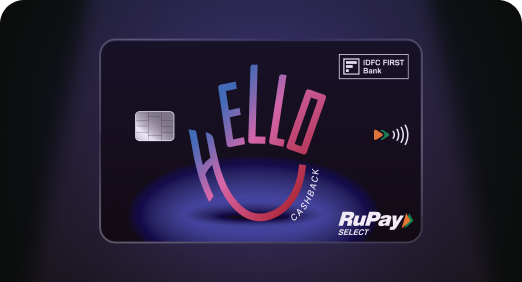
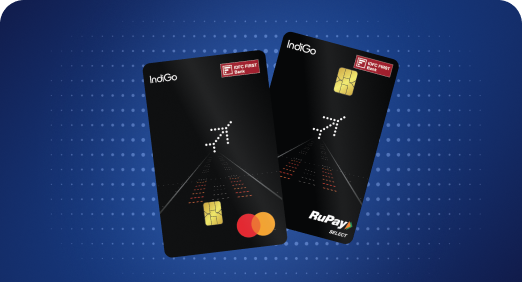

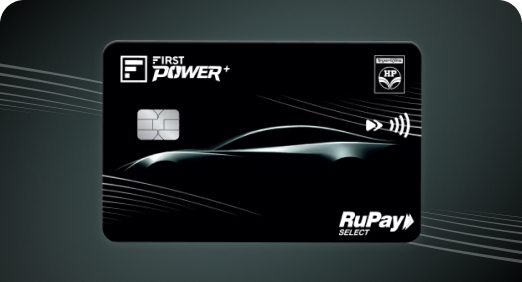
A Card that Powers your Savings & Lifestyle
IDFC FIRST Bank HPCL Credit Card





Most Searched

Earn up to 6.50% interest on your Savings Account
Open Account Now
Download our app
Get instant help for all your queries in one place
Unlock features, exclusively available
only on the IDFC FIRST Bank app
Trusted by 1.2+ million Indians.


4.8

4.8

Tools & Calculators
Privilege Program




Unlock features, exclusively available
only on the IDFC FIRST Bank app
Savings Account
 Bank charges can quietly add up over time, reducing your overall savings potential
Learn how to avoid bank charges with simple tips, some care, and financial awareness
Explore IDFC FIRST Bank Savings Accounts and learn how they offer a transparent and seamless banking experience
Bank charges can quietly add up over time, reducing your overall savings potential
Learn how to avoid bank charges with simple tips, some care, and financial awareness
Explore IDFC FIRST Bank Savings Accounts and learn how they offer a transparent and seamless banking experience
Download a year’s worth of bank statements, and you will find it peppered with quite a few small debits. Fees, penalties, and various miscellaneous debits fall under the broad umbrella of bank charges. You may be tempted to add it all up. Chances are that you will be annoyed to realise that a few hundred or thousands have gone down that route.
You may wonder how to avoid bank charges, but the truth is, it may not be entirely possible. Your choice of bank may determine how much you end up paying in bank charges. You can minimise it with a sound knowledge of the banking terms and conditions. At the same time, it would help if banks were more transparent about the applicability of various bank charges.
An NRI bank account is specially designed to cater to the needs of NRIs. With an NRI account, you can seamlessly send money from abroad, repatriate funds from India, make investments, avail of loans and insurance, conduct a wide range of financial transactions, etc.
Yes, you can open both accounts at the same bank.
No, your regular savings account can only be converted to an NRO account. If you need an NRE account, you must open a new one.
Banks provide a host of important services to their customers, and some of these can attract charges. Some of the common bank charges are:
Banks provide a limited number of free cheques every year. If a customer frequently uses cheques for payments, they may need additional cheque books. Charges may apply for additional cheque leaves, delivery charges, and special request charges.
These charges are incurred when you have an overdraft facility on your bank account. This is triggered when the account balance goes negative, and it can escalate quickly if a timely deposit is not made to bring it back to a positive balance.
Many banks don’t offer unlimited ATM withdrawals. In such cases, ATM withdrawals beyond a certain limit may attract a fee. An annual charge is also levied for holding a debit card.
Some bank accounts may require a minimum balance. If the customer does not maintain the average monthly balance, a penalty is imposed.
In addition to the above charges, banks offer various other services for which bank charges may apply. These may include SMS alert charges, locker rent, duplicate statement and/or passbook charges, charges on digital fund transfers, etc.
Banks levy these charges to cover the expenses they incur to provide you with various banking services. Bank charges are collected to cover operational costs, maintain the ever-growing ATM network, and support branch infrastructure.
Needless to say, many of the abovementioned bank charges are avoidable. Here are a few precautions that can help you avoid bank charges.
Set reminders, make it a point to check your balance regularly, or set a limit you won’t exceed. These steps will ensure that you always stay above the average monthly balance.
Physical bank statements, passbooks and cheque books come at a cost. Instead, you may try to conduct your banking activities digitally. Most banks encourage digital transactions by minimising or waiving online transaction charges.
Find out the number of ATM withdrawals allowed in a month and the location of network ATMs near you, so that you can plan your withdrawals and avoid bank ATM withdrawal charges.
Always remember the auto-debit dates to maintain the required balance in your account. This way, you can avoid overdraft penalties in your account.
Before opening a new savings account, you should check the bank charges structure across various banks. Your bank should be transparent about these charges and penalties. Also, look for banks known for their low fees.
Bank charges are fees that banks levy for services such as ATM withdrawals, cheque books, overdrafts, or maintaining accounts. These charges help banks cover operational and service-related costs
Common bank charges include ATM withdrawal fees, debit card annual fees, minimum balance penalties, cheque book charges, and overdraft fees. Additional charges may apply for services like duplicate statements or SMS alerts.
You can reduce bank charges by maintaining the required minimum balance, using digital banking services, planning ATM withdrawals, and keeping track of auto-debit payments.
Review your bank statements regularly and compare them with the bank's fee schedule. Look for unfamiliar bank charges and consult your bank for clarification.
Yes, in some cases, banks may waive certain fees, especially if you maintain a good relationship or meet specific criteria. It's worth discussing this with your bank's customer service.
The contents of this article/infographic/picture/video are meant solely for information purposes. The contents are generic in nature and for informational purposes only. It is not a substitute for specific advice in your own circumstances. The information is subject to updation, completion, revision, verification and amendment and the same may change materially. The information is not intended for distribution or use by any person in any jurisdiction where such distribution or use would be contrary to law or regulation or would subject IDFC FIRST Bank or its affiliates to any licensing or registration requirements. IDFC FIRST Bank shall not be responsible for any direct/indirect loss or liability incurred by the reader for taking any financial decisions based on the contents and information mentioned. Please consult your financial advisor before making any financial decision.
The features, benefits and offers mentioned in the article are applicable as on the day of publication of this blog and is subject to change without notice. The contents herein are also subject to other product specific terms and conditions and any third party terms and conditions, as applicable. Please refer our website www.idfcfirst.bank.in for latest updates.


You will earn