









Login to Internet banking
A brand-new experience - smarter, faster, and secured



You gain a dedicated partner committed to helping you reach your full potential and achieve new heights
Know More
BRAVO (Auto Sweep)
Convert the idle funds in your current account into a fixed deposit with the BRAVO feature.
Know More
Zero Forex Markup Current Account
Maximise your savings and boost profitability with our Zero Forex Markup current accounts
Know More





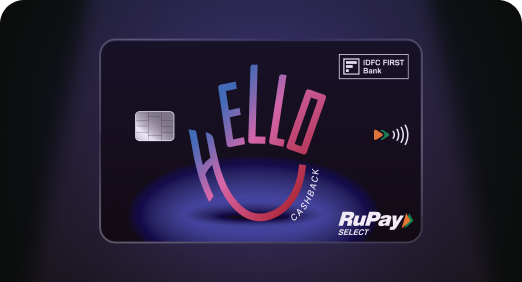
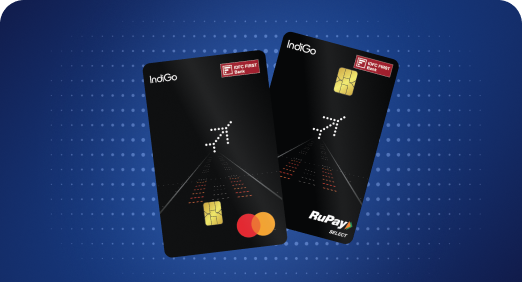

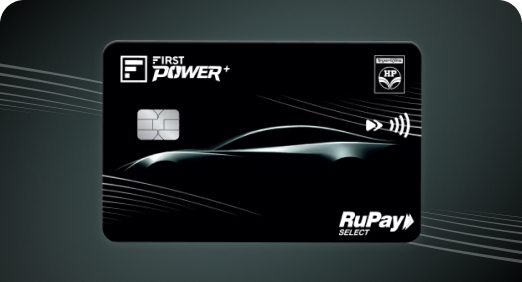
A Card that Powers your Savings & Lifestyle
IDFC FIRST Bank HPCL Credit Card









Most Searched
Earn up to 7% interest on your Savings Account
Open Account Now
Download our app
Get instant help for all your queries in one place
Unlock features, exclusively available
only on the IDFC FIRST Bank app
Trusted by 1.2+ million Indians.


4.8

4.8

Tools & Calculators
Privilege Program



Tools & Calculators

Unlock features, exclusively available
only on the IDFC FIRST Bank app
Personal Loan
 Personal loan foreclosure does not damage your credit score; it is treated as a positive repayment behaviour, although a slight and temporary dip can occur due to changes in credit mix and active credit history.
Closing your personal loan makes financial sense only when the interest saved is higher than the foreclosure charges and your cash flow remains comfortable.
With FIRSTmoney by IDFC FIRST Bank offering zero loan foreclosure charges, you get the flexibility to repay early without penalties while keeping your credit profile strong.
Personal loan foreclosure does not damage your credit score; it is treated as a positive repayment behaviour, although a slight and temporary dip can occur due to changes in credit mix and active credit history.
Closing your personal loan makes financial sense only when the interest saved is higher than the foreclosure charges and your cash flow remains comfortable.
With FIRSTmoney by IDFC FIRST Bank offering zero loan foreclosure charges, you get the flexibility to repay early without penalties while keeping your credit profile strong.
Loan foreclosure is the process of fully repaying your loan before the end of its tenure, closing the loan account early. It is beneficial because it helps you save on future interest payments and become debt-free sooner, improving your overall financial health.
If you are wondering, “Does foreclosure of a personal loan affect the CIBIL score?”, don’t worry. Loan foreclosure does not negatively impact your credit score. In fact, it can actually be positive for your credit profile. Let’s understand the relation between loan foreclosure and credit score in detail.
Personal loan foreclosure (also called ‘pre-closure’ or ‘prepayment’) refers to repaying the entire outstanding principal of your loan before the agreed tenure ends. Rather than continuing to pay your equated monthly instalments (EMI) over, say, 36 months, you choose to clear the full remaining balance with a single payment.
This is different from missing payments or defaulting. Loan foreclosure is a deliberate, voluntary act of full repayment. That distinction is important because the two are treated very differently by credit bureaus.
The short answer is no, not in any meaningful or lasting way.
When you complete a loan foreclosure, credit bureaus such as CIBIL and Experian record the account status as ‘Closed’ with a complete repayment history. This is not a negative entry. A clean loan closing record tells lenders that you honoured your obligation and repaid it in full, which is exactly the kind of borrower they want.
That said, you may notice a small, temporary dip in your credit score after foreclosure. The keyword here is ‘temporary’. This minor fluctuation typically corrects itself within a few months, provided you continue managing other credit products responsibly.
Understanding this requires examining how credit scores are calculated. Here are the factors that can influence loan foreclosure:
This is the most significant factor. By opting for loan foreclosure, you demonstrate that you had the capacity to pay back the full amount. A clean repayment record leading up to a loan closing is a major green flag for future lenders.
Lenders like to see a healthy mix of secured loans (such as home loans) and unsecured loans (such as personal loans). If your personal loan was your only active credit, foreclosure might leave you with a thin credit profile, which can cause a slight temporary drop.
Credit scores benefit from long-standing accounts. With a loan foreclosure, you are essentially shortening the life of that credit account, which can marginally impact the age of your credit history.
This applies primarily to revolving credit, like credit cards. Closing your personal loan does not directly affect your credit utilisation ratio.
When you complete a loan foreclosure, the lender reports the account to CIBIL, Experian, and other bureaus with a ‘Closed’ status. Crucially, the repayment history associated with the account (every EMI you paid on time) remains on record.
A closed account with a clean repayment trail is not a red flag for future lenders. In fact, a completed loan closing signals financial discipline. Prospective lenders reviewing your credit report will see that you borrowed money and repaid it fully, without a single default. That is a positive data point, not a problematic one.
While the impact on your CIBIL score is generally neutral to positive, the impact on your wallet depends on the fine print. Most banking and non-banking financial companies (NBFCs) in India levy loan foreclosure charges to compensate for the interest they lose when you pay early.
FIRSTmoney personal loan offers zero foreclosure charges on personal loan
Other lenders may charge between 2% to 5% of the outstanding principal amount as foreclosure charges
Before proceeding with a loan foreclosure, you must calculate whether the interest you are saving is higher than the foreclosure fee
If the loan is in its final stages, closing your loan might actually cost you more in penalties than you’d save in interest
Deciding on loan foreclosure should be a mathematical, not an emotional, decision. It makes sense under the following conditions:
If you are in the first half of your loan term, the interest component of your EMI is high. Foreclosing early during the loan tenure saves you the most money.
If the money is sitting idle in a savings account earning ~3% while your loan costs 12%, foreclosure is the logical choice.
If you plan to take a high-value home loan soon, a loan foreclosure improves your debt-to-income (DTI) ratio, making you a more attractive candidate for a larger loan amount.
If the idea of loan foreclosure charges and rigid terms feels restrictive, you need a smarter way to borrow. This is where IDFC FIRST Bank FIRSTmoney changes the game. It is a personal loan designed for the modern Indian borrower who values flexibility and transparency.designed for the modern Indian borrower who values flexibility and transparency.
With IDFC FIRST Bank FIRSTmoney, you don’t have to worry about the typical hurdles of a foreclosure. It offers:
Want to close your debt early? Go right ahead and foreclose your loan via app without paying any foreclosure charges.
Choose tenures ranging from 9 to 60 months, giving you total control over your monthly budget.
Withdraw from your approved loan offer as per your needs. Interest is applicable only on the amount you actually withdraw.
Get funds when you need them the most, with instant disbursal in as little as 10 minutes.
Conclusion
Loan foreclosure is a sound financial move that demonstrates high creditworthiness. While you might see a negligible, short-term dip in your score due to the change in your credit mix, the long-term benefits of being debt-free and saving on interest far outweigh the risks. Always weigh the loan foreclosure charges against your savings to ensure you are making the most of your money.
Ready to experience loans with total freedom? Apply for an IDFC FIRST Bank FIRSTmoney personal loan today and enjoy a world with no foreclosure penalties and absolute transparency.
Yes, this is a part payment. While it doesn't close the account, it reduces the principal balance, thereby either lowering your monthly EMI or shortening the remaining tenure. Most lenders have specific rules on the minimum amount allowed for part payments.
Many Indian lenders require you to pay a certain number of EMIs (usually 6 to 12) before they allow a loan foreclosure. Always check your original loan agreement for a lock-in or cooling-off period to avoid administrative hurdles
Not necessarily. Before opting for foreclosure, compare the interest savings with any applicable foreclosure charges. You should also ensure you retain sufficient liquidity for emergencies rather than using all surplus funds to close the loan.
Loan foreclosure can improve your borrowing eligibility. By closing an active loan, your overall debt decreases, improving your debt-to-income ratio. This makes you a more reliable borrower in the eyes of lenders when applying for future credit.
The contents of this article/infographic/picture/video are meant solely for information purposes. The contents are generic in nature and for informational purposes only. It is not a substitute for specific advice in your own circumstances. The information is subject to updation, completion, revision, verification and amendment and the same may change materially. The information is not intended for distribution or use by any person in any jurisdiction where such distribution or use would be contrary to law or regulation or would subject IDFC FIRST Bank or its affiliates to any licensing or registration requirements. IDFC FIRST Bank shall not be responsible for any direct/indirect loss or liability incurred by the reader for taking any financial decisions based on the contents and information mentioned. Please consult your financial advisor before making any financial decision.
The features, benefits and offers mentioned in the article are applicable as on the day of publication of this blog and is subject to change without notice. The contents herein are also subject to other product specific terms and conditions and any third party terms and conditions, as applicable. Please refer our website www.idfcfirst.bank.in for latest updates.