







Login to Internet banking
A brand-new experience - smarter, faster, and secured




BRAVO (Auto Sweep)
Convert the idle funds in your current account into a fixed deposit with the BRAVO feature.
Know More

Zero Forex Markup Current Account
Maximise your savings and boost profitability with our Zero Forex Markup current accounts
Know More
BRAVO (Auto Sweep)
Convert the idle funds in your current account into a fixed deposit with the BRAVO feature.
Know More
You gain a dedicated partner committed to helping you reach your full potential and achieve new heights
Know More







Enjoy Zero Forex on all IDFC FIRST Bank Credit Cards
Save more on all international spends
Know More
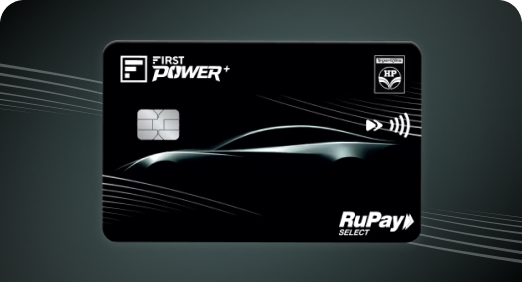
A Card that Powers your Savings & Lifestyle
IDFC FIRST Bank HPCL Credit Card








Most Searched
Earn up to 7% interest on your Savings Account
Open Account Now
Download our app
Get instant help for all your queries in one place
Unlock features, exclusively available
only on the IDFC FIRST Bank app
Trusted by 1.2+ million Indians.


4.8

4.8

Tools & Calculators
Privilege Program



Tools & Calculators
Savings Account
 Bank fees are charged monthly for varied reasons, e.g., not maintaining a certain minimum balance in the savings account, ATM transactions, and other specific services, and they vary from bank to bank.
Average Monthly Balance (AMB) non-maintenance charge is a fee charged to the customer for not meeting the requisite average monthly balance (AMB) of the savings account he/she holds.
It is imporant to be aware of the bank's charges in advance, and to ensure that the average monthly balance (AMB) does not fall below the threshold as specified by the bank where the savings acccount is held.
For many, it is quite common to not to read a bank’s schedule of charges - a compilation of all the fees that banks usually charge for their services – in detail.
Advancements in technology have made banking services easier and more accessible - opening a digital savings account, transferring funds, and making payments. However, on occasions when you open one of the most popular formats of Savings Account today – the instant savings bank account or digital savings account your natural tendency is to primarily look for its key features and highlights like Savings Account interest rates, ease of access, privileges and benefits it offers and not focus much on the service fees and charges or go through them carefully.
Knowing about maintenance charges or fees, that come with Savings Accounts is important. Bank fees are charged monthly for various reasons, like not maintaining a certain minimum balance in the savings account, ATM transactions, and other specific services. These bank charges vary from bank to bank, and you can avoid most of them if you are aware of them.
It is a fee that a bank or any other financial institution charges its customers for not meeting the requisite average monthly balance (AMB) of the savings account he/she holds. At the time of online savings account opening, as a part of the Terms and Conditions the customer agrees to maintain the AMB and pay the fees in case of not maintaining the same. The banks usually does an ‘auto-debit’ of a customer’s account with this fee on a month-on-month basis . For instance, IDFC FIRST Bank’s savings accounts have a particular threshold for the AMB. If the Customers fall below it, the fees are then levied as monthly maintenance charges. Nevertheless, you can avoid them by complying with the requirements.
Here are some common maintenance charges that you will come across with most banks in India.
A typical Savings Account comes with competitive interest on the balance maintained. The Savings Account interest rates range from 3% to 6%, depending on the bank and the amount in the account. With IDFC FIRST Bank, you can earn attractive and competitive interest per annum that is one of the bests in the industry on the AMB in your digital account.
Nonetheless, you are required to maintain the minimum balance every month. If you fail to do it, you will have to pay a fine, which differs depending on the bank’s policy. These bank charges make up the operational costs that a financial institution has to put up with to maintain and service your account.
For instance, IDFC FIRST Bank requires its customers to maintain a Saving Account minimum balance every month. An amount below this minimum AMB will attract a monthly maintenance fee depending on the balance in your Savings Account.
To conclude, or Average Monthly Balance Non-maintenance Charges vary depending on the type of savings account you hold and the bank you choose. Banks have different requirements and ways to help you avoid most of these charges. Open a Savings Account with IDFC FIRST Bank and enjoy various services and transactions without any charges.
The contents of this article/infographic/picture/video are meant solely for information purposes. The contents are generic in nature and for informational purposes only. It is not a substitute for specific advice in your own circumstances. The information is subject to updation, completion, revision, verification and amendment and the same may change materially. The information is not intended for distribution or use by any person in any jurisdiction where such distribution or use would be contrary to law or regulation or would subject IDFC FIRST Bank or its affiliates to any licensing or registration requirements. IDFC FIRST Bank shall not be responsible for any direct/indirect loss or liability incurred by the reader for taking any financial decisions based on the contents and information mentioned. Please consult your financial advisor before making any financial decision.
The features, benefits and offers mentioned in the article are applicable as on the day of publication of this blog and is subject to change without notice. The contents herein are also subject to other product specific terms and conditions and any third party terms and conditions, as applicable. Please refer our website www.idfcfirst.bank.in for latest updates.


You will earn