









Login to Internet banking
A brand-new experience - smarter, faster, and secured


You gain a dedicated partner committed to helping you reach your full potential and achieve new heights
Know More
BRAVO (Auto Sweep)
Convert the idle funds in your current account into a fixed deposit with the BRAVO feature.
Know More
Zero Forex Markup Current Account
Maximise your savings and boost profitability with our Zero Forex Markup current accounts
Know More






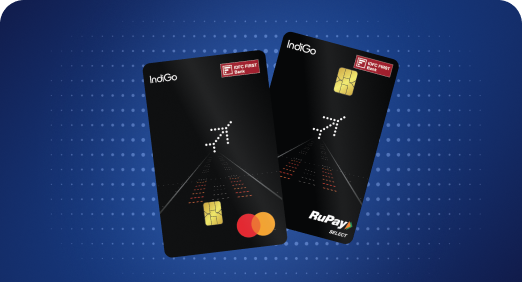

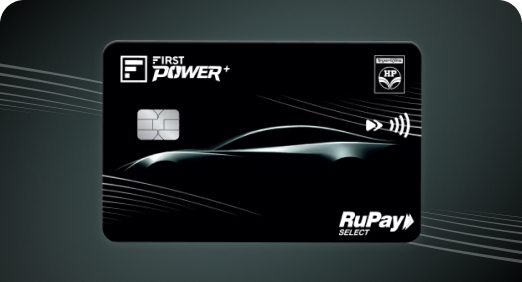
A Card that Powers your Savings & Lifestyle
IDFC FIRST Bank HPCL Credit Card









Most Searched
Earn up to 7% interest on your Savings Account
Open Account Now
Download our app
Get instant help for all your queries in one place
Unlock features, exclusively available
only on the IDFC FIRST Bank app
Trusted by 1.2+ million Indians.


4.8

4.8

Tools & Calculators
Privilege Program



Tools & Calculators

Unlock features, exclusively available
only on the IDFC FIRST Bank app
Finance
 Budget 2026 keeps tax slabs and deductions unchanged, giving salaried taxpayers stability
Disciplined investments like ELSS, PPF, FDs and SIPs still remain the most popular ways to save from your salary
Goal-based saving and smarter budgeting is encouraged by the Budget 2026-2027, rather than relying on tax changes
Budget 2026 keeps tax slabs and deductions unchanged, giving salaried taxpayers stability
Disciplined investments like ELSS, PPF, FDs and SIPs still remain the most popular ways to save from your salary
Goal-based saving and smarter budgeting is encouraged by the Budget 2026-2027, rather than relying on tax changes
Every new Union Budget announcement impacts how you manage your money, and Union Budget 2026 is no different. With updates to tax exemptions, your monthly in-hand savings might look a little different this year.
If you're wondering how to save money from your salary after Budget 2026, then here is a quick guide to help you get started. A few smart adjustments can make a big difference in your savings over time.
The Union Budget 2026 kept no change in tax slabs for FY 2026-27 for salaried individuals. Standard deduction remains ₹75,000 under the new regime, the goal being to bring down their total taxable income irrespective of their salary slab. This avoids any cutdown on disposable income available to everyday working-class individuals.
Read on if you're looking for saving ideas that align with your income and tax bracket.
Here are the key updates relevant for salaried professionals:
No change in basic income tax slab rates; the basic exemption limit was not raised
Standard deduction on salary remains unchanged (no increase to ₹1 lakh announced)
Section 80C limit stays at ₹1.5 lakh, with no enhancement
HRA and LTA rules remain the same, with no higher exemptions introduced
No provision for joint taxation for married couples was announced
Overall, Budget 2026–27 focuses on stability in tax rules rather than introducing new tax-saving benefits, encouraging savers to plan based on post-tax returns and long-term goals.
With no major changes to tax slabs or deductions, your take-home pay is likely to remain largely stable. That said, the continuity in tax rules brings clarity, making it easier to plan how to save money for future goals with confidence.
Since the Section 80C limit remains unchanged, disciplined investments in ELSS, PPF, or FDs continue to be reliable ways to optimise taxes and grow long-term savings from your salary. The existing standard deduction also helps support day-to-day budgeting by lowering taxable income.
This is a good time to reassess how you save money from your salary and fine-tune your budget, so your savings stay aligned with both short-term needs and long-term goals.
Make the most of the ₹1.5 lakh 80C limit available only in old regime. Consider SIPs in ELSS funds or a high-interest fixed deposit.
Use budgeting apps or IDFC FIRST Bank’s digital tools to track spending and automate savings.
With higher disposable income, divert a portion towards building a robust emergency corpus.
Wondering how to save money in India practically and without too much effort? An easy way is to set auto-debit instructions to directly invest funds after your salary is credited.
Ensure you submit accurate rent receipts and travel proofs to benefit from the revised limits.
While Budget 2026 provides a solid foundation, what truly defines your financial growth is how you adapt. If you're still wondering how to save money from your salary, remember that it comes down to making a consistent and disciplined plan, and choosing the right financial tools.
With IDFC FIRST Bank, you get access to high-interest savings accounts, zero-fee services, and budget-friendly banking options. All of this helps you convert your post-budget income into long-term savings.
Start a recurring deposit, invest in ELSS, or automate savings through a budgeting app linked to your salary account.
Start with an emergency fund and SIPs. These are flexible instruments that offer long-term benefits.
Yes. IDFC FIRST Bank offers high-interest savings accounts, budgeting tools, and investment options that help salaried professionals.
The contents of this article/infographic/picture/video are meant solely for information purposes. The contents are generic in nature and for informational purposes only. It is not a substitute for specific advice in your own circumstances. The information is subject to updation, completion, revision, verification and amendment and the same may change materially. The information is not intended for distribution or use by any person in any jurisdiction where such distribution or use would be contrary to law or regulation or would subject IDFC FIRST Bank or its affiliates to any licensing or registration requirements. IDFC FIRST Bank shall not be responsible for any direct/indirect loss or liability incurred by the reader for taking any financial decisions based on the contents and information mentioned. Please consult your financial advisor before making any financial decision.
The features, benefits and offers mentioned in the article are applicable as on the day of publication of this blog and is subject to change without notice. The contents herein are also subject to other product specific terms and conditions and any third party terms and conditions, as applicable. Please refer our website www.idfcfirst.bank.in for latest updates.