














Login to Internet banking
A brand-new experience - smarter, faster, and secured


Introducing the First-in-industry IDFC FIRST Bank's Super Account
Request a Callback
You gain a dedicated partner committed to helping you reach your full potential and achieve new heights
Know More
BRAVO (Auto Sweep)
Convert the idle funds in your current account into a fixed deposit with the BRAVO feature.
Know More
Zero Forex Markup Current Account
Maximise your savings and boost profitability with our Zero Forex Markup current accounts
Know More
Make more than one online payment in just a few clicks with IDFC FIRST Bank Bulk Payments
Know More






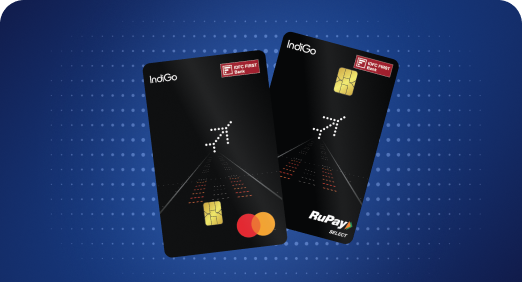


A Card that Powers your Savings & Lifestyle
IDFC FIRST Bank HPCL Credit Card






Most Searched

Earn up to 6.50% interest on your Savings Account
Open Account Now
Download our app
Get instant help for all your queries in one place
Unlock features, exclusively available
only on the IDFC FIRST Bank app
Trusted by 1.2+ million Indians.


4.8

4.8

Tools & Calculators
Privilege Program



Tools & Calculators

Unlock features, exclusively available
only on the IDFC FIRST Bank app
Personal Loan
 A marriage loan does not have to derail future goals if the wedding loan EMI after marriage is planned realistically within the couple’s combined income.
Planning finances after marriage becomes easier when couples budget early, automate EMIs after the wedding, and maintain an emergency fund alongside repayments.
Managing a marriage loan responsibly can support long-term financial stability, improve credit scores, and encourage healthy money conversations between partners.
Refinancing, early payments, and regular budget reviews are effective ways to reduce wedding loan burden without compromising post-marriage financial plans.
A marriage loan does not have to derail future goals if the wedding loan EMI after marriage is planned realistically within the couple’s combined income.
Planning finances after marriage becomes easier when couples budget early, automate EMIs after the wedding, and maintain an emergency fund alongside repayments.
Managing a marriage loan responsibly can support long-term financial stability, improve credit scores, and encourage healthy money conversations between partners.
Refinancing, early payments, and regular budget reviews are effective ways to reduce wedding loan burden without compromising post-marriage financial plans.
Weddings mark special memories that you can cherish for a lifetime. But what comes after the celebrations shouldn’t bog you down. The joy from your big day should ideally carry forward into your married life. You can make this happen with proper financial planning. So, if you plan to take out a marriage loan, learn how to plan the repayments and other financial expenses after marriage in this blog.
Taking a wedding loan eases your pressure on big-ticket wedding expenses. It also shapes how you handle money in the months and years that follow.
However, some of the common effects it may have on your long-term finances are as follows:
Once the EMI after the wedding begins, a fixed part of your income is locked in. Hence, it affects the portion of income available to save, invest, and spend on other essentials.
A wedding loan can temporarily push back your other life goals, such as buying a car, starting a family fund, or investing for a better future.
Building an emergency fund and growing your savings through SIPs, RDs, and other flexible investments may take more effort. But maintaining these is crucial for covering unexpected expenses.
How you manage your marriage loan EMIs has a direct effect on your credit score. If you clear them on time, it reflects positively and delaying or missing out on EMIs has an opposite effect.
A wedding loan is often the first major financial responsibility you tackle as a couple. So, it nudges you to have honest conversations around income, spending habits, and financial priorities.
Once your marriage loan EMIs start after the wedding, you want to ensure the repayments are smooth. You can manage this with a bit of structure and honest discussions as a couple. Here are some tips to help you in your wedding loan repayment journey:
You can start by mapping out your combined income, fixed commitments, essential household expenses, and a buffer. A detailed layout of your priorities helps you understand how much room you have for the wedding loan EMIs. Hence, you can budget accordingly and have a clear sense of direction with repayments.
It is very common to forget or miss out on EMI payments as you navigate numerous expenses. But the repercussions of this minor oversight are a late payment penalty and a lower credit score. Hence, it is best to set up auto-debit on your savings account for EMI payments. This ensures timely payments without your conscious involvement.
Even while repaying a marriage loan, creating a small buffer is a wise move. You can aim for a small emergency fund of 2-3 months’ expenses. This prevents financial stress and dependency on credit cards and additional loans, which strain your finances. They can compromise wedding loan EMIs.
As a newly married couple, you may be tempted to upgrade everything at once. Home setup, new gadgets, and honeymoon packages are all very exciting. However, making selective choices as your budget allows with the wedding loan EMI is important to avoid stretching your finances.
The budgeting practices to ease the EMI load are not a one-time solution. They need to be reviewed from time to time. You want to reassess your budget, EMI structure, and savings every few months to make adjustments as necessary. For instance, if your income increases, you can consider foreclosing the loan to save on the interest cost.
The early months of marriage shape your financial journey as a couple. They help you establish your new responsibilities and shared dreams.
Throw in a marriage loan into the mix, and it gets even more serious. Here’s how you can go about planning finances after marriage to stay on the right track:
· Set up essential monthly commitments
List out your fixed expenses like rent, groceries, utilities, insurance, and wedding loan EMIs. These will form your monthly commitments that you must fulfil no matter what.
· Decide your short-term shared goals
Whether it is setting up your home, planning a short trip, or making important purchases, having clarity on short-term goals helps. It prevents overspending.
· Build capital for the long haul
Big-picture goals such as buying a house, investing, or preparing for family planning are crucial part of building a stress-free life together. Set up investments for these early on.
· Divide financial responsibilities
As a couple, you can combine the power of two income sources. Hence, it is good to understand how you split financial responsibilities to have a clear direction in planning finances after marriage.
· Align your financial values and spending habits
Not everyone saves the same way, so it is completely reasonable for your financial values to misalign. Understanding each other’s motivation and spending habits is the key to working out a common ground.
Figuring out your shared values and responsibilities involves a learning curve. As you go along the journey, you may discover some pitfalls that reshape your finances. Rather than waiting to make mistakes, you can proactively prepare for these common red flags:
· An unclear monthly budget
If you’re bearing expenses without a shared budget, it’s a recipe for scattered finances. Without clarity, you will overindulge in unnecessary expenses and end up compromising on necessary responsibilities like EMI after the wedding.
Credit cards are highly convenient, and there is no issue in using them. But overtly relying on them is where the problem lies. As you increase your dependence, you may incur higher debt, which may cause an imbalance in your savings.
A spontaneous dinner plan, harmless takeout every now and then, or a stress-busting splurge. Indulging in such expenses routinely throws off your monthly financial planning.
If building an emergency fund or making small investments keeps getting pushed off for later, it’s a sign that your financial routine isn’t balanced. Savings should never come to half regardless of EMIs.
Buying a car, building a wardrobe, planning for holidays, etc., are all part of how we find our happiness and move forward in life. But when they exceed our monthly income, it’s a cause for concern.
If you, as a couple, tiptoe around budget discussions and repeatedly delay important financial decisions, it’s a red flag. Consistent check-ins are important to achieve your shared goals systematically.
Making marriage loan EMIs after a wedding is a major point of concern for many couples. This is a prevalent topic of discussion on Reddit, which has revealed some refinancing options that can offer breathing room. They include:
Several Reddit users recommend comparing interest rates on wedding loans. If you find a better offer from banks and financial institutions, you can opt for refinancing your loan. This can reduce your EMI and total interest outgo.
Some redditors shared that combining multiple loans like credit cards, marriage loan, home loan, or car loan into a single loan simplified repayments and reduced stress.
If you receive a bonus, gift money, or variable income after the wedding, you can use a portion of it for prepaying your wedding loan. This may incur a minimal cost but will also bring down the EMIs significantly.
Balancing a marriage loan with the financial realities as a newly married couple can get overwhelming. But with the right approach, you can simplify the monthly EMIs. All you need is a bit of planning with shared conversations around budgeting, goals, spending habits, and priorities. You don’t want to necessarily rush through repayments to ease the burden. Rather, it’s about building a steady rhythm that makes EMI repayments comfortable.
Explore FIRSTmoney personal loan for marriage by IDFC FIRST Bank, a smart choice for couples planning their big day in India. Here’s how it stands out:
✅ Keep your EMIs affordable with low interest rates starting at just 9.99% p.a.
✅ Close your loan anytime without any foreclosure charges.
✅ Quick approval & 30-minute disbursal. Perfect for last-minute wedding expenses.
✅ 100% digital process, no paperwork – Apply from anywhere, hassle-free.
✅ Multiple on-demand loans for the flexibility to manage extra wedding costs easily.
No, a marriage loan only becomes a problem if the EMIs are too high for your income or if it affects your basic expenses and savings. When planned well, it simply becomes one of your monthly commitments. If you budget realistically, you can use a wedding loan to build a healthy credit score.
It depends on your financial situation and the loan’s interest rate and other charges. If the interest on your wedding loan is high or the EMIs feel heavy, you can repay early to reduce the overall loan burden. In other cases, it helps to reinvest in avenues where you can fund your other expenses. Do check the lender’s policies before repaying early.
You would have to revisit your budget and change your savings approach to reduce discretionary spending and prioritise only essential expenses. If needed, you can also consider refinancing to extend tenure to reduce EMI pressure until the income stabilises.
The contents of this article/infographic/picture/video are meant solely for information purposes. The contents are generic in nature and for informational purposes only. It is not a substitute for specific advice in your own circumstances. The information is subject to updation, completion, revision, verification and amendment and the same may change materially. The information is not intended for distribution or use by any person in any jurisdiction where such distribution or use would be contrary to law or regulation or would subject IDFC FIRST Bank or its affiliates to any licensing or registration requirements. IDFC FIRST Bank shall not be responsible for any direct/indirect loss or liability incurred by the reader for taking any financial decisions based on the contents and information mentioned. Please consult your financial advisor before making any financial decision.
The features, benefits and offers mentioned in the article are applicable as on the day of publication of this blog and is subject to change without notice. The contents herein are also subject to other product specific terms and conditions and any third party terms and conditions, as applicable. Please refer our website www.idfcfirst.bank.in for latest updates.