








Login to Internet banking
A brand-new experience - smarter, faster, and secured



You gain a dedicated partner committed to helping you reach your full potential and achieve new heights
Know More
BRAVO (Auto Sweep)
Convert the idle funds in your current account into a fixed deposit with the BRAVO feature.
Know More
Zero Forex Markup Current Account
Maximise your savings and boost profitability with our Zero Forex Markup current accounts
Know More





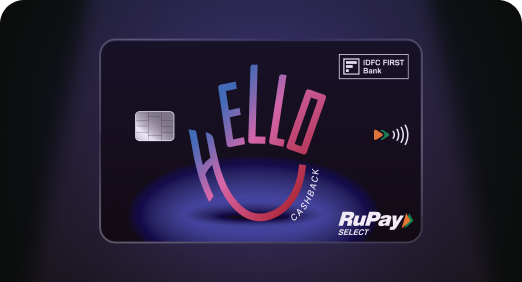
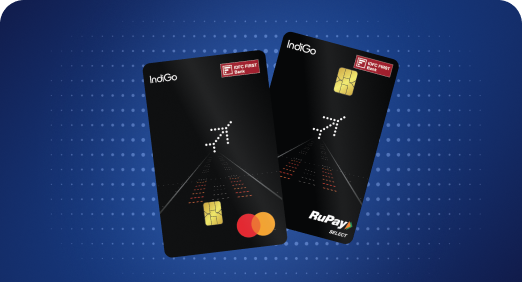

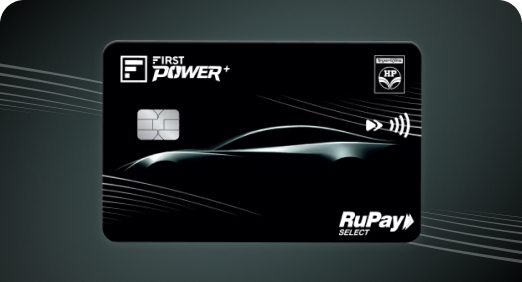
A Card that Powers your Savings & Lifestyle
IDFC FIRST Bank HPCL Credit Card









Most Searched
Earn up to 7% interest on your Savings Account
Open Account Now
Download our app
Get instant help for all your queries in one place
Unlock features, exclusively available
only on the IDFC FIRST Bank app
Trusted by 1.2+ million Indians.


4.8

4.8

Tools & Calculators
Privilege Program



Tools & Calculators

Unlock features, exclusively available
only on the IDFC FIRST Bank app
Personal Loan
 Always check eligibility and compare lenders before applying for a debt consolidation loan.
Evaluate the total cost of the loan before opting for a debt consolidation option.
Use debt consolidation wisely and avoid taking on new debt during repayment.
Review repayment flexibility and charges to choose a lender that supports long-term savings.
Always check eligibility and compare lenders before applying for a debt consolidation loan.
Evaluate the total cost of the loan before opting for a debt consolidation option.
Use debt consolidation wisely and avoid taking on new debt during repayment.
Review repayment flexibility and charges to choose a lender that supports long-term savings.
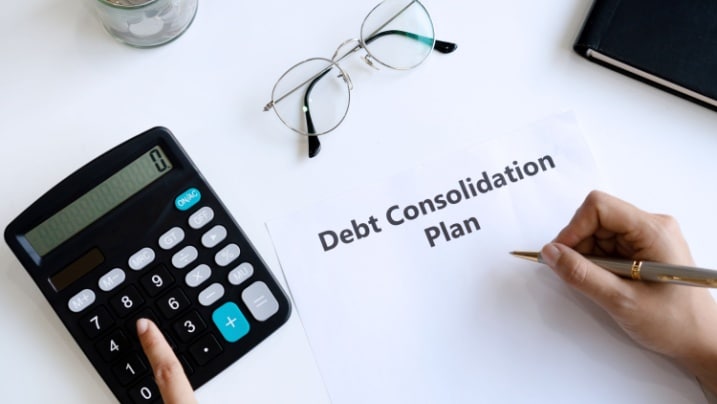
If you are someone who is juggling several debts, especially those pesky credit card bills, you might find yourself considering debt consolidation loans as a way to ease the burden. Debt consolidation loans reduces the burden of paying multiple EMIs and is well suited for people whose ongoing debts have high interest rates. In this article, we will explain how to choose the right lender and highlight the common mistakes to avoid.
A debt consolidation loan can be defined as a single loan a person can take to repay several existing debts. Simply put, in place of paying multiple EMIs, each with a different due date, and varying interest rate, you can choose to pay one EMI to a single lender. Customers opt for a debt consolidation loan in India, to reduce the overall cost of interest and to ease repayment.
Listed under are a few common factors that can be easily overlooked. They are:
Most borrowers skip checking their debt consolidation loan eligibility before initiating the process.
Typical eligibility criteria for lenders in India are:
Not meeting any of these mandatory requirements could lead to loan application rejection. Several rejections may impact your credit score negatively. It is recommended that all borrowers must fulfil these criteria before applying.
One of the most common mistakes made by borrowers is to assume a lower EMI means the loan is cheaper. Factors to consider while applying for a debt consolidation loan in India are:
A longer tenure typically means the cost of loan is higher even if the EMI is low. It is imperative to compare your current interest cost with the full cost of the debt consolidated loan.
Borrowers oftentimes apply to several lenders in a bid to understand their options, interest rates and cost of loan. This move ends up triggering several hard inquiries in your credit history causing a direct impact on your overall credit score. Too many credit inquiries in a short term can be perceived as a red flag for lenders.
Borrowers are recommended to compare rates and products before making hard inquires to avoid credit score reduction. To speed up the process, look for lenders that provide digital approvals on instant debt consolidation loans, check eligibility before proceeding with completing documentation and know your customer formalities to avoid rejection.
It is ideal for borrowers to compare products across various lenders that offer debt consolidation loan. Typically, lenders like banks and non-banking financial companies (NBFC) offer personal loans that can be used to consolidate debt. Each lender has its set of unique rules and eligibility criteria. By skipping the step of product comparison, borrowers may end of choosing loans with a higher overall cost.
Listed below are points to consider while comparing credit products:
Comparing these factors will help you make informed decisions and help chose a debt consolidation loan that aligns with your current financial capacity.
While debt consolidation loans are a prudent way to manage debt and reduce outflow of interest payments, it is not a means to clear debt instantly. Borrowers assume debt consolidation as a single payment and underestimate its financial implications while accumulating more debt.
Borrowers are encouraged to engage in proper financial planning to ensure timely payments while reducing other credit spends for optimising debt reduction. This has a direct impact on your credit health and impacts your chances of getting loans in the future.
Lenders have different policies around early closure of loans or making lump-sum part payments. It is crucial to know the lenders policy around these terms and the possible charges you may end up paying in case you choose to repay the loan earlier than intended.
What to look for:
Selecting lenders that allow flexibility in loan repayment and loan closure can significantly impact your finances in the long term.
Financial products, whether they are for credit or investment must be thoroughly researched, compared with other similar products by different lenders and most importantly, must align with your risk profile and financial goals. This inculcates financial discipline and avoids any rude surprises for the borrower later.
Let us see some crucial aspects borrowers must consider before choosing a lender:
These aspects are critical for ensuring that taking a debt consolidation loan is working in your favour and easing your credit burdens.
Lenders such as public and private sector banks, offer personal loan as a form of debt consolidation but a select few banks also have a product called a debt consolidation of loan.
If you are looking for an instant personal loan to meet your urgent financial needs, you can avail a FIRSTmoney personal loan by IDFC FIRST Bank. You can get loan amounts up to 15 lakh and interest rates start at 9.99% p.a. with zero foreclosure charges.
The eligibility requirements can differ from one lender to another, but generally, most banks and NBFCs look for a few key factors. You’ll typically need to be an Indian citizen, have a steady income, maintain a good credit score, show a solid repayment history, and keep your debt-to-income ratio in check.
A lot of lenders let you apply for a debt consolidation loan online. The whole process is completely digital, featuring instant verifications, quick approvals, and speedy disbursals, which makes it super convenient.
A personal loan is often a top pick for debt consolidation. These loans are usually unsecured, which means you don’t need to put up collateral, and they tend to have a higher approval rate. They can help you roll multiple high-interest debts, like credit card bills and small loans, into a single, manageable EMI. This can reduce your overall interest payments and make repayment a lot simpler.
The contents of this article/infographic/picture/video are meant solely for information purposes. The contents are generic in nature and for informational purposes only. It is not a substitute for specific advice in your own circumstances. The information is subject to updation, completion, revision, verification and amendment and the same may change materially. The information is not intended for distribution or use by any person in any jurisdiction where such distribution or use would be contrary to law or regulation or would subject IDFC FIRST Bank or its affiliates to any licensing or registration requirements. IDFC FIRST Bank shall not be responsible for any direct/indirect loss or liability incurred by the reader for taking any financial decisions based on the contents and information mentioned. Please consult your financial advisor before making any financial decision.
The features, benefits and offers mentioned in the article are applicable as on the day of publication of this blog and is subject to change without notice. The contents herein are also subject to other product specific terms and conditions and any third party terms and conditions, as applicable. Please refer our website www.idfcfirst.bank.in for latest updates.