








Login to Internet banking
A brand-new experience - smarter, faster, and secured


BRAVO (Auto Sweep)
Convert the idle funds in your current account into a fixed deposit with the BRAVO feature.
Know More

Zero Forex Markup Current Account
Maximise your savings and boost profitability with our Zero Forex Markup current accounts
Know More
BRAVO (Auto Sweep)
Convert the idle funds in your current account into a fixed deposit with the BRAVO feature.
Know More
You gain a dedicated partner committed to helping you reach your full potential and achieve new heights
Know More





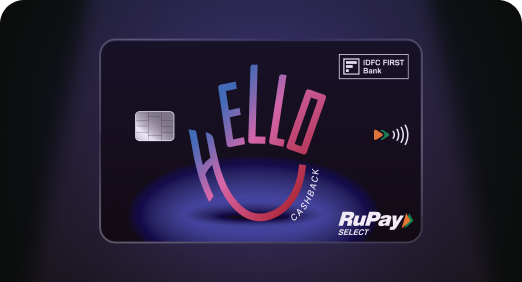

Enjoy Zero Forex on all IDFC FIRST Bank Credit Cards
Save more on all international spends
Know More
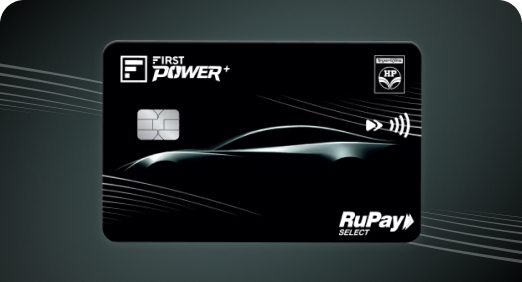
A Card that Powers your Savings & Lifestyle
IDFC FIRST Bank HPCL Credit Card









Most Searched
Earn up to 7% interest on your Savings Account
Open Account Now
Download our app
Get instant help for all your queries in one place
Unlock features, exclusively available
only on the IDFC FIRST Bank app
Trusted by 1.2+ million Indians.

4.8

4.8

Tools & Calculators
Privilege Program



Tools & Calculators

Unlock features, exclusively available
only on the IDFC FIRST Bank app
Personal Loan
 P2P lending connects individual borrowers with lenders directly, offering higher returns for investors compared to traditional savings accounts, and easier access to credit for those who may not qualify for bank loans.
While P2P lending presents attractive opportunities, it also carries risks, such as the likelihood of borrower defaults, especially since many borrowers may have poor credit histories.
Unlike traditional bank loans, P2P loans are not protected or insured by the government, leaving investors vulnerable if a borrower defaults.
P2P lending connects individual borrowers with lenders directly, offering higher returns for investors compared to traditional savings accounts, and easier access to credit for those who may not qualify for bank loans.
While P2P lending presents attractive opportunities, it also carries risks, such as the likelihood of borrower defaults, especially since many borrowers may have poor credit histories.
Unlike traditional bank loans, P2P loans are not protected or insured by the government, leaving investors vulnerable if a borrower defaults.
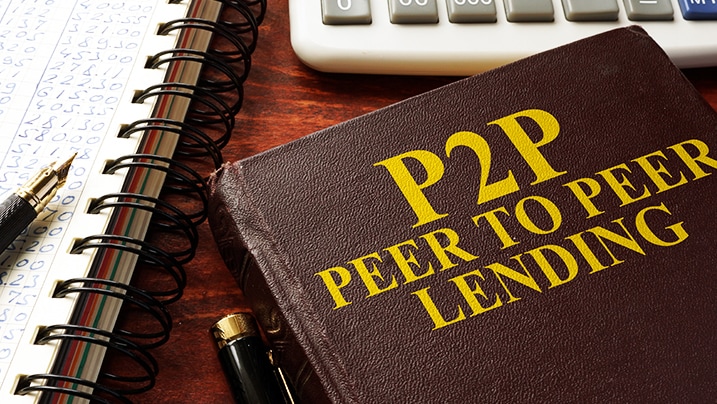
Peer-to-peer lending, or P2P lending, has emerged as a popular alternative to traditional finance methods, offering higher returns for investors and easier access to credit for borrowers. But like any financial product, it carries both risks and rewards. In this article, we’ll examine the ins and outs of P2P lending and help you decide whether it’s a viable option for you, whether you are looking to invest or borrow money.
Peer-to-peer lending is an innovative financial model that connects individuals who want to lend money with those who need to borrow. Unlike traditional banks, P2P lending platforms serve as intermediaries that facilitate loans directly between individuals.
On many websites, the money that you deposit for peer-to-peer investing is automatically distributed among multiple borrowers. However, on other peer-to-peer lending platforms, you have the option of choosing who you want to lend your money to. (P2P Loan) Peer-to-peer loan interest rates are often greater than those offered by regular savings accounts.
Peer-to-peer lending has a simple mechanism. All the operations are completed on a mobile application or website. The following steps outline the general process:
There are several advantages to participating in P2P lending, both for borrowers and investors:
With P2P lending, however, there is always the risk that the borrower would be unable to repay the debt.
Peer-to-peer lending does, however, have a few drawbacks, such as:
How Is P2P Lending Regulated In India?
Regulation by Reserve Bank of India (RBI)
The Reserve Bank of India (RBI) is the primary regulatory authority overseeing P2P lending platforms. It ensures that these platforms operate under established guidelines to protect both borrowers and lenders, maintain financial stability, and enhance trust in the P2P lending ecosystem.
Regulatory Guidelines for P2P Platforms
RBI has laid down specific guidelines for the functioning of P2P lending platforms, including requirements related to financial stability, such as maintaining a minimum net owned fund, and imposing caps on the amount an individual can lend or borrow.
Operational Guidelines
The operational framework requires that P2P lending platforms function strictly as intermediaries, facilitating the connection between borrowers and lenders without holding any deposits.
KYC and Credit Assessment
To mitigate risks, P2P lending platforms are mandated to adhere to KYC (Know Your Customer) norms, verifying the identities of all lenders and borrowers. In addition, platforms must conduct thorough credit assessments and share relevant information to help lenders make informed decisions.
While P2P lending can be an attractive alternative to traditional loans, it’s not always the best option. For instance, if you’re looking for a loan with security and regulatory oversight, a bank loan might be a better choice. Unlike P2P loans, bank loans are often insured and come with consumer protections.
P2P loans are like instant personal loans but without much authorisation. It is best to get a loan from a conventional bank if you need money. IDFC FIRST Bank gives instant personal loans with the major benefits of a P2P loan, but with added security. You can also check you EMI amount with IDFC FIRST Bank’s personal loan EMI calculator. Simply enter your loan amount requirement, period for which you want. The fact that you can get personal loans online proves that bank loans are on equal footing with P2P loans.
Disclaimer
The contents of this article/infographic/picture/video are meant solely for information purposes. The contents are generic in nature and for informational purposes only. It is not a substitute for specific advice in your own circumstances. The information is subject to updation, completion, revision, verification and amendment and the same may change materially. The information is not intended for distribution or use by any person in any jurisdiction where such distribution or use would be contrary to law or regulation or would subject IDFC FIRST Bank or its affiliates to any licensing or registration requirements. IDFC FIRST Bank shall not be responsible for any direct/indirect loss or liability incurred by the reader for taking any financial decisions based on the contents and information mentioned. Please consult your financial advisor before making any financial decision.
On RBI regulated P2P platforms, individuals lend to other individuals while the platform acts as a facilitator. It completes onboarding, KYC, and credit assessment, then assigns risk grades. Money moves through an escrow account with a bank, not via the platform’s own accounts. Lenders choose matching loans and transfer funds to the escrow. Borrowers repay into the same escrow. The platform charges fees, provides dashboards, and does not guarantee returns.
Sometimes, although it depends on the platform’s pricing model and the borrower’s risk grade. Lenders see rates and fees, then choose listings that suit their target yield and risk tolerance. Compare the all-in return after platform charges, delays, and expected defaults. Diversification across many small loans may smooth outcomes but cannot remove risk. Also compare taxes, liquidity, and effort versus alternatives such as bank deposits or debt funds.
No, IDFC FIRST Bank does not operate a P2P marketplace. Its lending is offered as bank issued products through digital journeys and branches. Visit the FIRSTmoney personal loan page to explore instant personal loan offers up to 10 lakhs starting at just 9.99% p.a.
Main risks include borrower default borne by the lender, delays in recovery, and lower liquidity if secondary exits are limited. Platform or operational failures can disrupt repayments until processes resume. Policy changes may alter limits, caps, or reporting. Outcomes depend on selection quality, diversification, and discipline with small ticket exposures. Keep realistic expectations, track collections regularly, and plan for periods with missed instalments and irregular cash flows from your portfolio.
The features, benefits and offers mentioned in the article are applicable as on the day of publication of this blog and is subject to change without notice. The contents herein are also subject to other product specific terms and conditions and any third party terms and conditions, as applicable. Please refer our website www.idfcfirst.bank.in for latest updates.


Check the latest rates.

Know your total loan cost.

Estimate your EMI instantly.

Compare EMIs for multiple loan types.

See why your score matters.