








Login to Internet banking
A brand-new experience - smarter, faster, and secured


BRAVO (Auto Sweep)
Convert the idle funds in your current account into a fixed deposit with the BRAVO feature.
Know More

Zero Forex Markup Current Account
Maximise your savings and boost profitability with our Zero Forex Markup current accounts
Know More
BRAVO (Auto Sweep)
Convert the idle funds in your current account into a fixed deposit with the BRAVO feature.
Know More
You gain a dedicated partner committed to helping you reach your full potential and achieve new heights
Know More



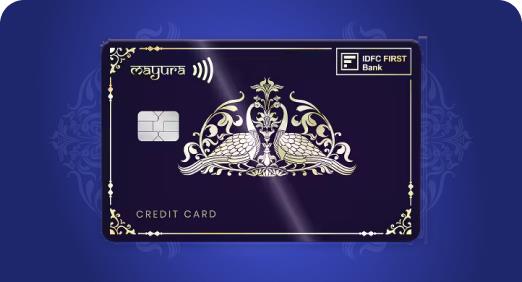

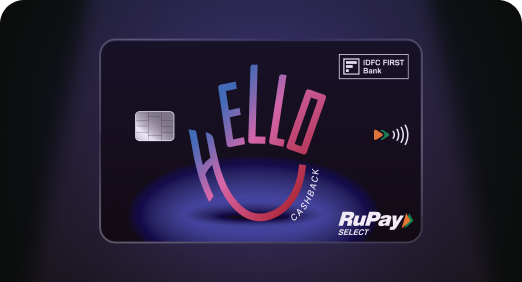

Enjoy Zero Forex on all IDFC FIRST Bank Credit Cards
Save more on all international spends
Know More
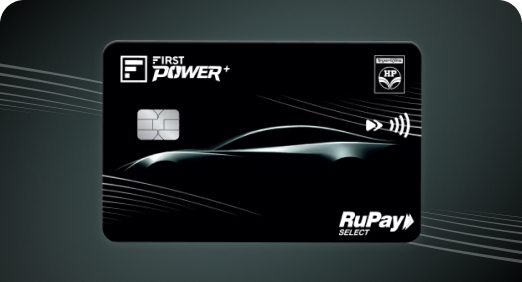
A Card that Powers your Savings & Lifestyle
IDFC FIRST Bank HPCL Credit Card








Most Searched
Earn up to 7% interest on your Savings Account
Open Account Now
Download our app
Get instant help for all your queries in one place
Unlock features, exclusively available
only on the IDFC FIRST Bank app
Trusted by 1.2+ million Indians.


4.8

4.8

Tools & Calculators
Privilege Program



Tools & Calculators
Savings Account
 The Account Payee or A/C Payee cheque is a secured instrument of payment, considered as one of the safest types of cheques, using which one can transfer money from his/her bank account into the payee's account named on the cheque.
To issue an A/C Payee cheque, you need to draw two parallel lines, at the top left corner of the cheque, known as 'crossing' the cheque.
To encash a crossed cheque, the payee needs to visit his/her bank branch and deposit it into their own savings account by filling out the cheque deposit form. Upon verification and clearance, the money is credited, within the stipulated time as specified by the bank.
The Account Payee or A/C Payee cheque is a secured instrument of payment, considered as one of the safest types of cheques, using which one can transfer money from his/her bank account into the payee's account named on the cheque.
To issue an A/C Payee cheque, you need to draw two parallel lines, at the top left corner of the cheque, known as 'crossing' the cheque.
To encash a crossed cheque, the payee needs to visit his/her bank branch and deposit it into their own savings account by filling out the cheque deposit form. Upon verification and clearance, the money is credited, within the stipulated time as specified by the bank.
After opening a bank account, you will be provided with a kit in an envelope. Inside the envelope, you will find important elements such as an ATM/Debit Card, a Welcome Letter and a Chequebook.
If you are new to the world of banking, it is rather usual to come across the term ‘account payee or a/c payee cheque’ and not quite understand what do they actually mean. To learn more about the term in detail, , read on.
The account payee/ac payee cheque can be defined as a secured type of cheque. That’s because, in this variant of cheques, it is possible for you to transfer money from your bank account only into the payee's account. Furthermore, the recipient of the account payee cheque does not have the authorisation for marking the cheque for anybody else. To further your understanding regarding this type of cheque, it is imperative for you to be aware of the account payee cheque meaning and the three terms mentioned below :
Three important terms associated with account payee cheques:
The drawer is the entity or the account holder who is writing the cheque and signs on the cheque. Generally, the drawer is the individual whose account is debited.
The drawee is the financial institution to which you are writing the cheque. Generally, the bank is the drawee. The drawer is supposed to leave an instruction to the drawee to deduct a sum from their bank account.
The payee can be described as the account holder or the corporate entity to whom you are transferring money. The cheque is addressed to the name of the payee.
Here are the steps that are involved in the issue of an account payee cheque:
· While issuing an account payee cheque, it is important for you to draw two parallel crossing lines. You need to draw the said parallel line at the top of the left corner. This step is also referred to as crossing the cheque.
· Right in the middle of the two parallel lines, write ‘account payee only’. It is important to note that without mentioning these words, the bank or drawee will not consider the cheque as the account payee cheque.
The primary benefit of account payee cheques is that they are the safest variant of cheques. That is because the written sum on the cheque can only be deposited into the account of the payee, ensuring that the chances of misuse are very low.
After receiving the payment through this cheque, the payee can’t endorse the account payee cheque to anyone else. This only adds to the security of these cheques. Apart from the secured nature of these cheques, it is also imperative to note that these cheques come with a validity of only three months.
Account payee cheques are considered to be one of the safest variants of cheques because the sum written on the cheque can only be deposited into the account of the payee
If you ever receive an account payee cheque, it is not possible for you to cash it instantly. To encash it, you are required to deposit the cheque into your Savings Account by filling out the cheque deposit form. After filling out the form, clip the cheque to the form and drop it inside the cheque deposit box or hand it over to the bank official. After that, the bank will deposit the money into your account in two or more days.
If you are looking for an easier way of transferring funds, you can download IDFC FIRST Bank’s mobile banking app without paying any additional charges for transactions. Also, you can conduct online money transfers through IMPS, NEFT, and RTGS for seamless online transaction with IDFC FIRST Bank Savings Account.
Understanding the function and process of account payee cheques can add a layer of security to your banking transactions. Account payee cheques ensure that funds reach the intended recipient’s bank account directly, making them a secure mode of fund transfers. If you often handle cheque transactions, being well-versed in the process can help you manage payments safely. Additionally, with IDFC FIRST Bank’s digital banking options, you can explore seamless online transfers via IMPS, NEFT, and RTGS, making fund transfers even more convenient and efficient.
The contents of this article/infographic/picture/video are meant solely for information purposes. The contents are generic in nature and for informational purposes only. It is not a substitute for specific advice in your own circumstances. The information is subject to updation, completion, revision, verification and amendment and the same may change materially. The information is not intended for distribution or use by any person in any jurisdiction where such distribution or use would be contrary to law or regulation or would subject IDFC FIRST Bank or its affiliates to any licensing or registration requirements. IDFC FIRST Bank shall not be responsible for any direct/indirect loss or liability incurred by the reader for taking any financial decisions based on the contents and information mentioned. Please consult your financial advisor before making any financial decision.
The features, benefits and offers mentioned in the article are applicable as on the day of publication of this blog and is subject to change without notice. The contents herein are also subject to other product specific terms and conditions and any third party terms and conditions, as applicable. Please refer our website www.idfcfirst.bank.in for latest updates.


You will earn