

























Login to Internet banking
A brand-new experience - smarter, faster, and secured


Introducing the First-in-industry IDFC FIRST Bank's Super Account
Request a Callback
You gain a dedicated partner committed to helping you reach your full potential and achieve new heights
Know More
BRAVO (Auto Sweep)
Convert the idle funds in your current account into a fixed deposit with the BRAVO feature.
Know More
Zero Forex Markup Current Account
Maximise your savings and boost profitability with our Zero Forex Markup current accounts
Know More
Make more than one online payment in just a few clicks with IDFC FIRST Bank Bulk Payments
Know More




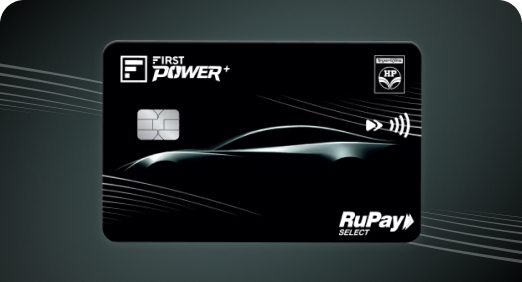
A Card that Powers your Savings & Lifestyle
IDFC FIRST Bank HPCL Credit Card

Most Searched

Earn up to 6.50% interest on your Savings Account
Open Account Now
Download our app
Get instant help for all your queries in one place
Unlock features, exclusively available
only on the IDFC FIRST Bank app
Trusted by 1.2+ million Indians.


4.8

4.8

Tools & Calculators
Privilege Program

Unlock features, exclusively available
only on the IDFC FIRST Bank app
 NRIs must consolidate and convert resident accounts into NRO/NRE accounts for compliance and efficient fund management. Equity and mutual fund investments require redesignation and linking with NRI accounts to continue investing seamlessly. Real estate, insurance, and property-related responsibilities must be structured with digital tools or automated payments for convenience. Professional advice from a tax specialist ensures compliance with Indian and international laws while optimising liabilities.
While relocating abroad comes with excitement and opportunities, it also requires thoughtful financial planning in India. With evolving FEMA (Foreign Exchange Management Act) regulations and taxation rules, you must ensure compliance while protecting your wealth. By following the right measures, you can simplify asset management, secure your family’s financial needs, and enjoy seamless banking through trusted partners like IDFC FIRST Bank.
Here are eight measures you need to take to facilitate NRI banking before you book your flight:
If you have multiple bank accounts in India, it is best to consolidate your finances for ease of accounting and proper tax reporting. Just hold on to one or at least two bank accounts and convert them to an NRO (Non-Resident Ordinary) bank account. All income generated in India, such as rent, dividends, investment proceeds, etc., can be deposited into your NRI account.
Additionally, you may have to open an NRE account (Non-Resident External) if you have dependents in India to whom you wish to remit money or repatriate funds from investments. If you want to continue making new investments in India and don’t want to take currency conversion risk, invest in FCNR (Foreign Currency Non Resident) deposits. With IDFC FIRST Bank, you get comprehensive NRI banking solutions with a range of account options that suit your financial needs.
Bank lockers can be expensive to maintain. Most banks charge a hefty annual fee for lockers and expect customers to maintain a high account balance. Consider giving up these lockers unless you have no other option for storing jewellery, valuables, or important documents. If you need to retain a locker, choose a bank where you will be maintaining your NRI bank account.
As your status changes, you’ll need to redesignate your Demat account and follow FEMA rules. NRIs cannot trade equities the same way as resident Indians — instead, you’ll need a PoA, mandate holder, or RBI’s Portfolio Investment Scheme (PIS).
There are three ways to continue investing in Indian markets – appoint a mandate holder for your NRO/NRE account, give a Power of Attorney to a trusted contact to trade on your behalf, or sign up for RBI’s Portfolio Investment Scheme (PIS) through an eligible bank or broker. With IDFC FIRST Bank, you can setup these facilities online through net-banking or your relationship manager.
Choose to link your mutual funds with an NRO or NRE Account. For existing mutual fund investments, you will have to get a fresh KYC (Know Your Customer) done to reflect your non-resident status. You will also have to change the folios to ‘non-resident’ to link them to your NRI bank account.
Note: account of the Foreign Account Tax Compliance Act (FATCA) agreement between India and the US, a few domestic AMCs have discontinued mutual fund services to NRIs based out of US/Canada.
Here’s a quick comparison between equity and Mutual Fund investments for NRIs
Investment Type | What NRIs Need to Do | Restrictions | Special Notes |
Equity | Redesignate Demat account; use NRO/NRE + PIS; appoint PoA/mandate holder | Cannot trade like residents | Setup possible online with partner banks like IDFC FIRST Bank |
Mutual Funds | Update KYC, redesignate folios, link to NRI account | Limited access if in US/Canada (FATCA) | Easy to continue SIPs/redemptions digitally |
Managing real estate assets from overseas require you to take care of maintenance charges, electricity/gas bills, property taxes, repairs and any ongoing mortgage. In case your property is rented out, a property management service (typically charging 3–7% of rent) can ease the process, many of them offering digital dashboards.
Responsibility | Typical Cost/Requirement | NRI-Friendly Solution |
Maintenance charges, utilities | Monthly recurring | Digital auto-pay |
Property tax payments | Annual/semi-annual | Mandate or PoA |
Repairs & upkeep | Variable | Property management company |
Rental oversight | 3–7% of rent if outsourced | Professional property managers with online dashboards |
Life insurance plans are relatively easier to manage, and NRIs can even purchase new policies. Most life insurance companies even accept premium payments in foreign currency.
In terms of managing insurance plans, consider the following:
Just as life insurance, health insurance plans require a strategy as well:
If you hold multiple investments, a tax specialist with expertise in international taxation is crucial. They’ll help you comply with FEMA, double taxation treaties, and optimise liabilities across jurisdictions.
Managing your finances in India as an NRI need not be overwhelming. With structured planning and the right banking partner, you can efficiently oversee investments, insurance, and real estate while abroad. With IDFC FIRST Bank tailored NRI solutions - from account management to remittances and investment options - you stay financially secure and compliant.
The features, benefits and offers mentioned in the article are applicable as on the day of publication of this blog and is subject to change without notice. The contents herein are also subject to other product specific terms and conditions and any third party terms and conditions, as applicable. Please refer our website www.idfcfirst.bank.in for latest updates.