









Login to Internet banking
A brand-new experience - smarter, faster, and secured



BRAVO (Auto Sweep)
Convert the idle funds in your current account into a fixed deposit with the BRAVO feature.
Know More

Zero Forex Markup Current Account
Maximise your savings and boost profitability with our Zero Forex Markup current accounts
Know More
BRAVO (Auto Sweep)
Convert the idle funds in your current account into a fixed deposit with the BRAVO feature.
Know More

You gain a dedicated partner committed to helping you reach your full potential and achieve new heights
Know More







Enjoy Zero Forex on all IDFC FIRST Bank Credit Cards
Save more on all international spends
Know More
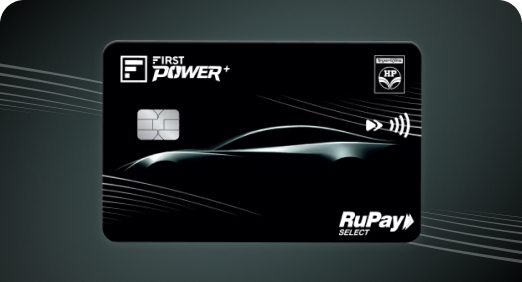
A Card that Powers your Savings & Lifestyle
IDFC FIRST Bank HPCL Credit Card









Most Searched
Earn up to 7% interest on your Savings Account
Open Account Now
Download our app
Get instant help for all your queries in one place
Unlock features, exclusively available
only on the IDFC FIRST Bank app
Trusted by 1.2+ million Indians.


4.8

4.8

Tools & Calculators
Privilege Program



Tools & Calculators

Unlock features, exclusively available
only on the IDFC FIRST Bank app
Savings Account
 A joint account helps couples align and manage shared financial goals such as buying a home, saving for children’s education, or building an emergency fund.
Having one account for household expenses and savings ensures transparency and simplifies budgeting, especially when both partners contribute regularly.
It gives both partners access to funds and reduces delays in decision-making during emergencies like job loss or medical crises.
While you can keep personal accounts too, a joint account creates a clear platform for shared finances and strengthens trust, teamwork and communication.
A joint account helps couples align and manage shared financial goals such as buying a home, saving for children’s education, or building an emergency fund.
Having one account for household expenses and savings ensures transparency and simplifies budgeting, especially when both partners contribute regularly.
It gives both partners access to funds and reduces delays in decision-making during emergencies like job loss or medical crises.
While you can keep personal accounts too, a joint account creates a clear platform for shared finances and strengthens trust, teamwork and communication.
Managing money can be a challenge even for the best of partners. Should you combine finances after marriage or keep money matters separate? Every household's financial requirements are different, and couples must evaluate and prioritise their personal and shared goals to arrive at an arrangement that works for them.
Here are five instances when combining finances and tackling expenses through account sharing can be beneficial in the long run.
If either or both partners are freelancers or entrepreneurs, their income will vary from month to month. It would therefore make sense to combine finances, at least for household expenses. Both partners can decide on a fixed monthly amount and deposit it into a joint account that they can use to pay for rent/maintenance, groceries, utilities, children's education, etc.
If married couples pool money, they can get on a consistent investment plan for different shared life goals such as retirement. Additionally, a more significant investible surplus opens the door to various asset classes that have a high investment threshold – such as real estate, portfolio management services, alternate investment funds, etc.
Just as with investments, acquiring certain assets may require a united effort. For example, while looking to buy a house, low-income couples or those with low credit scores may have to jointly apply to become eligible for a home loan. Even in the case of affluent families, you may need to combine forces if you want to upgrade to a bigger house, where one partner's income may not suffice for loan approval.
Unexpected issues can crop up at any time. It could be an emergency hospitalisation of a family member, unplanned travel, car breakdown, or even loss of income. All these issues need to be addressed right away. Couples can contribute to an emergency corpus to counter the financially draining impact of these sudden expenses. Sound personal finance practice suggests this fund should be equivalent to at least six months of the family's living expenses.
Combining resources to pay off debt can significantly boost the family's financial and social health, especially in cases of loans that have been taken jointly or for the use/well-being of the family, such as a home loan, car loan, education loan, etc. A joint financial arrangement allows you to prepay long-term or expensive loans and save a lot of money on interest payments.
To keep a relationship healthy, you and your partner must communicate frequently and figure out how to tackle various expenses and outlays. Whether you are looking to save for a rainy day, invest for a secure future, or structure a loan repayment plan, IDFC FIRST Bank's new-age savings account allows you to manage all financial decisions from one place.
Gain more control over your finances with IDFC FIRST Bank's joint savings account.
Disclaimer
The contents of this article/infographic/picture/video are meant solely for information purposes. The contents are generic in nature and for informational purposes only. It is not a substitute for specific advice in your own circumstances. The information is subject to updation, completion, revision, verification and amendment and the same may change materially. The information is not intended for distribution or use by any person in any jurisdiction where such distribution or use would be contrary to law or regulation or would subject IDFC FIRST Bank or its affiliates to any licensing or registration requirements. IDFC FIRST Bank shall not be responsible for any direct/indirect loss or liability incurred by the reader for taking any financial decisions based on the contents and information mentioned. Please consult your financial advisor before making any financial decision.
The features, benefits and offers mentioned in the article are applicable as on the day of publication of this blog and is subject to change without notice. The contents herein are also subject to other product specific terms and conditions and any third party terms and conditions, as applicable. Please refer our website www.idfcfirst.bank.in for latest updates.


You will earn