Are you ready for an upgrade?
Login to the new experience with best features and services
Notifications
-
As per amendment in the Income Tax Rules, PAN or Aadhaar are to be mandatorily quoted for cash deposit or withdrawal aggregating to Rupees twenty lakhs or more in a FY. Please update your PAN or Aadhaar. Kindly reach out to the Bank’s contact center on 1800 10 888 or visit the nearest IDFC FIRST Bank branch for further queries.
-
Activate your Credit Card within minutes and enjoy unlimited benefits
Accounts
Deposits
Loans
- IDFC FIRST Bank Loans
-
Personal Loan
-
Consumer Durable
Loan -
Home Loan
-
Business Loan
-
Professional Loan
-
Education Loan
-
New Car Loan
-
Pre-owned Car Loan
-
Two Wheeler Loan
-
Pre-owned Two
Wheeler Loan -
Commercial Vehicle
Loan -
Gold Loan
-
Loan Against Property
-
Loan Against Securities
-
Easy Buy EMI card
-
Personal Loan
EMI Calculator -
Education Loan
EMI Calculator -
Home Loan
EMI Calculator -
EMI Calculator
-
Personal Loan Eligibility Calculator
Wealth & Insure
Payments
Cards
- IDFC FIRST Bank Cards
-
Ashva :
Metal Credit Card -
Mayura :
Metal Credit Card -
FIRST Millennia
Credit Card -
FIRST Classic
Credit Card -
FIRST Select
Credit Card -
FIRST Wealth
Credit Card -
FIRST WOW!
Credit Card -
Deals
-
Debit Cards
-
Co-branded Cards
-
Credit Card
EMI Calculator -
FIRST Corporate
Credit Card -
FIRST Purchase
Credit Card -
FIRST Business
Credit Card
Premium Metal
Travel
- Best for travellers
-
Diamond Reserve Credit CardZero ForexTravel₹3,000
-
FIRST WOW! BlackZero ForexTravelDual Cards
-
IndiGo IDFC FIRST Dual Credit CardTravelLifestyle₹4,999
-
MayuraZero ForexMetal₹5,999
-
Ashva1% ForexMetal₹2,999
-
FIRST WOW!Zero ForexTravelLifetime Free
-
FIRST SWYPTravel OffersEMI₹499
-
FIRST Select1.99% ForexLifestyleLifetime Free
-
FIRST Wealth1.5% ForexLifestyleLifetime Free
-
Club VistaraTravelLifestyle₹4,999
Lifetime Free
- Max benefits, Free for life
-
FIRST Classic10X RewardsShoppingNever Expiring Rewards
-
FIRST Millennia10X RewardsShoppingNever Expiring Rewards
-
FIRST Select10X RewardsLifestyle1.99% Forex
-
FIRST Wealth10X RewardsLifestyle1.5% Forex
-
FIRST WOW!RewardsTravelZero Forex
-
LIC ClassicRewardsInsuranceShopping
-
LIC SelectRewardsInsuranceShopping
10X Rewards
- Reward Multipliers
-
Diamond Reserve Credit CardLifestyleZero Forex₹3,000
-
AshvaLifestyleMetal₹2,999
-
MayuraLifestyleZero Forex₹5,999
-
FIRST ClassicNever Expiring RewardsShoppingLifetime Free
-
FIRST MillenniaNever Expiring RewardsShoppingLifetime Free
-
FIRST SelectNever Expiring RewardsLifestyleLifetime Free
-
FIRST WealthNever Expiring RewardsLifestyleLifetime Free
UPI Cards
Fuel & Utility
Showstopper
Credit Builder
More
NRI Savings Account
NRI Fixed Deposit
FOREX Solutions
Transfer to NRE
Corporate Account
Cash Management Services
Corporate Lending
Treasury
MSME Accounts
Trade Services
MSME Loan
MSME Solutions
Offers
About Us
Investors
Careers
IDFC FIRST Academy
ESG
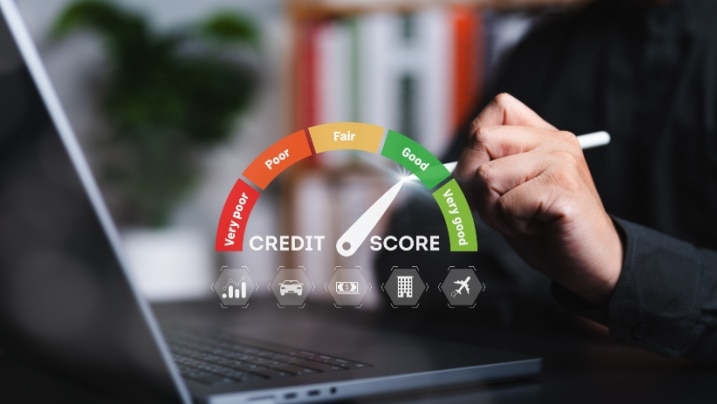
It’s almost impossible to explore loans or credit cards without coming across one of the most deciding factors in your approval: your CIBIL score. This three-digit number plays a significant role in how lenders view you. It tells them if you are a creditworthy borrower based on your repayment history.
If your score currently sits around 500, don’t see it as a setback. It’s can be a good starting point to reach a good score of 750 or above. When you improve your CIBIL score, you may qualify for better loan terms and smoother approvals. Continue reading to learn how to get a good credit score.
Common reasons for a low CIBIL score
Before you take the steps to improve your CIBIL score, it’s critical to understand why it might be low in the first place. If your score stands at 500, you can understand the reasons behind it and identify which financial habits need adjusting. This is the ideal way to build towards what is considered a good credit score number, 750 or above.
Here are some of the common reasons that may keep your CIBIL score low:
· Late or missed payments
Delay in repayments or defaulting on your payments is one of the prominent causes of a low score. Every single missed EMI or late credit card bill contributes to a low CIBIL score. Lenders note such patterns as a sign of poor repayment behaviour.
· Too many credit applications
Your every loan or credit card application leads are recorded in your credit report. When you make too many applications simultaneously, lenders conduct a hard enquiry. Multiple applications in a short period make you appear overly dependent on credit. Hence, such frequent checks dent an otherwise good CIBIL score.
· Errors in your credit report
Sometimes, the reason for your low credit score might not be your fault. You may have some discrepancies in your credit report. This may be due to incorrect loan closures, wrongly reported delays, duplicate accounts, etc. They can affect your score without you realising it.
· High credit utilisation ratio
Credit utilisation ratio refers to the percentage of total credit you utilise from the available credit limit on your credit cards. When this percentage is high (more than 30%), it shows your financial overdependence. Lenders may interpret this as a sign of risk, which can negatively affect your CIBIL score.
· Unhealthy credit mix
If you have only dealt with one kind of credit, say, just one personal loan or credit cards, lenders have limited intel on your credit-handling skills. A diverse credit mix provides them with a well-rounded view. While it may not drastically lower your score, it can make the difference when aiming for what is a great credit score.
· Co-signing or being a guarantor
If you have co-signed on someone else’s loan, their repayment habits directly influence your credit report. If they fail to clear their dues on time, you’re on the hook. It makes you a risky borrower, even if your own payments are sorted.
· Closing old accounts
If you have older credit accounts with a good repayment record, they strengthen your credit history. Closing them too soon shortens your financial track record. This, in turn, reduces your overall available credit, which pulls your credit score down.
Step-by-step process to increase your CIBIL score from 500 to 750
Understanding the reasons for your low CIBIL score gets half the work done. Now, you can progress with logical steps to fix what’s wrong. Find below some easy-to-follow, gradual steps to improve your CIBIL score from 500 to 750:
1. Monitor your credit report
When you check your credit report, you can stay aware of every entry. You can spot errors or discrepancies early. Whether it's incorrect late payments or duplicate accounts, it helps you report them immediately. With this step, you can keep your credit profile accurate and avoid lowering your credit score over unnoticed mistakes.
2. Make timely payment non-negotiable
Timely repayment is the most critical factor responsible for a steady increase in your CIBIL score. So, it is a good practice to clear every EMI, credit card bill, or other dues on time, even better, before the due date. You can stay on top of them by setting reminders or automating payments.
3. Reduce credit utilisation
It is ideal to keep your credit utilisation ratio below 30% of your total available limit. You can pay off your balances regularly and lower your dependency on credit for unnecessary expenses to display a responsible credit behaviour.
4. Avoid multiple credit applications
You may think applying with multiple lenders will improve your chances of approval. But spreading yourself too thin with multiple loan or credit card applications leads to hard enquiries. What you can do instead is check your eligibility and only apply when you qualify. Most lenders, like IDFC FIRST Bank, offer free tools to help you, like the personal loan eligibility calculator on their portal.
5. Diversify your credit portfolio
You want to show your ability to manage different types of debt to lenders. For example, you can combine a personal loan with a credit card and manage the repayments seamlessly to positively build your credit profile. A well-balanced credit mix like this contributes toward a good CIBIL score.
6. Keep older accounts active
If you have credit accounts with a good and long repayment history, it brings value to lenders. So, avoid closing such accounts. Continue to have a record of your positive repayments, even if they’re rarely used. Keeping them active gives loan providers more information on your credit history. It strengthens your financial track record and helps you move closer to a good credit score.
7. Cautiously co-sign
You can’t always vouch for how someone would handle their financial responsibility. One who seems financially stable today might not be tomorrow. Thus, it’s better to think through all the possibilities before you co-sign on a loan. Consider becoming a guarantor only when you trust the repayment habits of the primary borrower.
8. Regularly track your progress
You may be paying your dues on time and seemingly in a good position with all your debts. But actively tracking your progress as opposed to going about it on a whim makes a significant difference. You want to review your monthly statements and credit reports to keep you accountable. Doing so will also highlight any improvements and help you address discrepancies immediately.
9. Borrow thoughtfully
With multiple credit options available today and borrowing made easier, with a simplified application process by lenders, like IDFC FIRST Bank, it is easy to overborrow. It is crucial to take a step back and analyse your income, financial stability, and existing liabilities before you apply for credit. This way, you can borrow what you can repay comfortably and build a good CIBIL score.
10. Build an emergency fund
If you don’t have an emergency fund already, it’s time to start building one right away. With this fund in place, you can take care of unexpected expenses without financial crunch and stress. Thus, you won’t be compelled to borrow unnecessarily. Even a small buffer helps with financial stability, protects your existing CIBIL score of 500, and helps focus on implementing other steps effectively.
Final words
Improving your CIBIL score from 500 to 750 is all about making smart financial decisions. Now that you know how much a good CIBIL score is and how to get there, you can take the right steps.
With consistent and actionable efforts, you can cross 710+ in due time (which is the eligibility criteria for a FIRSTmoney personal loan). Start with understanding what is holding you back and take it from there. Once you successfully improve your score, you open yourself to affordable loan products like FIRSTmoney personal loan with interest rates starting as low as 9.99%, a loan amount of up to ₹10 lakhs, and zero foreclosure charges.
Check out the personal loan eligibility calculator here.
Frequently Asked Questions
It can take anywhere from six months to a year or more to improve your credit score from 500 to 700. Note that the exact time taken will depend on your current financial habits and how consistently you repay your debts, control credit usage, and implement other actionable steps.
There’s no instant solution to increase your CIBIL score. Building your CIBIL score is a gradual process.
Timely repayment of any loan, big or small, makes a difference in your credit score. It demonstrates your financial credibility and contributes to a positive credit history.
You can check your credit report two to three times a year. You can make it more regular, like quarterly, if you actively manage credit and apply for loans. It may lead to soft enquiries, but this does not negatively affect your CIBIL score.
Login to myCIBIL > Credit Reports > Dispute Centre > Dispute an Item > Complete online form > submit.
Disclaimer
The contents of this article/infographic/picture/video are meant solely for information purposes. The contents are generic in nature and for informational purposes only. It is not a substitute for specific advice in your own circumstances. The information is subject to updation, completion, revision, verification and amendment and the same may change materially. The information is not intended for distribution or use by any person in any jurisdiction where such distribution or use would be contrary to law or regulation or would subject IDFC FIRST Bank or its affiliates to any licensing or registration requirements. IDFC FIRST Bank shall not be responsible for any direct/indirect loss or liability incurred by the reader for taking any financial decisions based on the contents and information mentioned. Please consult your financial advisor before making any financial decision.