








Login to Internet banking
A brand-new experience - smarter, faster, and secured




BRAVO (Auto Sweep)
Convert the idle funds in your current account into a fixed deposit with the BRAVO feature.
Know More

Zero Forex Markup Current Account
Maximise your savings and boost profitability with our Zero Forex Markup current accounts
Know More
BRAVO (Auto Sweep)
Convert the idle funds in your current account into a fixed deposit with the BRAVO feature.
Know More
You gain a dedicated partner committed to helping you reach your full potential and achieve new heights
Know More







Enjoy Zero Forex on all IDFC FIRST Bank Credit Cards
Save more on all international spends
Know More

A Card that Powers your Savings & Lifestyle
IDFC FIRST Bank HPCL Credit Card









Most Searched
Earn up to 7% interest on your Savings Account
Open Account Now
Download our app
Get instant help for all your queries in one place
Unlock features, exclusively available
only on the IDFC FIRST Bank app
Trusted by 1.2+ million Indians.


4.8

4.8

Tools & Calculators
Privilege Program



Tools & Calculators

Unlock features, exclusively available
only on the IDFC FIRST Bank app
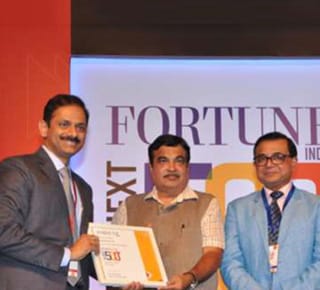
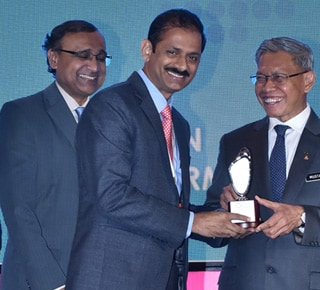
Capital First awarded in the prestigious Fortune “Next 500” for FY 2016. Mr. V Vaidyanathan receives the award on behalf of the company from Shri Nitin Gadkari. CELEBRATING THE GIANTS OF TOMORROW Highlights from the second Fortune India The Next 500 event, which showcased India's largest and finest midsize companies and shone the spotlight on the challenges faced by this neglected segment. THE SECOND ANNUAL Fortune India The Next 500 event was held in Delhi on August 19 to celebrate the achievements of India's largest midsize companies and their stellar role in the country's economy. The chief guest and keynote speaker was Nitin Gadkari, union minister for road transport, highways, and shipping. Chandreshwar Prasad Singh, minister of urban development and housing development, Government of Jharkhand, was the guest of honour. He was joined by Ramsevak Sharma, chairman of the Telecom Regulatory Authority of India. The event was attended by the CEOs and directors of The Next 500 companies, senior industry leaders, policymakers, academicians, and senior bureaucrats. Eminent personalities in the audience included Amir Ullah Khan, senior policy advisor to Bill and Melinda Gates Foundation; Sunil Sinha, chief economist, India Ratings; Nilanjan Banik, professor at Bennett University; Harshbeena Zaveri, managing director and president, NRB Bearings; Emmanuel Balayer, vice-president — marketing, Bhartiya Urban; and Pranav Haldea, managing director, Prime Database group. The event also featured a host of renowned thought leaders speaking on a variety of subjects, including Shailesh Pathak, executive director, Bhartiya Group; Sanjeev Sanyal, author, former banker, and urban planner; Suresh Narayanan, chairman and managing director, Nestle India; and Ajay Rastogi, founder, Foundation for Contemplation of Nature. Fortune India collaborated with a number of marquee partners to build this unique event. These included state partner Jharkhand; automobile partner Ford; associate partner Giant Starkenn; evening partner The Glenlivet; hospitality partner The Leela Palace New Delhi; and television partner NDTV Prime. D.D. Purakayastha, managing director and CEO of ABP Pvt. Ltd., Fortune India's parent company, delivered the welcome address. He reiterated the contribution made by the Next 500 companies, calling the leaders of these companies ""visionaries and disruptors"" who are creating paradigms of change in India Inc. It is Fortune India's mission to deliver information on people, ideas, and technologies changing the world to a community of decision makers. And The Next 500 list is a vital part of this information. INTRODUCING THE CONCEPT of The Next 500, D.N. Mukerjea, editor, Fortune India, pointed out that Fortune India's The Next 500 is the only definitive ranking of midsize companies. Fortune India, he said, is the only publication to understand that this set of companies is neglected both by policymakers and by those who provide capital. Whether or not these companies break into the Fortune India 500, they matter to the economy at large, he said. ""These businesses are the backbone of the Indian economy, and will be responsible for its phenomenal growth in the coming years,"" he added. He proved his point with a set of unexpected data, comparing the growth of the Fortune India 500 companies with that of The Next 500 companies. While overall growth was similar; the double-digit growth of the last 50 of The Next 500 outstripped the sluggish 3% growth seen in the last 50 of the 500 list. Despite the clear evidence of growth, these companies, Mukerjea said, often faced problems in accessing capital. Policymakers and bankers need to address this issue, and allow these midsize companies space to grow. As Fortune India had articulated in The Next 500 issue of June 2016, across sectors, highly leveraged balance sheets remain a drag on performance. Equally, a number of these midsize companies are hungry for growth. Predictably, as we found last year, manufacturing dominates the list, with 413 companies accounting for 83% of the total revenue. This year, 50 companies from last year have moved into the revenue bracket that qualifies them for a place in the Fortune India 500. The event sought to felicitate the top movers into the 500. The idea behind The Next 500 event is to create an accessible, world-class knowledge-sharing platform that will help these companies learn from each other and from the policymakers they meet. At the same time, our goal was to celebrate the many successes of these companies. Last year, we felicitated 10 of the top wealth creators. This year, we added to that by including companies that have moved into the 500 list (technically, they are The Next 500 alumni). We also identified and felicitated companies that were most likely to move into the 500 list. The 30 companies felicitated came from sectors as diverse as pharmaceuticals, e-commerce, banking, tourism, automotive, and infrastructure development. Guests from this list included Yogesh Agrawal, managing director, Ajanta Pharma; Abhijit Bose, head-retail assets and strategic alliances, DCB Bank; Hitesh Oberoi, managing director and CEO, Info Edge (India); Ashish Bhatia, group general manager, IRCTC; Deepak Chiripal, CEO, Nandan Denim; Madhavan Menon, chairman and managing director, Thomas Cook (India); and Nitin Sood, CFO, PVR; and many more besides. IN HIS KEYNOTE ADDRESS, Gadkari urged the companies on Fortune India's Next 500 list to work with government to improve the country's infrastructure and waterways. He also highlighted his plans to expand the current national highways system from 96,000 km to 2 lakh km. The improved road network will help ease the logistics and transport bottlenecks that have long been an impediment to local businesses, he said. Gadkari added that the government is building two arterial bypasses for trucks passing through Delhi, which will dramatically curb pollution in the National Capital Region. Guest of honour Chandreshwar Prasad Singh began by asking the audience if he could talk in Hindi. In an address that recognised the chief minister of Jharkhand, Raghubar Das, as the driving force behind much of the development in the state, Singh emphasised on the business opportunities that Jharkhand offered. ""I offer single-window clearance to all Next 500 companies for projects in Jharkhand,"" he announced. Before his responsibilities as chairman of the Telecom Regulatory Authority of India, Ramsevak Sharma, was chief secretary to the Government of Jharkhand, and also director general of the UIDAI. Speaking after Singh, Sharma said that to most people, it appears that no infrastructure development is taking place in Jharkhand. But work was progressing, he said, except that the pace was sometimes slow. That's because the state has seen too many changes in government, he added. THE MINISTERS' ADDRESSES were followed by a series of talks, and questions from the audience. Kicking off the sessions was Shailesh Pathak, executive director, Bhartiya Group, speaking on India's infrastructure in the next few years. Starting off by asking how many in the audience cycled to school, he segued into the need for good urban transportation systems. Public transport can and should be supported by cheap and non-polluting modes of private transport: cycles. Following that was Sanjeev Sanyal, author, economist, and former banker, speaking on how the Indian Ocean changed, and is changing, the world. Drawing upon historical examples, including the maritime adventures of the Chola kings of South India, Sanyal spoke of how India views its neighbours today. The first speaker focussed on the future and the second on the past, began Suresh Narayanan, chairman and managing director of Nestle India. His talk would be on the present, he said, before talking of the Maggi crisis that almost brought his company to its knees. Using his own example, he explained what a leader could do when a crisis paralysed the company. The last speaker, Ajay Rastogi, who founded the Foundation for Contemplation of Nature, explained how all humans have a deep connection to nature. While it may not be possible for everyone to live amid nature, he said it was possible for even the most boring corporate workplace to bring some elements of nature in, even if it's a small plant. The event closed with Arun Singh, business head, Fortune India, delivering the vote of thanks, followed by a networking session.