









Login to Internet banking
A brand-new experience - smarter, faster, and secured


BRAVO (Auto Sweep)
Convert the idle funds in your current account into a fixed deposit with the BRAVO feature.
Know More

Zero Forex Markup Current Account
Maximise your savings and boost profitability with our Zero Forex Markup current accounts
Know More
BRAVO (Auto Sweep)
Convert the idle funds in your current account into a fixed deposit with the BRAVO feature.
Know More
You gain a dedicated partner committed to helping you reach your full potential and achieve new heights
Know More



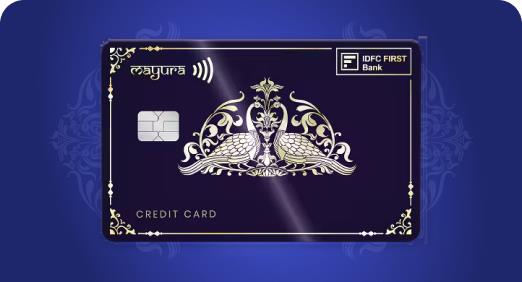

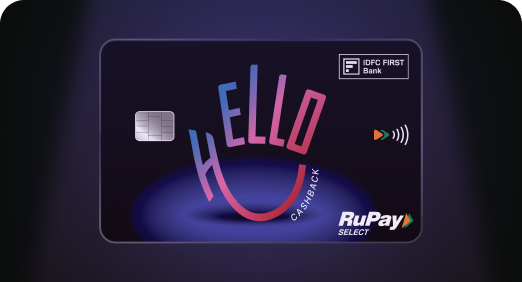

Enjoy Zero Forex on all IDFC FIRST Bank Credit Cards
Save more on all international spends
Know More
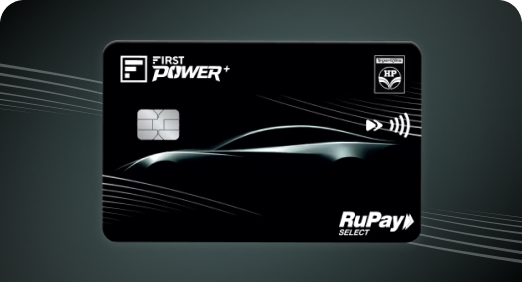
A Card that Powers your Savings & Lifestyle
IDFC FIRST Bank HPCL Credit Card









Most Searched
Earn up to 7% interest on your Savings Account
Open Account Now
Download our app
Get instant help for all your queries in one place
Unlock features, exclusively available
only on the IDFC FIRST Bank app
Trusted by 1.2+ million Indians.




Tools & Calculators
Privilege Program



Tools & Calculators

Unlock features, exclusively available
only on the IDFC FIRST Bank app
Invest in India's safest government-backed bonds


Government Securities, known as G-Secs, are debt instruments issued by the Government of India and state governments to raise funds for their borrowing needs. The Reserve Bank of India manages issuance and auctions of government securities. G-secs include treasury bills, dated bonds, state development loans and STRIPS, each with a different tenure.
Every category carries sovereign backing, which places default risk near zero. Investors lend money to the government and receive interest at fixed or floating rates, along with principal repayment at maturity. G-secs trade actively in the primary and secondary markets and price other fixed income instruments in India.


The Government of India issues securities of varying tenure and structure to meet short-term and long-term borrowing needs. These instruments differ in maturity, coupon payment and issuing authority, giving investors options based on their time horizon and cash flow needs.

T-bills are short-term instruments with maturities of 91, 182 or 364 days. They carry no coupon and are issued at a discount to face value. The return equals the difference between the issue price and the redemption value paid at maturity. RBI conducts weekly auctions for these instruments.

A dated govt bond carries a fixed or floating coupon paid semi-annually, with maturities ranging from 3 to 50 years. The 10-year G-Sec serves as the benchmark for the broader bond market. Principal is repaid in full at maturity, and the coupon rate is fixed at issuance.

SGS are dated securities issued by state governments to fund their fiscal deficits. The structure and auction process mirror those of central government bonds, though yields are usually a notch higher due to state-level credit spreads. RBI manages issuance on behalf of states.

STRIPS separate a dated G-Sec's coupon and principal payments into individual zero-coupon instruments. Each piece can be traded on its own. This suits investors who want a fixed cash flow on a known future date without reinvestment risk.
Rates move with RBI policy, inflation and auction demand. Figures below cover the benchmark tenures RBI reports most often; each category also trades in other tenures, since dated bonds range from 3 to 50 years and SGS vary by state and issue.
as on 5/8/2026

Govt bonds interest rates change with each auction cycle and RBI policy review. Investors should check live rates before placing an order.

G-Secs can be bought through IDFC FIRST Bank's mobile banking app

The process needs PAN, bank account and KYC, plus a demat account for the app route.

Interest and maturity proceed credit directly to the linked bank account on the due date.

Account holders can track G-Sec holdings and govt bonds interest rates from the same login.

No fee applies for opening a Retail Direct Gilt account, and the demat account has no opening charges either.

Conservative investors who prioritise capital safety over higher returns

Retirees seeking a steady interest income stream

Investors building a long-term portfolio with a fixed maturity date in mind

Those who want to diversify away from equity and corporate debt exposure

NRIs looking for rupee-denominated sovereign debt exposure in India

First-time debt market investors who want to invest in govt bonds with low entry amounts

Log in to IDFC FIRST Bank's internet banking or mobile banking app

Go to the
Investments section

Select
Government Securities

Choose the G-Sec, T-Bill, SGS or STRIPS you wish to invest in and enter the desired amount

Review the payable amount and confirm to complete the purchase
Alternatively, investors can open a Retail Direct Gilt (RDG) account on the RBI Retail Direct portal using their PAN, email and mobile number, complete KYC and link their IDFC FIRST Bank account for payment and settlement. Additional details on eligibility, account opening, investment options, and platform features are available on the RBI Retail Direct portal.
Learn more about government securities, their benefits, and how to invest in them through IDFC FIRST Academy course

An existing IDFC FIRST Bank account speeds up linking with the mobile banking application.

Our mobile banking app allow direct payment for app purchases, auction bids and secondary trades.

Interest and maturity get credited directly to the linked bank account.

Digital access allows investors to track G-Sec holdings alongside other bank products.
A government security is a debt instrument issued by the central or state government to borrow funds, carrying a sovereign guarantee on interest and principal repayment.
Treasury bills, dated govt bonds, state development loans and STRIPS are the main types issued in India.
A PAN card, bank account and KYC details are required for both routes. Using IDFC FIRST Bank's mobile banking app needs a demat account, while RBI Retail Direct needs a Retail Direct Gilt account instead.
The minimum investment is Rs 10,000 face value, with additional investment in multiples of Rs 10,000.
Dated government bonds and State Government Securities (SGS) pay interest semi-annually. T-bills and STRIPS are zero-coupon and pay the full return only at maturity.
Yes, G-Secs carry a sovereign guarantee from the government of India, making default risk near zero.
G-secs carry sovereign backing and market-linked pricing, while FDs offer fixed returns with deposit insurance up to Rs 5 lakh. The choice depends on the investor's goals.
Yes, retail investors can invest in govt bonds through the RBI Retail Direct portal, the IDFC FIRST Bank mobile banking app, or other banks and brokers offering access.
You can learn more about govt bonds on the RBI Retail Direct portal and the RBI website as they publish detailed information, auction calendars, govt bonds interest rates and yield data.
G-secs are issued by the government with sovereign backing. Corporate bonds are issued by companies and carry credit risk based on the issuer's rating.
Treasury bills are themselves a type of government security, but they are short-term, zero-coupon instruments maturing within a year. The wider G-sec category also includes longer-tenure, coupon-bearing bonds up to 50 years.
ON A MISSION TO BUILD THE WORLD’S MOST
CUSTOMER FRIENDLY BANK


