









Login to Internet banking
A brand-new experience - smarter, faster, and secured




You gain a dedicated partner committed to helping you reach your full potential and achieve new heights
Know More
BRAVO (Auto Sweep)
Convert the idle funds in your current account into a fixed deposit with the BRAVO feature.
Know More
Zero Forex Markup Current Account
Maximise your savings and boost profitability with our Zero Forex Markup current accounts
Know More






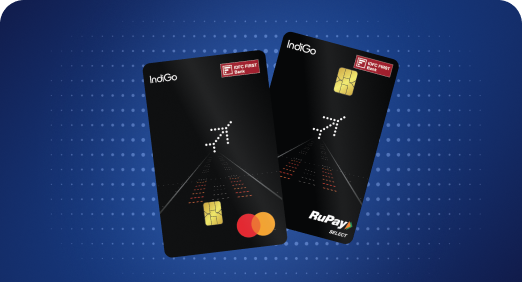


A Card that Powers your Savings & Lifestyle
IDFC FIRST Bank HPCL Credit Card









Most Searched
Earn up to 7% interest on your Savings Account
Open Account Now
Download our app
Get instant help for all your queries in one place
Unlock features, exclusively available
only on the IDFC FIRST Bank app
Trusted by 1.2+ million Indians.


4.8

4.8

Tools & Calculators
Privilege Program



Tools & Calculators

Unlock features, exclusively available
only on the IDFC FIRST Bank app
 Bengaluru’s outsourcing edge was built on talent, scale and cost.
AI is breaking the link between headcount and outsourced value.
The next advantage will come from specialised, higher-value capabilities.
MSMEs can use AI to compete beyond traditional scale advantages.
Bengaluru’s outsourcing edge was built on talent, scale and cost.
AI is breaking the link between headcount and outsourced value.
The next advantage will come from specialised, higher-value capabilities.
MSMEs can use AI to compete beyond traditional scale advantages.
For decades, Bengaluru has been one of the addresses most global companies associated with outsourcing. AI is now changing that model: India's tech industry is set to touch $315 billion in FY26, while direct sector employment grows just 2.3%, to nearly 6 million.
Nasscom describes this as part of a wider shift as AI moves from experimentation to industrialisation, with providers moving away from FTE-based delivery towards outcome-based, risk-sharing models. For a city built on skilled people at scale, the question is clear: can Bengaluru's outsourcing model survive the technology changing how the industry works, or will it have to change?
Bengaluru's outsourcing advantage was not accidental. It was built layer by layer:
Early talent base: Institutions such as the Indian Institute of Science, alongside public sector organisations like Hindustan Aircraft Limited (HAL) and Indian Space Research Organisation (ISRO), helped build an early base of engineering and technical talent.
Policy support: Karnataka's 1997 IT policy helped support the rapid growth of Bengaluru's IT and IT-enabled services sector.
Homegrown scale: companies such as Infosys and Wipro helped build India's global delivery model, combining skilled talent with the ability to deliver technology services at scale.
Why the model worked: Global companies could access a large pool of skilled workers at a much lower cost, while outsourcing providers could deliver work at scale. This made Bengaluru an efficient alternative to doing the same work in-house.
That combination of talent, scale and lower costs became the foundation of Bengaluru's outsourcing advantage. It is also what AI is now challenging.
The traditional outsourcing model was closely linked to FTE-based delivery; AI is starting to break that link between the number of people working on a project and the value delivered. Nasscom describes FY26 as the year the industry moved from AI experimentation to industrialisation, with providers moving towards outcome-based, risk-sharing contracts.
Routine technology and business-process work is likely to face greater pressure as AI automates more repetitive and codifiable tasks. As this happens, companies will need to offer more than scale and lower costs, with greater focus on skills, faster delivery and more complex work.
Bengaluru's own position illustrates this shift, visible in two indicators:
AI talent share: At a meeting announcing Bengaluru Tech Summit 2025, Karnataka chief minister Siddaramaiah had said Bengaluru hosts nearly 50% of India's AI talent, ranking fifth among the world's AI cities.
GCC growth: Nasscom-Zinnov's GCC research says India has added more than 500 new Global Capability Centres in the past five years, with many taking on higher-value work such as AI and enterprise strategy. Although GCCs are different from third-party outsourcing providers their growth shows where technology work is moving.
For Bengaluru's outsourcing industry, the message is clear: competing only on cost may not be enough. Specialised skills, AI capabilities and higher-value services will matter more.
A 2026 study of 150 MSMEs in Bangalore found that financial constraints, limited technical expertise and inadequate digital infrastructure are among the key barriers to AI adoption. This means the opportunity for smaller businesses will depend not just on access to AI tools, but on their ability to build the readiness needed to use them.
For MSMEs in and around Bengaluru's ecosystem, this could mean:
Building AI readiness: Developing the skills, digital infrastructure and understanding needed to adopt AI effectively.
Improving productivity: Using AI to improve decision-making and streamline operations where it fits existing business needs.
Competing on capability: Using AI to build specialised capabilities without needing the same scale of resources as larger firms.
For Bengaluru's MSMEs, the opportunity is therefore not simply to adopt AI, but to use it to overcome some of the scale advantages traditionally held by larger businesses.
Bengaluru's history suggests the city adapts rather than standing still. But adaptation is not the same as continuity. The routine, high-volume work that underpinned the traditional outsourcing model is likely to face the greatest disruption.
What survives, and grows, looks different. GCCs owning AI strategy rather than executing instructions, outsourcing firms selling outcomes and specialised capability instead of simply scaling headcount, and MSMEs using AI to compete on capability rather than cost. Bengaluru's next advantage will depend on how quickly its businesses can make that shift.
ET Now Leaders of Tomorrow presented by IDFC FIRST Bank, is an entrepreneurship event that has over more than 13 seasons, empowered India’s MSME and startup ecosystem through television, digital and on-ground initiatives. Season 14 focuses on “Emerging Businesses: The India Advantage”, exploring how entrepreneurs, MSMEs and emerging businesses can build future-ready businesses amid shifts in technology, trade and the global economy.
With Bengaluru’s outsourcing industry at an inflection point, the question of how businesses can move beyond cost and scale towards AI-led, higher-value work is becoming increasingly important. The ET Now Leaders of Tomorrow S14 Bengaluru Springboard, themed “Can Bengaluru's Outsourcing Industry Survive AI?”, will explore this question on 4 September 2026, presented by IDFC FIRST Bank.
The on-ground summit will bring together founders, policymakers and industry experts to examine how AI is reshaping Bengaluru’s outsourcing ecosystem and what this shift means for businesses.
The contents of this article/infographic/picture/video are meant solely for information purposes. The contents are generic in nature and for informational purposes only. It is not a substitute for specific advice in your own circumstances. The information is subject to updation, completion, revision, verification and amendment and the same may change materially. The information is not intended for distribution or use by any person in any jurisdiction where such distribution or use would be contrary to law or regulation or would subject IDFC FIRST Bank or its affiliates to any licensing or registration requirements. IDFC FIRST Bank shall not be responsible for any direct/indirect loss or liability incurred by the reader for taking any financial decisions based on the contents and information mentioned. Please consult your financial advisor before making any financial decision.
The features, benefits and offers mentioned in the article are applicable as on the day of publication of this blog and is subject to change without notice. The contents herein are also subject to other product specific terms and conditions and any third party terms and conditions, as applicable. Please refer our website www.idfcfirst.bank.in for latest updates.