









Login to Internet banking
A brand-new experience - smarter, faster, and secured





You gain a dedicated partner committed to helping you reach your full potential and achieve new heights
Know More

BRAVO (Auto Sweep)
Convert the idle funds in your current account into a fixed deposit with the BRAVO feature.
Know More
Zero Forex Markup Current Account
Maximise your savings and boost profitability with our Zero Forex Markup current accounts
Know More





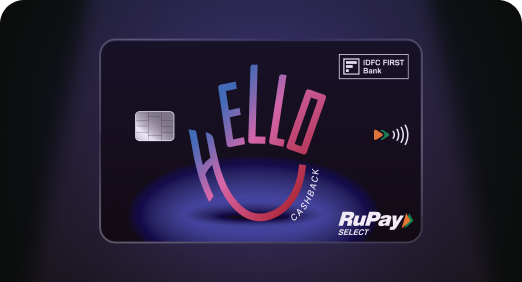

Enjoy Zero Forex on all IDFC FIRST Bank Credit Cards
Save more on all international spends
Know More
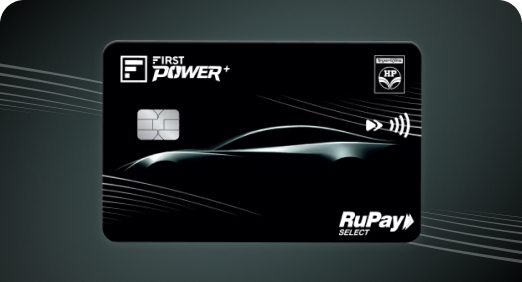
A Card that Powers your Savings & Lifestyle
IDFC FIRST Bank HPCL Credit Card









Most Searched
Earn up to 7% interest on your Savings Account
Open Account Now
Download our app
Get instant help for all your queries in one place
Unlock features, exclusively available
only on the IDFC FIRST Bank app
Trusted by 1.2+ million Indians.


4.8

4.8

Tools & Calculators
Privilege Program



Tools & Calculators

Unlock features, exclusively available
only on the IDFC FIRST Bank app
Tokenisation is the process of securing customer card details by replacing sensitive data such as card numbers, CVV and expiry date with a unique identifier i.e. Token number which are generated by the network scheme i.e. RuPay, Visa or Mastercard. Card Tokenisation applies to online transactions only.
Tokenisation helps secure card details and make the transaction safer.
Card holders can tokenise their card on merchant/acquirer platforms (web or app) where online transactions are initiated.
Once a card is tokenized on a merchant platform, the Token will replace card details. The merchant and network or card scheme will have access to the Token details for initiating transactions as per your request.
Transaction authentication will continue as per existing process of One-Time Password (OTP).
Card networks such as RuPay/Visa/Mastercard generate the Token against the card number.
Only E-com (online) transactions done at merchant website/mobile app are impacted.
Customer can manage token on merchant platform where cardholder has initiated Tokenisation request. However, Bank will also provide an option to manage Tokens initially through customer care.
The card tokenised value is the most secure way of storing your card at merchant websites/apps. You may continue to have tokenised value on merchant app and avoid Tokenisation every time you perform transaction.
This is a security feature and there is no charge for this service.
As per the latest communication, Tokenisation guidelines are applicable from June 30, 2022.
As per RBI guidelines, Tokenisation is only applicable for Domestic e-com/online transactions.
No, it is not mandatory for a customer to tokenise their card(s). Customers who chooses not to tokenise their card will be required to enter card details like card number, expiry date and CVV for every online transaction as merchants will not be storing their card details after June 30, 2022.
There is no limit to the number of cards that can be tokenised.
For performing any transaction, the customer shall be free to use any of the cards registered with the token requestor/merchant. The customer can select the card after seeing the last 4 digits of the card on the merchant’s page at the time of the transaction.
The customer will need to visit the merchant’s page or App again, and generate a fresh token against the newly issued card.
The customer will be able to see the last 4 digits of the card on the merchant’s app or page.
Yes, each card will have a unique token for each specific merchant.
As per standard network practices, CVV validation is optional for tokenised cards.