












Login to Internet banking
A brand-new experience - smarter, faster, and secured


Introducing the First-in-industry IDFC FIRST Bank's Super Account
Request a Callback
You gain a dedicated partner committed to helping you reach your full potential and achieve new heights
Know More
BRAVO (Auto Sweep)
Convert the idle funds in your current account into a fixed deposit with the BRAVO feature.
Know More
Zero Forex Markup Current Account
Maximise your savings and boost profitability with our Zero Forex Markup current accounts
Know More
Make more than one online payment in just a few clicks with IDFC FIRST Bank Bulk Payments
Know More





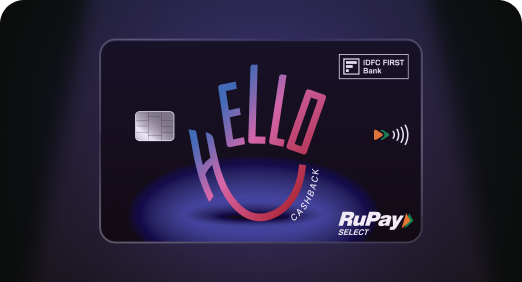
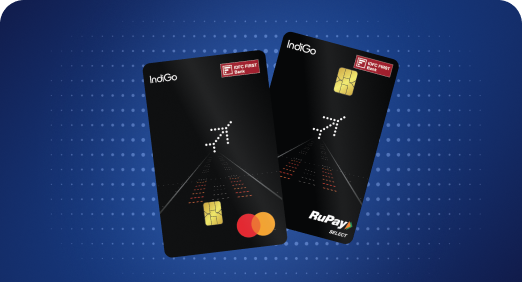

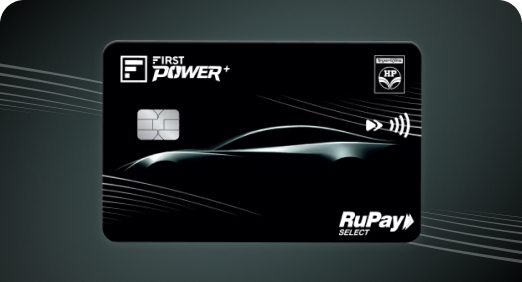
A Card that Powers your Savings & Lifestyle
IDFC FIRST Bank HPCL Credit Card





Most Searched

Earn up to 6.50% interest on your Savings Account
Open Account Now
Download our app
Get instant help for all your queries in one place
Unlock features, exclusively available
only on the IDFC FIRST Bank app
Trusted by 1.2+ million Indians.


4.8

4.8

Tools & Calculators
Privilege Program




Unlock features, exclusively available
only on the IDFC FIRST Bank app


Access personal loan up to ₹15 lakh instantly

Get interest rates starting @ 9.99% p.a.

Apply with 710+ CIBIL score
Access personal loan up to ₹15 lakh instantly
Get interest rates starting @ 9.99% p.a.
Apply with 710+ CIBIL score
Your credit score, commonly known as CIBIL score, reflects your financial health and creditworthiness. If you have a good credit score while applying for a personal loan or a credit card, you are likely to enjoy favourable terms, such as lower interest rates and more repayment flexibility. Credit bureaus like TransUnion CIBIL, Equifax, Experian and CRIF High Mark calculate your credit score based on factors like your payment history, credit utilisation, credit age, credit mix, and new inquiries. Understand the ways to boost your credit score and take control of your financial future.

A CIBIL score is a three-digit number credit score ranging from 300 to 900, issued by TransUnion CIBIL, and reflects your creditworthiness and ability to repay loans or credit card dues. A CIBIL score of 700 or above is usually considered good, improving your chances of loan approvals and favourable interest rates.
In everyday usage, the two terms mean the same thing. Technically, a CIBIL score is the credit score issued specifically by TransUnion CIBIL, one of the four RBI-licensed credit bureaus in India. Experian, Equifax, and CRIF High Mark also generate credit scores using their own models, on a 300 to 900 scale. Lenders may check one or multiple bureaus when reviewing your credit card or loan application.

Your credit score is crucial when applying for a personal loan or credit card. Lenders assess it to determine your repayment ability and eligibility. A higher credit score:

Credit score/CIBIL score range |
Rating |
What it means |
300-499 |
Poor |
High risk of loan rejection. Urgent credit improvement needed. |
500-649 |
Fair |
Possible loan approvals, but with high interest rates. |
650-699 |
Average |
Eligible for loans, but interest rates aren't yet favourable. |
700-749 |
Good |
Better chances of loan and credit card approvals with reasonable interest rates. |
750-900 |
Excellent |
Easy approvals and best interest rates on loans and credit cards. |

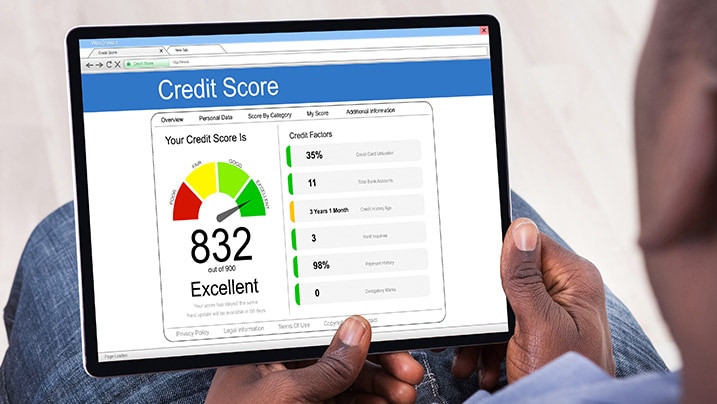
The most significant factor. Lenders check whether you've paid past accounts on time. Late payments, defaults, and bankruptcies can severely hurt your score, while consistent on-time payments will boost it.

This measures what portion of your available credit you're using, calculated by dividing your total credit card balances by your total credit limits. Keeping utilization below 30% usually signals that you're not overly reliant on credit.

Lenders look at the age of your oldest account, newest account, and the average across all accounts. A longer credit history is seen as more favourable because it gives a clearer picture of your borrowing habits.

Having a variety of credit types such as credit cards, mortgages, and auto loans can impact your score positively, as it shows you can manage different kinds of credit responsibly.
Every time you apply for new credit, a hard inquiry is recorded on your report. Too many inquiries in a short period can pull your score down, as it may indicate financial difficulties.
Start Your Journey to a Better Credit Score & Easy Loan Approval!
Checking your own CIBIL/credit score is a soft inquiry and has no impact on your CIBIL rating.
Visit the official CIBIL website or a trusted financial institution’s website.
Click on the option ‘Get your free CIBIL score and report’.
Enter your PAN card number and registered mobile number.
Complete the OTP-based verification.
View your credit score and report.
FREE CIBIL Score & Report is available only once a calendar year via the CIBIL website.
Alternatively, you can use trusted payment apps like Google Pay that also provide a free CIBIL score whenever you need. However, you will not get a detailed report on these apps.
Yes. Your credit score usually refreshes every month, so staying on top of it means you're never caught off guard when you need a loan or card. Here are some reasons to check it:
A low credit score can result from multiple factors. Some of them include:

Set up automatic payments or reminders to make sure you never miss a due date. Payment history has the greatest influence on your score, so consistency here matters most.

Keep your credit utilization below 30% of your total available limit. This shows lenders you manage credit responsibly and aren't overly reliant on borrowing.

Space out your credit applications to minimise the impact on your credit score. Every new application triggers a hard inquiry, which can lower your score.

Use old cards occasionally for small purchases to keep the accounts active. A longer credit history gives lenders more confidence in your borrowing behaviour. However, do so only if you are not incurring hefty maintenance charges for the cards.

Review your credit report regularly and raise any dispute with the credit bureau promptly. Errors like incorrect account details or fraudulent activity can unfairly drag down your score.
Raising your limit while keeping spending the same automatically lowers your utilisation ratio. This improves your score without taking on any additional debt.
The time it takes depends on where you are starting from. Scores around 700 can climb to 750 within 30 to 60 days with timely payments and reduced utilisation. If your score sits near 650, consistent financial discipline over 3 to 6 months should show meaningful progress. For scores below 600, especially after a default or settlement, the recovery path is longer and usually takes 12 to 24 months. The sooner you begin, the sooner the numbers move in your favour.
Most banks and Non-Banking Financial Companies in India set a minimum CIBIL score requirement of 700 to 750 for unsecured personal loans. The stronger your score, the better your chances of approval and getting favourable interest rates.
For IDFC FIRST Bank's FIRSTmoney personal loan specifically, you need a minimum CIBIL score of 710 for salaried and 760 or above for self-employed individuals. Applicants who meet this criterion can qualify for loan amounts up to ₹15 lakhs, with interest rates starting at 9.99% p.a. and disbursals completed in as little as 10 minutes. Final offer and approval depends on your overall profile and lender policies.
With a credit score of 710 or above, you can avail exclusive personal loan benefits with FIRSTmoney from IDFC FIRST Bank. Enjoy competitive interest rates, instant approval, and seamless digital processing.
• Loan amounts up to ₹15 lakh
• Attractive interest rates starting at just 9.99% p.a.
• Instant disbursal with no documentation
• Flexible repayment tenures from 9 to 60 months
• Access multiple loans anytime, anywhere
• Quick disbursal in as low as 10 minutes
• Close your loan early with zero foreclosure charges
Apply Now

Your credit/CIBIL score directly impacts the types of financial products you can access:


The most widely checked bureau in India; most lenders start and often stop here.

Known for its strong fraud detection and analytical capabilities; lenders occasionally pull an Experian report alongside CIBIL for a second perspective.

Covers both consumers and businesses, giving lenders a broader view of creditworthiness across segments.

Built around microfinance and rural lending; it captures credit profiles that traditional bureaus tend to overlook.
A CIBIL score is a 3-digit score that reflects your creditworthiness and affects your ability to get loans and credit cards with favourable terms.
You can check your CIBIL score for free from the official website of CIBIL or any leading financial institution’s website or trusted payment apps like Google Pay.
It’s recommended to check your CIBIL score every month to monitor your financial status.
Yes, checking your CIBIL score is a soft inquiry and will not affect your score.
A PAN number is used to verify your identity and retrieve your accurate credit report.