









Login to Internet banking
A brand-new experience - smarter, faster, and secured



BRAVO (Auto Sweep)
Convert the idle funds in your current account into a fixed deposit with the BRAVO feature.
Know More

Zero Forex Markup Current Account
Maximise your savings and boost profitability with our Zero Forex Markup current accounts
Know More
BRAVO (Auto Sweep)
Convert the idle funds in your current account into a fixed deposit with the BRAVO feature.
Know More

You gain a dedicated partner committed to helping you reach your full potential and achieve new heights
Know More





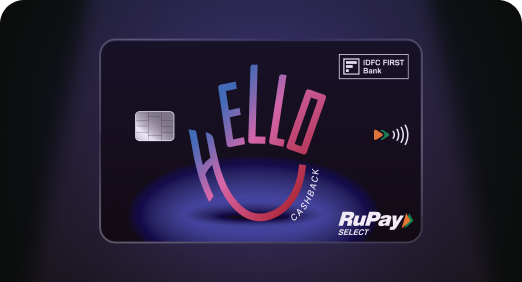

Enjoy Zero Forex on all IDFC FIRST Bank Credit Cards
Save more on all international spends
Know More
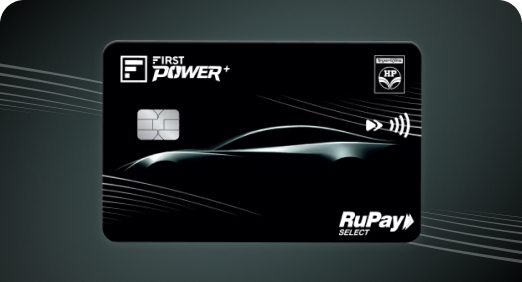
A Card that Powers your Savings & Lifestyle
IDFC FIRST Bank HPCL Credit Card









Most Searched
Earn up to 7% interest on your Savings Account
Open Account Now
Download our app
Get instant help for all your queries in one place
Unlock features, exclusively available
only on the IDFC FIRST Bank app
Trusted by 1.2+ million Indians.


4.8

4.8

Tools & Calculators
Privilege Program



Tools & Calculators
How does a business entity account for goods that the customer returns after purchasing them? An item can be returned for quality/quantity issues, packaging defects, or maybe because customers were overcharged and the tax invoice didn’t reflect their payment. It warrants accounting, both by the buyer and the supplier. The issuance of a credit note allows a supplier to account for this returned item in their ledger.
This article will explain credit note meaning, what is debit note and credit note, and the reason for issuing credit note.
Credit and debit notes are best understood with an example. Imagine heading to your local grocery store to buy some groceries worth ₹2000. When you get back home, you realise that the bread you bought is stale and the milk is spoilt. They together amount to ₹ 80. You immediately head back to the store, return them, and ask for a replacement. The shopkeeper obliges, only to regretfully inform you that his stock for both bread and milk is depleted.
Instead of returning you the ₹80, he issues you a credit note, telling you that you could come to his store and buy the bread and milk at any point in the future or make a purchase worth ₹ 80. This is the primary function of a credit note.
In a supplier and buyer transaction, the supplier issues a "credit note" as a sales return. By doing so, the supplier informs the buyer that the purchase returns are accepted. A credit note, also called a "sales return credit note", is given by the supplier in exchange for a debit note.
The customer returning the goods provides the debit note. In our example, you give a debit note to the shopkeeper mentioning the details of what you intended to purchase with the ₹80. In return, you receive a credit note from the shopkeeper.
A credit note enables a buyer to purchase goods later without paying for them. While quality issues can be one reason for issuing credit notes, here are a few more reasons why suppliers may issue them:
Hence, the process of issuing a credit note to a customer is as follows:
Section 34 of the Central Goods and Services (CGST) Act, 2017 mandates the issuance of one or more credit notes in any such event.
A credit note contains HSN SAC codes (Harmonized System Nomenclature Service Accounting Code) for the goods involved, the name of the product/service, quantity, rate, taxable value, the Integrated Goods and Services Tax (IGST), and a calculation of the total amount after tax. It also contains the buyer's bank details, who has already made the payment.
Additionally, it may also include:
Disclaimer
The contents of this article/infographic/picture/video are meant solely for information purposes. The contents are generic in nature and for informational purposes only. It is not a substitute for specific advice in your own circumstances. The information is subject to updation, completion, revision, verification and amendment and the same may change materially. The information is not intended for distribution or use by any person in any jurisdiction where such distribution or use would be contrary to law or regulation or would subject IDFC FIRST Bank or its affiliates to any licensing or registration requirements. IDFC FIRST Bank shall not be responsible for any direct/indirect loss or liability incurred by the reader for taking any financial decisions based on the contents and information mentioned. Please consult your financial advisor before making any financial decision.
The features, benefits and offers mentioned in the article are applicable as on the day of publication of this blog and is subject to change without notice. The contents herein are also subject to other product specific terms and conditions and any third party terms and conditions, as applicable. Please refer our website www.idfcfirst.bank.in for latest updates.