









Login to Internet banking
A brand-new experience - smarter, faster, and secured


BRAVO (Auto Sweep)
Convert the idle funds in your current account into a fixed deposit with the BRAVO feature.
Know More

Zero Forex Markup Current Account
Maximise your savings and boost profitability with our Zero Forex Markup current accounts
Know More
BRAVO (Auto Sweep)
Convert the idle funds in your current account into a fixed deposit with the BRAVO feature.
Know More
You gain a dedicated partner committed to helping you reach your full potential and achieve new heights
Know More



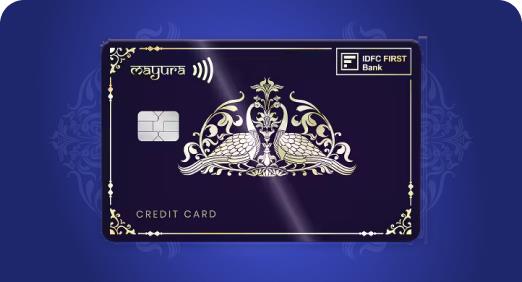

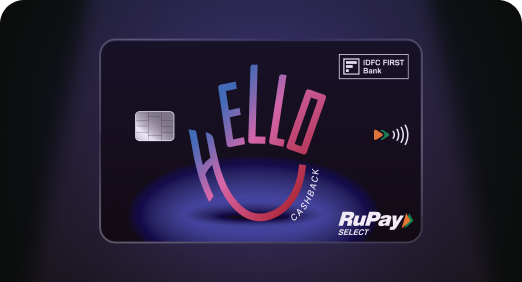

Enjoy Zero Forex on all IDFC FIRST Bank Credit Cards
Save more on all international spends
Know More
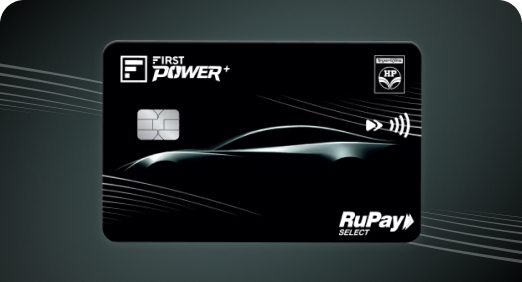
A Card that Powers your Savings & Lifestyle
IDFC FIRST Bank HPCL Credit Card








Most Searched
Earn up to 7% interest on your Savings Account
Open Account Now
Download our app
Get instant help for all your queries in one place
Unlock features, exclusively available
only on the IDFC FIRST Bank app
Trusted by 1.2+ million Indians.

4.8

4.8

Tools & Calculators
Privilege Program



Tools & Calculators

Unlock features, exclusively available
only on the IDFC FIRST Bank app
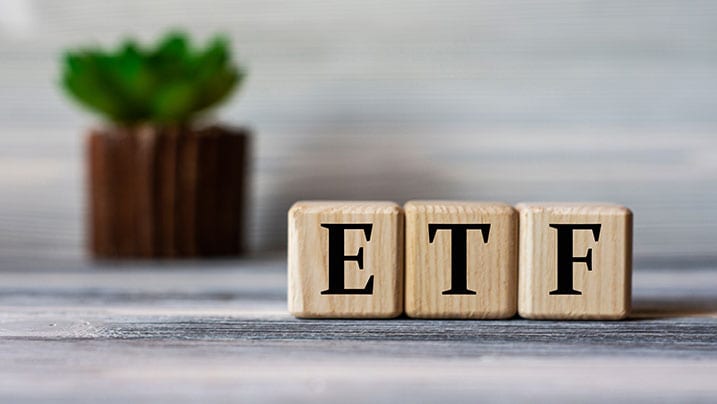
Assume you are bullish about an up-and-coming sector in the Indian market and wish to invest your capital in an index. One of your initial impulses would be to search for an index fund and invest in it. Investing your capital in an index mutual fund via a Systematic Investment Plan (SIP) is always a smart option, but there's another, more cost-effective option that you could consider – an Exchange-Traded Fund (ETF).
Before we get to ETFs, here's a quick refresher on what an index fund does: it pools money from investors and invests it in indices, allotting 'units' based on the fund's NAV (Net Intrinsic Value). An Exchange-Traded Fund functions a lot like a typical index mutual fund. The only exception is that the unit(s) allocated to you are the ETF shares that trade on the stock market.
Does this mean that if the SENSEX increases by a few points, the units of a SENSEX ETF you invested in would also increase in value? Absolutely! This is a major benefit of investing in ETFs. Exchange-Traded Funds allow you to purchase and sell units during market hours, and that too, at a price near the scheme's actual NAV.
Once you buy an Exchange-Traded Fund, you can track it like any other stock and buy and sell it whenever you need to. However, there's a significant difference between an ETF and a stock. ETFs can help you diversify in a range of stocks – a sectoral index or an index like NIFTY 50. Stocks, on the other hand, act as individual instruments of investment.
Investors increasingly see Exchange-Traded Funds as a cost-effective way to grow their capital. In April 2022, the assets under management (AUM) of NIFTY 50 index-based ETFs surpassed the ₹2 lakh crore milestone. The FY 2021-2022 was touted as a historic year for the Indian ETF industry, as it registered fund inflows of ₹1.28 lakh crore.
You need a Demat account to invest in ETFs. IDFC FIRST Bank can help you open one instantly without any paperwork and account opening charges. Additionally, there's no annual maintenance charge (AMC) for the first year, so you save more.
Besides equity-oriented ETFs, which invest in specific indices in the stock market, you can also invest in debt ETFs and gold ETFs.
15% tax is levied on short-term capital gains (STCG) made on equity-oriented ETF units you hold for less than a year. However, a tax of 10% would be levied on long-term capital gains (LTCG), sans indexation benefit. On the other hand, short-term capital gains made on gold and debt ETF units held for less than three years are taxed according to the applicable income tax slab rate.
Lower expense ratios also explain the popularity of Exchange-Traded Funds in India. ETFs are of interest to many retail investors in India today because they allow them to invest in India's growth trajectory at a lower cost than index mutual funds.
Disclaimer
The contents of this article/infographic/picture/video are meant solely for information purposes. The contents are generic in nature and for informational purposes only. It is not a substitute for specific advice in your own circumstances. The information is subject to updation, completion, revision, verification and amendment and the same may change materially. The information is not intended for distribution or use by any person in any jurisdiction where such distribution or use would be contrary to law or regulation or would subject IDFC FIRST Bank or its affiliates to any licensing or registration requirements. IDFC FIRST Bank shall not be responsible for any direct/indirect loss or liability incurred by the reader for taking any financial decisions based on the contents and information mentioned. Please consult your financial advisor before making any financial decision.
The features, benefits and offers mentioned in the article are applicable as on the day of publication of this blog and is subject to change without notice. The contents herein are also subject to other product specific terms and conditions and any third party terms and conditions, as applicable. Please refer our website www.idfcfirst.bank.in for latest updates.