









Login to Internet banking
A brand-new experience - smarter, faster, and secured


BRAVO (Auto Sweep)
Convert the idle funds in your current account into a fixed deposit with the BRAVO feature.
Know More

Zero Forex Markup Current Account
Maximise your savings and boost profitability with our Zero Forex Markup current accounts
Know More
BRAVO (Auto Sweep)
Convert the idle funds in your current account into a fixed deposit with the BRAVO feature.
Know More
You gain a dedicated partner committed to helping you reach your full potential and achieve new heights
Know More





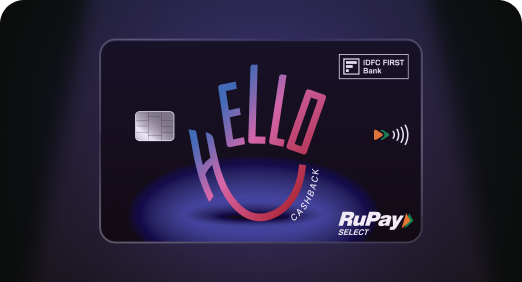

Enjoy Zero Forex on all IDFC FIRST Bank Credit Cards
Save more on all international spends
Know More
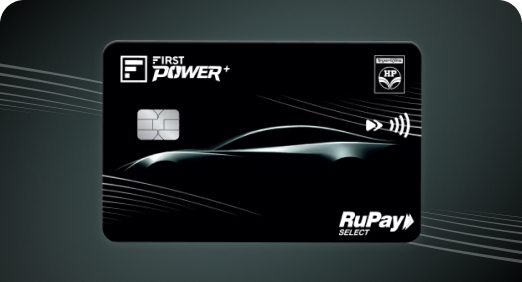
A Card that Powers your Savings & Lifestyle
IDFC FIRST Bank HPCL Credit Card









Most Searched
Earn up to 7% interest on your Savings Account
Open Account Now
Download our app
Get instant help for all your queries in one place
Unlock features, exclusively available
only on the IDFC FIRST Bank app
Trusted by 1.2+ million Indians.


4.8

4.8

Tools & Calculators
Privilege Program



Tools & Calculators
Since both the old and new tax regimes have pros and cons, it becomes difficult for taxpayers to choose between them. Starting April 1, 2020 (FY 2020-21), the Indian government implemented a new alternative tax rate regime for Hindu Undivided Families (HUF).
As a result, Section 115BAC of the Income Tax Act of 1961 (the Act) has been implemented, which mandates reduced tax rates for individual taxpayers and HUFs who opt-out of certain tax deductions or exemptions.
The Central Board of Direct Taxes granted a one-time relaxation to verify e-filed ITRs for the assessment year (AY) 2020-21 that were awaiting verification owing to non-submission of the ITR-V form or outstanding e-verification on December 28. To get a clear picture of these changes, let us look at the difference between the old and new tax regimes.
Under the applicable parts of the Income Tax Act, some financial instruments are eligible for tax deductions (life insurance policies under as per Section 80C). It pushes you to save and insure while lowering your tax bill. Furthermore, Section 10 of the Act excludes some incomes from taxation to reduce tax payments.
Some adjustments have been made because of the new tax plan. There were 120 possible exemptions under the old tax regime. The new tax regime has abolished 70 of them while keeping 50.
The following are some of the well-known exemptions and deductions that have been eliminated under the new tax scheme:
Similarly, here are some common exemptions which will be preserved under the new tax system.
Individual taxpayers had the opportunity to choose between the old and new tax regimes for the first time when filing their income tax returns in FY 2020-21.
As every taxpayer has different qualifying deductions, sources, and income, one rule does not apply to everyone. Taxpayers must assess and contrast the tax liability under both systems before deciding which to choose.
Suppose a taxpayer has investments in tax-saving instruments, pays life or medical insurance premiums, children's school fees, home mortgage principal repayment, and takes advantage of the HRA, LTA, and other deductions. In that case, it may be more helpful to opt for the old tax regime because the benefit of deduction/exemption is available.
The government has taken several initiatives to simplify the tax system in recent years. India still maintains one of the highest taxes ratios relevant to individual taxpayers, with a top rate of 30% and a top surcharge of 37% on income surpassing five crores.
As a result, once the government examines expanding the tax slabs to balance the impact of waiving certain deductions or exemptions, there is scope to render the new tax regime more appealing to a more significant percentage of individual taxpayers.
Disclaimer
The contents of this article/infographic/picture/video are meant solely for information purposes. The contents are generic in nature and for informational purposes only. It is not a substitute for specific advice in your own circumstances. The information is subject to updation, completion, revision, verification and amendment and the same may change materially. The information is not intended for distribution or use by any person in any jurisdiction where such distribution or use would be contrary to law or regulation or would subject IDFC FIRST Bank or its affiliates to any licensing or registration requirements. IDFC FIRST Bank shall not be responsible for any direct/indirect loss or liability incurred by the reader for taking any financial decisions based on the contents and information mentioned. Please consult your financial advisor before making any financial decision.
The features, benefits and offers mentioned in the article are applicable as on the day of publication of this blog and is subject to change without notice. The contents herein are also subject to other product specific terms and conditions and any third party terms and conditions, as applicable. Please refer our website www.idfcfirst.bank.in for latest updates.