









Login to Internet banking
A brand-new experience - smarter, faster, and secured





BRAVO (Auto Sweep)
Convert the idle funds in your current account into a fixed deposit with the BRAVO feature.
Know More

Zero Forex Markup Current Account
Maximise your savings and boost profitability with our Zero Forex Markup current accounts
Know More
BRAVO (Auto Sweep)
Convert the idle funds in your current account into a fixed deposit with the BRAVO feature.
Know More
You gain a dedicated partner committed to helping you reach your full potential and achieve new heights
Know More







Enjoy Zero Forex on all IDFC FIRST Bank Credit Cards
Save more on all international spends
Know More
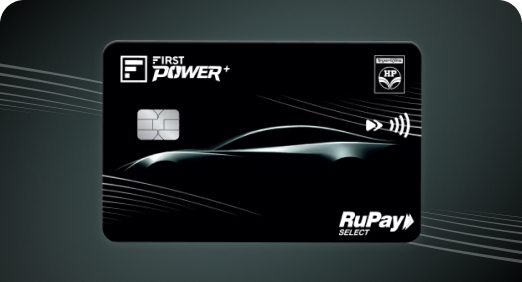
A Card that Powers your Savings & Lifestyle
IDFC FIRST Bank HPCL Credit Card









Most Searched
Earn up to 7% interest on your Savings Account
Open Account Now
Download our app
Get instant help for all your queries in one place
Unlock features, exclusively available
only on the IDFC FIRST Bank app
Trusted by 1.2+ million Indians.


4.8

4.8

Tools & Calculators
Privilege Program



Tools & Calculators

Unlock features, exclusively available
only on the IDFC FIRST Bank app
Finance
 Interest earned on a fixed deposit is taxable and must be added to your total income before applying your income slab rate.
Banks deduct tax at source (TDS) if interest exceeds defined limits and you have provided your PAN details.
Certain fixed deposit types such as NRE FDs may be exempt from Indian tax, depending on the account holder’s status and conditions.
IDFC FIRST Bank provides clear information on FD interest taxation so you can plan the tax impact before you invest.
Interest earned on a fixed deposit is taxable and must be added to your total income before applying your income slab rate.
Banks deduct tax at source (TDS) if interest exceeds defined limits and you have provided your PAN details.
Certain fixed deposit types such as NRE FDs may be exempt from Indian tax, depending on the account holder’s status and conditions.
IDFC FIRST Bank provides clear information on FD interest taxation so you can plan the tax impact before you invest.
A fixed deposit (FD) is an asset class where you invest for a longer term and earn interest. Investors receive both the interest and the principal amount when the FD matures. Additionally, FDs up to ₹5 lakh are insured by the Deposit Insurance Guarantee Corporation (DIGCI) of India.
It makes FDs one of the safest investment instruments, especially for risk-averse investors. FDs have many other benefits as well, although returns earned through them are not tax-free. Here is everything you need to know about income tax on interest on fixed deposits.
The interest earned on an FD is taxable. It is added to your total income and taxed at the slab rates that apply to your entire income. Investors should declare it on their tax return under the category 'Income from Other Sources.'
Remember, though, that TDS is withdrawn when the FD interest rate is credited, not when the FD matures. Hence, if you have a three-year FD, the bank will deduct tax on the FD at the end of each year.
When you receive money, the individual making the payment must deduct tax first. The gross amount must be subsequently included in your income when filing your income tax return.
In contrast, a TDS refund takes place when no tax is due. Salary, commission, rent, and bank interest payments are examples of such payments. The TDS charged at the point of filing the returns might then be adjusted by the taxpayer. If the taxable income exceeds the TDS, the taxpayer must pay the difference, and if the tax liability is less, you can request a TDS refund. It also makes income tax on FD interest chargeable.
Banks deduct tax at source (TDS) when crediting interest to your account if the amount of interest exceeds ₹40,000. It applies to all investors, except senior citizens. The limit for senior citizens is ₹50,000.
Here are a few ways in which your FD can act as a tax-saving asset:
FD is the most common investment instrument used in India. It offers decent returns, and by using the above tricks, you can save tax as well. You can open an FD with banks via Mobile Banking and post offices, although the interest is more in banks such as IDFC FIRST Bank. IDFC FIRST offers one of the highest interest rates on FDs in the country, which helps build your wealth.
Disclaimer
The contents of this article/infographic/picture/video are meant solely for information purposes. The contents are generic in nature and for informational purposes only. It is not a substitute for specific advice in your own circumstances. The information is subject to updation, completion, revision, verification and amendment and the same may change materially. The information is not intended for distribution or use by any person in any jurisdiction where such distribution or use would be contrary to law or regulation or would subject IDFC FIRST Bank or its affiliates to any licensing or registration requirements. IDFC FIRST Bank shall not be responsible for any direct/indirect loss or liability incurred by the reader for taking any financial decisions based on the contents and information mentioned. Please consult your financial advisor before making any financial decision.
The features, benefits and offers mentioned in the article are applicable as on the day of publication of this blog and is subject to change without notice. The contents herein are also subject to other product specific terms and conditions and any third party terms and conditions, as applicable. Please refer our website www.idfcfirst.bank.in for latest updates.