








Login to Internet banking
A brand-new experience - smarter, faster, and secured




BRAVO (Auto Sweep)
Convert the idle funds in your current account into a fixed deposit with the BRAVO feature.
Know More

Zero Forex Markup Current Account
Maximise your savings and boost profitability with our Zero Forex Markup current accounts
Know More
BRAVO (Auto Sweep)
Convert the idle funds in your current account into a fixed deposit with the BRAVO feature.
Know More

You gain a dedicated partner committed to helping you reach your full potential and achieve new heights
Know More






Enjoy Zero Forex on all IDFC FIRST Bank Credit Cards
Save more on all international spends
Know More
A Card that Powers your Savings & Lifestyle
IDFC FIRST Bank HPCL Credit Card









Most Searched
Earn up to 7% interest on your Savings Account
Open Account Now
Download our app
Get instant help for all your queries in one place
Unlock features, exclusively available
only on the IDFC FIRST Bank app
Trusted by 1.2+ million Indians.


4.8

4.8

Tools & Calculators
Privilege Program



Tools & Calculators

Unlock features, exclusively available
only on the IDFC FIRST Bank app
Most adults dream of owning a house. Real estate is a brilliant investment, offering great returns and unparalleled security. But buying a house without financial aid is almost impossible in the current market. Prices of residential properties are higher than ever, making it extremely difficult for people to supplement their real estate portfolio.
A home loan is a useful tool to address this problem. With a home loan, you can immediately purchase the property and then pay the bank in EMIs.
But before you apply for a home loan, understand everything there is about the product. While most features of a home loan are easy to understand, the loan-to-value (LTV) ratio is a challenging concept. In this article, we will discuss the meaning of LTV.
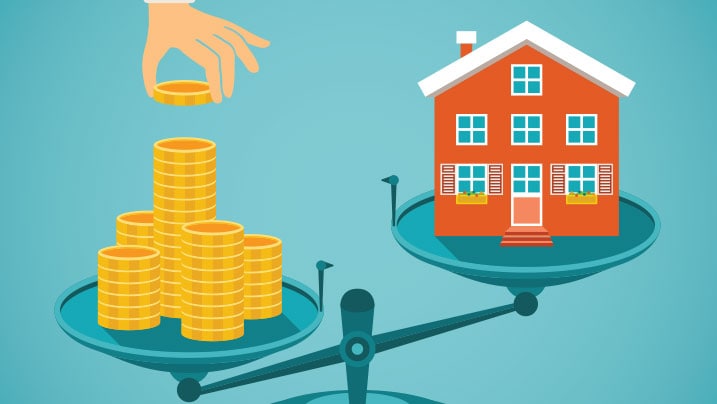
Lenders employ the loan-to-value (LTV) ratio to estimate the liability they incur with a secured loan. LTV in banking calculates the difference between the amount borrowed and the market value of the collateral, such as a house or automobile. For instance, if a lender grants a loan half the asset's value, the LTV is 50%. As the LTV ratio grows, so does the prospective loss to the lender if the borrower defaults on the loan.
The LTV ratio refers to the percentage of a property's worth that a lender may finance with a home loan. Financial institutions, such as banks, housing finance firms, and non-banking finance companies (NBFCs), utilise the LTV to measure their risk in granting you a home loan. The goal of employing the combined loan-to-value ratio for a lender is to ensure that they do not lend more than the property's true value. If a lender's LTV rises, the danger of a borrower default rises as well.
The LTV ratio formula is:
LTV (in percentage) = (Amount borrowed / Value of property) x 100
For example, if you are purchasing a home worth ₹1 crore and your bank's LTV ratio is 70%, the bank's maximum loan amount is ₹70 lakh.
The loan-to-value ratio can apply to any secured loan, although it is typically used in mortgages. LTV in home loans is among the qualifying factors in determining if the bank will approve your loan.
According to RBI norms, the LTV ratio for home loans of less than ₹30 lakh can be 90% of the property value. A 90% LTV implies borrowers must pay at least 10% of the property's worth out of their pocket, with the rest financed through loans. LTV ratios between ₹30 lakhs and ₹75 lakh can reach 80%, while LTV ratios over ₹75 lakh must be at least 75%. If you want to figure out what your minimum down payment will be, it is imperative that you take the LTV ratio into consideration.
The loan-to-value ratio is a crucial component of home loans. Every lender, including IDFC FIRST Bank, uses it when reviewing home loan applications. IDFC FIRST Bank, meanwhile, also employs digital processes to quickly process and approve home loan application. The bank also offers the best home loan interest rates in the market, which saves money. Apply for a home loan with IDFC FIRST Bank and become a proud homeowner today.
Disclaimer
The contents of this article/infographic/picture/video are meant solely for information purposes. The contents are generic in nature and for informational purposes only. It is not a substitute for specific advice in your own circumstances. The information is subject to updation, completion, revision, verification and amendment and the same may change materially. The information is not intended for distribution or use by any person in any jurisdiction where such distribution or use would be contrary to law or regulation or would subject IDFC FIRST Bank or its affiliates to any licensing or registration requirements. IDFC FIRST Bank shall not be responsible for any direct/indirect loss or liability incurred by the reader for taking any financial decisions based on the contents and information mentioned. Please consult your financial advisor before making any financial decision.
The features, benefits and offers mentioned in the article are applicable as on the day of publication of this blog and is subject to change without notice. The contents herein are also subject to other product specific terms and conditions and any third party terms and conditions, as applicable. Please refer our website www.idfcfirst.bank.in for latest updates.